📌 Cranberry Cream Cheese Bread: the complete recipe with its butter and melted cheese sauce
Posted 3 February 2026 by: Admin
The Asian Origin Of A Bakery Phenomenon
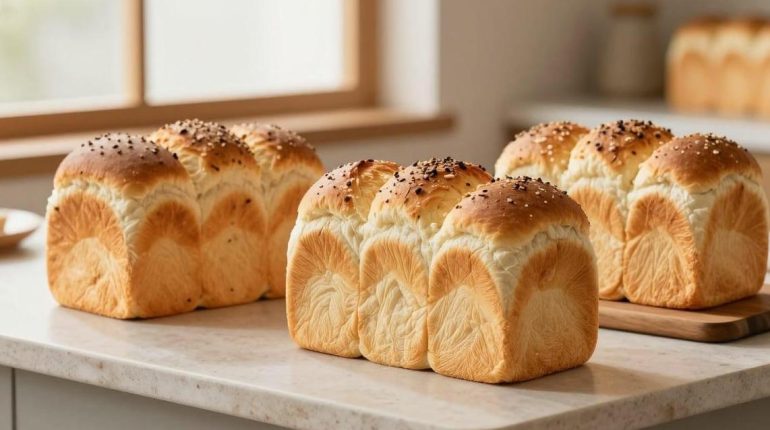
In the glittering windows of BreadTalk, Paris Baguette or Taiwanese artisanal bakeries, one bread dominates: soft, milky, filled with creamy or sweet fillings. This Cranberry Cream Cheese Bread belongs to this prestigious lineage, a direct heir to the Japanese Hokkaido milk bread, a world reference for its airy texture obtained by the tangzhong method.
Asian bakeries have revolutionized Western bread by injecting milky sweetness and bold fillings. Where European tradition favors a crunchy crust, the Japanese-Korean approach cultivates a cottony, almost melting crumb. This recipe takes the concept further: it combines the Asian double-proofing technique with an original cream cheese-cranberry filling, creating a bridge between traditional know-how and fusion innovation.
This growing popularity is no accident. Social media is full of videos showing these breads being torn apart, revealing creamy hearts flowing under a cascade of melted cheese sauce. Aesthetics matter as much as taste: each slice becomes a work of art, each bite a calibrated sensory experience. It is no longer just bread, but a culinary statement from Asia, adopted worldwide for its balance between comfort and sophistication.
An Exceptional Taste Balance Between Sweet And Tangy
This aesthetic sophistication finds its extension in the bread’s flavor architecture. The recipe deploys 130g of filling distributed over two loaves: 60g of cream cheese softened with sugar and milk powder, interlaced with 70g of dried cranberries. This precise ratio creates a striking contrast between the smoothness of the fresh cheese and the biting acidity of the red fruits, each bite oscillating between milky sweetness and fruity tang.
Balance doesn’t stop at flavors. The butter-enriched dough (28g) envelops the filling in a crumb that resists slightly under the tooth before giving way, releasing the creamy heart. The final melted cheese sauce—22g of cream, 25g of sliced cheese, 8g of butter—adds an extra layer of richness without becoming cloying. The result evokes a refined dessert more than a simple sandwich bread.
This versatility transforms the recipe into a culinary chameleon. At breakfast, it replaces pastries and buttered toast. At tea time, it rivals fine patisserie. As a gift, wrapped in parchment paper and natural twine, it impresses with its artisanal appearance. Purists will substitute cranberries with golden raisins; the bold will dare to use Nutella, proving that the technical structure supports all creative audacities. Nevertheless, this sweet-tangy alchemy requires irreproachable technical execution to reveal its full potential.
An Accessible But Demanding Bakery Technique
This gustatory alchemy relies on a precise technical architecture. The recipe uses 280g of bread flour, a raw material whose proteins develop the gluten network essential for the stringy crumb characteristic of Asian breads. Initial kneading transforms the flour-liquid mixture into an elastic dough, then incorporates 28g of softened butter until a translucent membrane is obtained that resists stretching without tearing: the famous windowpane test, the hallmark of experienced bakers.
Time then becomes the amateur baker’s ally. Two successive rises—1 initial hour then 45 minutes after shaping—allow the yeast (3g) to colonize the dough and generate airy pockets. Between these breaks, the crucial rolling operation seals 65g of filling into each loaf, preventing any leakage during baking. The 26 minutes at 180°C require vigilance: a sheet of aluminum foil placed mid-bake preserves the golden crust without charring.
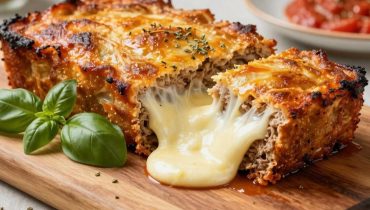
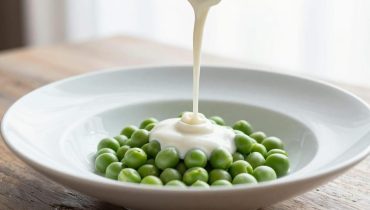
The spectacular finish distinguishes this recipe from conventional breads. A longitudinal slit made on the warm bread welcomes the melted cheese sauce, still steaming. This theatrical gesture—a mixture of butter, sliced cheese, cream, and sugar melted over low heat—transforms each loaf into a creamy fountain. Complete cooling (30 minutes minimum) stabilizes the crumb before slicing, avoiding the collapse that would ruin the aesthetics. This technical rigor, accessible to methodical novices, guarantees a result worthy of professional windows.
Unsuspected Nutritional Benefits
Beyond the aesthetic performance, this seemingly indulgent treat hides a thoughtful nutritional density. The 70g of dried cranberries per recipe concentrate antioxidants and soluble fibers, slowing carbohydrate absorption while supporting intestinal transit. Their natural acidity also provides polyphenols protective against cellular oxidation, partially balancing the lipid richness of the creamy filling.
The seed crown—a mixture of flax, pumpkin, white and black sesame—transforms each slice into a mineral vector. Flax delivers plant-based omega-3s rarely present in traditional pastries, while pumpkin seeds provide zinc and magnesium. This crunchy layering is not just ornamental: it elevates the nutritional profile without weighing down the calorie count, set at 210 kcal per portion of 12 slices.
The 165g of cold milk incorporated into the dough provide bioavailable calcium and 5g of protein per slice, contributing to morning satiety. Cream cheese, when it comes from live lactic cultures, introduces beneficial probiotics for the intestinal flora. This composition positions this fusion creation as a nutritionally defensible pleasure, where indulgence meets a certain dietary rationality.