When people hear about cottage cheese in pasta sauce, they make a face. They imagine something bland, diet-friendly, the kind of thing you eat when you’re trying to lose weight. And then they taste it — and they ask for the recipe.
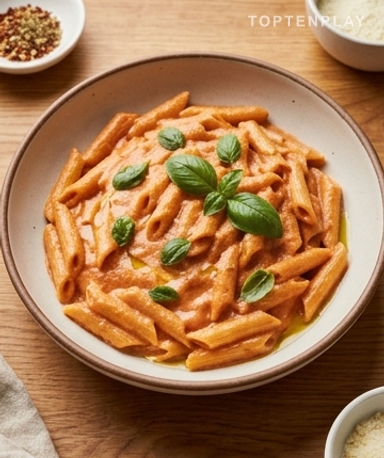
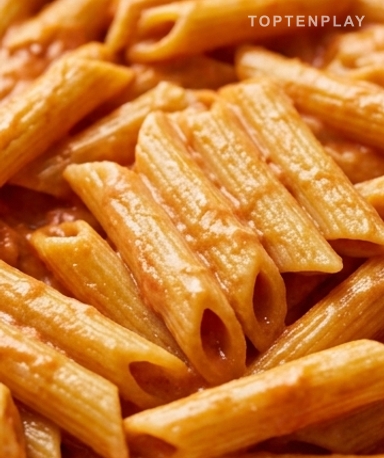
On the plate, it looks like a good creamy tomato sauce, with that characteristic salmon color you get when tomato meets something soft and white. The pasta is well-coated, the sauce clings and shines slightly under the light. The scent of garlic sautéed with oregano still floats from the pan. Nothing on this plate betrays the presence of cottage cheese — and that’s exactly the idea.
Why you’ll love this recipe
Ingredient Notes
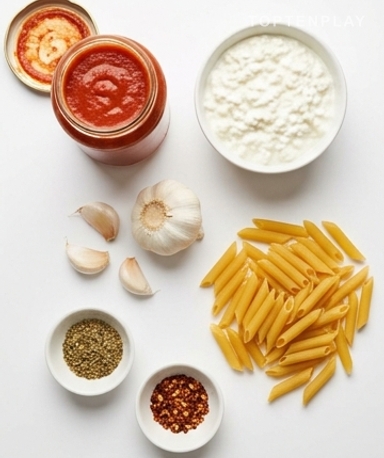
Everything you need for the sauce: cottage cheese, a good marinara, and some spices, that’s really it.
- Jarred tomato sauce : This sets the tone — pick one you actually love. Not the cheapest on the shelf, but not the fanciest either. Just the one you enjoy the taste of on a cold spoon. A good marinara works perfectly. If your base sauce is bland, the final sauce will be bland. Simple as that.
- Cottage cheese : Go for full fat, preferably small curd. It blends better, melts into the sauce without making it watery, and the final texture is much creamier. The 0% version can work, but you lose out on silkiness. This really isn’t the time to skimp on fat content.
- Fresh garlic : Two cloves, minced by hand or with a knife. Not garlic from a tube, not powder. Fresh garlic hitting hot oil smells different — a sharp, warm scent that mellows in less than a minute. That specific moment flavors the whole sauce, and there are no shortcuts.
- The pasta : Penne, rigatoni, or fusilli — shapes with grooves or holes. This sauce is thick and creamy; it needs something to hang onto. Spaghetti can work in a pinch, but you’ll lose a good part of the sauce on the plate instead of eating it.
Choose a jar you’d eat as is
It all starts with the tomato sauce. And yes, jarred — this recipe isn’t here to make you cook a homemade marinara on a weeknight. Taste your jar before starting. If you like the sauce cold, straight off a spoon, it will be perfect here. Otherwise, switch jars. The cottage cheese will amplify existing flavors, not create them. A sauce that’s too sweet will stay too sweet. A sauce that’s too acidic will keep that acidity. Start with a base you already like, and the rest follows naturally.
Blend all the way — really all the way
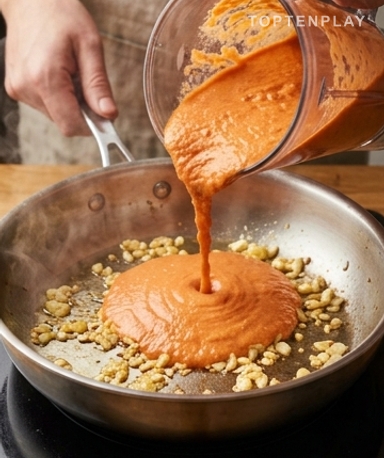
Pour the tomato sauce, cottage cheese, salt, pepper, and onion powder into the blender. Blend. And blend again. Not for five seconds — at least thirty to forty seconds at full power. You’re looking for a texture as smooth as a velouté, with no white grains visible. At first, the mixture is lumpy and frankly not reassuring to look at. Then the color becomes homogeneous, a uniform salmon-pink hue, and the texture changes completely: silky, almost shiny. That’s when you stop.
Garlic first, alone in the pan
A teaspoon of olive oil in a large pan over medium heat. Add the minced garlic, oregano, and chili flakes. Don’t rush. This minute of cooking is the only real technical step in the recipe. The garlic goes from raw white to a very light golden blonde, like a freshly formed light caramel, and the oregano releases a warm, slightly earthy, peppery scent. Don’t let the garlic brown — if it turns black, it will bitter the whole sauce. One minute, sometimes less depending on your stove. You’ll smell when it’s right.
Pour, mix, don’t force the cooking
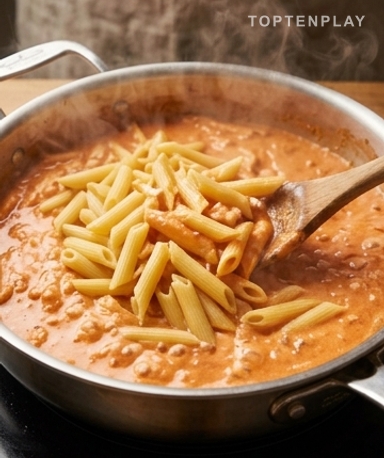
Add the blended sauce to the pan with the drained pasta. Medium-low heat — no more. Stir to thoroughly coat every penne. The sauce thickens slightly upon contact with the heat and clings to the pasta with a velvety consistency. If it becomes too dense, pour in a little reserved cooking water — start with two or three tablespoons, never the whole cup at once. The sauce should coat the pasta without drowning it. Keep the heat low: cottage cheese cooked at too high a heat becomes grainy, and that’s hard to fix once it happens.
Tips & Tricks
- Save the pasta cooking water — it’s truly valuable here. The starch it contains helps the sauce cling to the pasta and allows you to adjust the consistency without diluting the flavors.
- Don’t heat the sauce too high or too long. Beyond a certain temperature, the proteins in the cottage cheese coagulate and the sauce loses its smooth texture. Medium-low heat, warmed just enough — and serve immediately.
- This sauce doesn’t get better by waiting in the pan. It thickens fast and the pasta continues to absorb the sauce if left sitting. Call everyone to the table before pouring — not after.
Can you really taste the cottage cheese in the sauce?
No, not at all — provided you blend it well. Once blended for 30 to 40 seconds at high power, the cottage cheese completely disappears into the tomato sauce. The final texture resembles a classic creamy sauce, without the taste or grainy texture of cottage cheese.
Can I use Greek yogurt or ricotta instead of cottage cheese?
Ricotta works very well and gives an even creamier result. Greek yogurt (0% or full fat) can also replace cottage cheese, but choose a thick yogurt — one that’s too liquid will make the sauce watery. In both cases, blend it well.
Can the sauce become grainy? How do I avoid it?
Yes, if you heat it too high or too long. The proteins in the cottage cheese coagulate at high temperatures and the sauce loses its smooth texture. Keep the heat medium-low once the sauce is in the pan, warm it just enough, and serve immediately.
How do I store and reheat leftovers?
Leftovers keep for up to 4 days in an airtight container in the refrigerator. To reheat, do so over low heat in a saucepan or in the microwave, stirring regularly, and add a splash of water to loosen the sauce. Do not boil — it will make the sauce grainy.
Can I freeze this sauce?
No, freezing is not recommended. Cottage cheese doesn’t hold up well to freezing and the sauce will separate upon thawing. Make it fresh — it’s ready in 15 minutes, so there’s really no point in freezing it.
How can I make the recipe heartier for a full dinner?
Add diced grilled chicken, browned ground beef or turkey to the pan before incorporating the sauce. White beans or roasted vegetables (zucchini, bell peppers) also work very well. Stir them in just before the pasta.
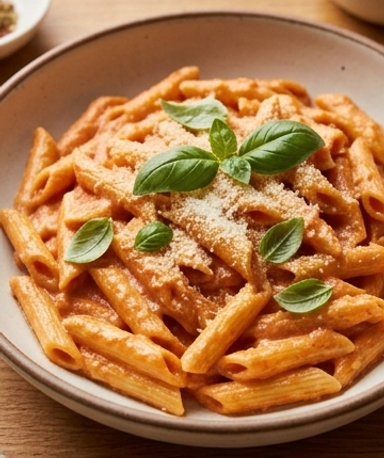
Cottage Cheese Pasta Sauce
Italian
Main Course
A creamy, protein-packed tomato sauce made in 15 minutes with blended cottage cheese. No one will guess the secret ingredient.
Ingredients
- 400g penne (or rigatoni, fusilli)
- 375ml (1½ cups) jarred marinara sauce
- 225g (1 cup) full fat cottage cheese (small curd)
- 1 tsp olive oil
- 2 garlic cloves, finely minced
- ½ tsp dried oregano
- ¼ tsp red pepper flakes (optional)
- ¼ tsp onion powder
- ½ tsp salt
- ¼ tsp black pepper
- a few leaves fresh basil (for serving, optional)
- 30g grated parmesan (for serving, optional)
Instructions
- 1Bring a large pot of salted water to a boil. Cook the pasta according to the package instructions. Reserve 180ml (¾ cup) of cooking water before draining.
- 2While the pasta is cooking, place the tomato sauce, cottage cheese, salt, pepper, and onion powder in a blender. Blend for 30 to 40 seconds at full power until perfectly smooth.
- 3Heat the olive oil in a large pan over medium heat. Add the minced garlic, oregano, and red pepper flakes. Cook for 1 minute while stirring, until the garlic is lightly golden and fragrant.
- 4Pour the blended sauce into the pan. Add the drained pasta and toss to coat thoroughly. Heat over medium-low heat while stirring until the sauce is hot and clinging to the pasta.
- 5Add the reserved cooking water tablespoon by tablespoon if the sauce is too thick. Adjust seasoning with salt and pepper. Serve immediately with fresh basil and parmesan.
Notes
• Do not overheat: keep the heat medium-low once the sauce is in the pan. Any higher and the cottage cheese will coagulate, making the sauce grainy.
• Storage: up to 4 days in the refrigerator in an airtight container. Reheat over low heat with a splash of water. Do not freeze.
• For a heartier version: stir in 200g of diced grilled chicken or 150g of drained white beans directly into the pan before adding the pasta.
Nutrition Facts (per serving, estimated)
| 505 kcalCalories | 22gProtein | 90gCarbs | 6gFat |