📌 Cooked Squash Drink
Posted 16 April 2026 by: Admin
What if the squash that’s been sitting in the corner of your kitchen for a week was actually your best tool against fatigue and blood sugar spikes? No need for a juice extractor, no powders from the other side of the world. A pot, some water, five simple ingredients. That’s it.
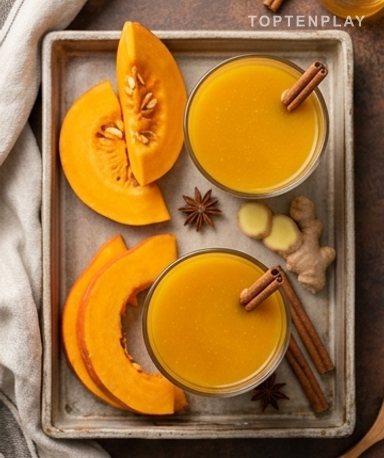
In the cup, it’s a deep amber-orange liquid, almost rust-colored depending on the variety of squash. The steam rises in a fine spiral and smells of warm cinnamon mixed with the discreet spice of fresh ginger — that tingle that tickles the nose even before the first sip. On the palate, it’s velvety, light, with a sweet roundness that comes from the squash itself. Nothing like a fruit juice that sends blood sugar soaring like a rocket.
Why you’ll love this recipe
Ingredient Notes
Squash, ginger, cinnamon, lemon, and honey: four ingredients, a thousand benefits.
- Butternut squash : The star of the recipe, so choose it well. Butternut has dense, sweet, bright orange flesh and is easy to find year-round. Avoid oversized specimens — they are often more fibrous and less flavorful. For this drink, 300 to 400 grams of flesh is more than enough.
- Fresh ginger : Powdered ginger is fine for cakes. Here, use fresh — a gnarled root found in any supermarket. Three to four centimeters are enough. Peel it with the back of a spoon (it really works) and grate it directly into the pot. The scent is immediately sharper and more penetrating than the dried version.
- Cinnamon stick : Prefer the stick over the powder for this recipe: cooking in water releases the aromas gently and gradually, without turning the drink a dull brown. If you only have Cassia cinnamon (the most common in stores), it works too — but the taste will be more intense and slightly spicy. It’s up to you to calibrate.
- Fresh lemon : Not bottled lemon juice — it often has an unpleasant aftertaste once heated. Half a freshly squeezed lemon, added after straining. This is what balances the natural sweetness of the squash and wakes everything up.
- Honey : Optional. But it’s what transforms a slightly austere health drink into something you actually want to drink. One teaspoon is enough — and add it when the drink is warm, never boiling, to preserve its properties.
Why cooked squash — and not raw or juiced
Raw squash is hard, fibrous, and not very pleasant to consume. Cooking in water does something specific: it softens the fibers, releases carotenoids — those orange pigments responsible for the color and the benefits on blood sugar — and makes the whole thing much easier to digest. Plus, the heat extracts the aromas of ginger and cinnamon directly into the cooking water. Result: a truly fragrant drink, not just vaguely colored water.
The part everyone misses: gentle cooking
The classic mistake is turning the heat to max and waiting for a rolling boil. Bad idea. What we want is a gentle simmer — tiny bubbles rising slowly to the surface, like a calm spring. With a rolling boil, the aromas evaporate too quickly and some nutrients leave with the steam. Medium-low heat, twenty minutes. The squash should collapse easily when poked with a fork. That’s the signal.
Smooth or strained: you choose the texture
Two ways to finish this drink, depending on what you want. If you simply strain the cooking liquid through a fine sieve, you get something clear, slightly translucent, colored like a pale orange broth. If you blend the cooked squash with its water, you get a velvety, thicker consistency, somewhere between a herbal tea and a smoothie. The blended version keeps you full longer — better for the morning. The strained version is lighter, more pleasant in the evening before bed.
How I integrate it into my week without the stress
In winter, I drink it hot with a bit more ginger — the spice that gently warms the throat is almost medicinal when it’s cold outside. In summer, I prep it in the evening, let it cool, put it in the fridge, and drink it cold with ice cubes and a slice of lemon. The most practical method: double the quantities on Sunday, store it in a large jar, and have your drink ready effortlessly from Monday to Tuesday.
Tips & Tricks
- Always add the lemon and honey after cooking, never in the pot while it’s heating — heat transforms their flavors and you lose the balance they provide.
- If your butternut squash is ripe and in season, it is often naturally sweet enough — taste before adding honey, you might not need it.
- To go even further on the anti-inflammatory side, slip in a small pinch of turmeric and a pinch of black pepper at the end of cooking: it doesn’t radically change the taste, and the pepper multiplies the absorption of turmeric by the body.
How long can this drink be kept in the refrigerator?
48 hours maximum in a hermetically sealed glass jar. Beyond that, the ginger starts to ferment slightly and the taste changes. If you make it often, prep for two days — no more.
Which variety of squash can I use if I don’t have butternut?
Hokkaido squash (red kuri) works very well — it’s slightly sweeter and its thin skin can be kept during cooking. Musquée de Provence also works. Avoid zucchini or watery pumpkins, which yield a bland, color-less drink.
Can it be made without a blender?
Yes, that’s actually the basic method. You simply strain the cooking liquid through a fine sieve or a clean cloth. The result is clearer and thinner. The blender gives a velvety version that keeps all the fibers, but it is completely optional.
Can other spices be added?
Absolutely. A pinch of turmeric and one of black pepper is an effective combination (pepper boosts turmeric absorption). A star anise gives a pleasant aniseed note. A crushed cardamom pod too. Start with one extra spice at a time to find your balance.
What is the best time of day to drink this?
In the morning on an empty stomach or just before a meal to fully benefit from the blood sugar regulating effect. The hot version in the morning, the cold version in the afternoon as an alternative to sugary juices. Avoid drinking it late at night if you are sensitive to ginger, which can be slightly stimulating.
How long should I drink it to see an effect?
This is not medicine and effects vary by person. Most people who consume it regularly (3 to 5 times a week) report better digestion and fewer cravings after 2 to 3 weeks. For blood sugar, always combine this drink with a balanced diet — it supports, it doesn’t replace.
Cooked Squash Drink
International
Health Drink
A hot or cold drink made from butternut squash, ginger, and cinnamon. Smooth, velvety, naturally sweet — and truly effective for blood sugar.
Ingredients
- 350g butternut squash, peeled and cut into 2-3 cm cubes
- 750ml water
- 4 cm fresh ginger (approx. 15g), peeled and grated
- 1 cinnamon stick (or ½ tsp ground cinnamon)
- ½ lemon, freshly squeezed juice
- 1 tsp honey (optional, add off the heat)
Instructions
- 1Peel the butternut squash and cut it into regular cubes of about 2-3 cm for even cooking.
- 2Place the cubes in a pot with the water, grated ginger, and cinnamon stick.
- 3Bring to a simmer over medium-low heat — steady small bubbles, no rolling boil — and simmer for 20 minutes covered.
- 4Check doneness by poking the squash with a fork: it should mash with no resistance.
- 5Option A (clear drink): strain the cooking liquid through a fine sieve, pressing the pieces slightly. Option B (velvety drink): blend the squash with its cooking water until smooth.
- 6Let cool for 3 to 5 minutes, then add the lemon juice and honey. Taste and adjust. Serve hot or let cool for an iced version.
Notes
• Storage: up to 48 hours in the refrigerator in an airtight jar. Reheat gently over low heat or consume cold with ice cubes.
• For a more concentrated version: reduce water to 500ml. The drink will be denser and flavors more intense — ideal for a short cleanse.
• No honey: ripe butternut squash is naturally sweet. Taste before adding honey — depending on the season and variety, it may not be necessary.
Nutrition Facts (per serving, estimated)
| 75 kcalCalories | 1.5gProtein | 18gCarbs | 0.2gFat |