Follow us
8 June 2026

Confit Lamb Shanks in Honey (Dutch Oven)

Prep Time
20 minutes
Cook Time
3 hours
Total Time
3 hours 20 minutes
Servings
4 portions

Confit lamb shanks are intimidating for no reason. People think they’re reserved for special occasions or experienced cooks, yet all they need is a Dutch oven, a few aromatics, and the patience not to lift the lid too often. What time does here, no technique can replace.
Advertisement
Final result
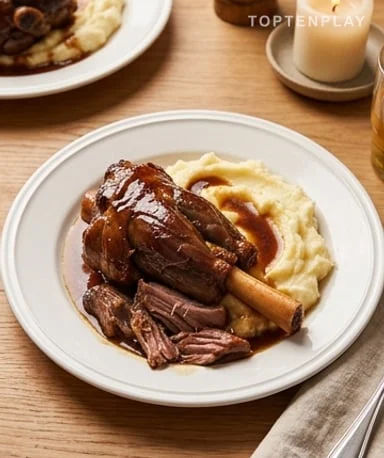
The confit lamb shank as it should be: lacquered, glossy, and the meat sliding off the bone.

After three hours of gentle cooking, the meat takes on a deep mahogany hue, almost lacquered, with that amber sheen from caramelized honey. The bone protrudes slightly, and a mere touch with a spoon sends the meat into long, melt-in-your-mouth shreds. The jus, dense and glossy, smells of warm rosemary, slightly burnt honey, and concentrated meat juices from hours of silent simmering. It’s the kind of dish that silences conversation for the first bite.

Why you’ll love this recipe

Meat that falls apart on its own : The collagen in this cut from the leg gelatinizes during slow cooking, making any cutting unnecessary—the meat separates with a fork, sometimes even a spoon. It’s structural, not luck.
The pot does the work for you : Once the lid is on, you have almost nothing to do for two and a half hours. That’s the ultimate comfort of braising: the dish builds itself while you tend to other things.
Sauce with no fuss : No roux, no slurry, no cornstarch. The cooking juices concentrate naturally thanks to the honey and collagen. The final reduction does it all.
Even better the next day : The jus solidifies as it cools, flavors meld, and the meat absorbs more sauce. Making this dish the day before is honestly a good decision.
Impressive results without stress : It looks like a high-end bistro dish. The technique is accessible to anyone with a Dutch oven and the ability to set a low flame.

Ingredient Notes

Ingredients

Few ingredients, big personality—the honey and aromatics do all the work.

  • Lamb shanks : This is the lower part of the leg, dense in collagen and connective tissue. These elements melt under gentle heat, giving that incomparable confit texture—nothing like a leg of lamb that dries out in the oven. Choose pieces of similar size, between 350g and 450g, for even cooking. Shanks that are too large extend the cooking time, while too small ones risk drying out.
  • Honey : It plays two distinct roles: it caramelizes on contact with heat, coating the vegetables with a sweet-bitter layer, and it binds the sauce, giving it that glossy, slightly syrupy appearance. Choose a mild honey, like acacia or blossom, rather than a strongly flavored one like chestnut, which would overpower and make the jus too bitter.
  • Chicken broth : It serves as the liquid base for the confit cooking and adds depth without overwhelming the lamb’s flavor. Avoid overly salty industrial broths: when reduced, they become cloying. A homemade or good-quality broth truly changes the final result.
  • Mild mustard : Often listed as optional, it’s actually a key balancer in this dish. It cuts the sweetness of the honey, adds a slight vegetal depth, and helps bind the sauce without being noticeable. Use mild or whole-grain mustard—not hot mustard, which would take over.
  • Fresh rosemary or thyme : These herbs hold up well to long cooking, unlike parsley or cilantro, which would lose all purpose. Rosemary is more assertive and camphor-like, thyme more subtle and floral. Use whole sprigs to perfume the jus without disintegrating. Remove them before serving.
  • Carrots and onions : They’re not just for color. During cooking, they release natural sugars and contribute to the complexity of the jus. Cut them coarsely—not into small dice—so they hold up during the two to three hours of simmering without dissolving and making the sauce cloudy.

Prepare the meat before lighting the fire

Take the lamb shanks out of the refrigerator twenty minutes before starting. This detail changes the cooking: cold meat placed in a hot pot cooks unevenly—the outside browns too quickly while the inside remains barely warm. Meanwhile, coarsely slice the onions, cut the carrots into thick rounds—about one centimeter—and crush the garlic cloves with the flat of the knife without mashing them. The garlic will flavor the jus without disintegrating or burning. This advance preparation prevents mistakes once the heat is on and everything moves fast.

Prepare the meat before lighting the fire
The step you never skip: sear the meat well on all sides to create that caramelization that makes the sauce.

Sear without rushing—this is where it all begins

Heat the olive oil over medium-high heat in a large heavy-bottomed Dutch oven until it shimmers. Place the shanks and do not touch them. The temptation to move them is strong, but caramelization requires contact and time. You hear a steady sizzle, and the meat starts to release naturally when the crust has formed—about three to four minutes per side. Turning too early tears that crust, which concentrates the flavors. Brown on all sides, including the edges. The brown bits stuck to the bottom of the pot are precious: they are the aromatic foundation of the entire sauce. Set the shanks aside on a plate without cleaning the pot.

Build the flavors layer by layer

Add the onions and carrots to the still-hot drippings. They will first sizzle, then soften while absorbing all those caramelized residues from the meat. When the onions turn translucent with slightly golden edges—about five minutes—add the garlic, herbs, and bay leaf. The garlic must not blacken: if it burns, it will bitter the entire dish over the next three hours. Then pour the honey directly onto the hot vegetables. You see it liquefy, simmer slightly, coating each piece in a shiny veil. Stir in the mustard, mixing to form a thick, aromatic paste. Return the lamb shanks, pour in the hot broth to reach halfway up the meat—not more, no need to submerge. Bring to a boil, then immediately reduce the heat to low.

Let time do what technique cannot

Cover tightly and set the heat to minimum. The cooking should proceed with just a few occasional bubbles rising—not a vigorous boil, which would toughen the lamb’s fibers instead of tenderizing them. For the first two hours, the pot works alone, and the aroma gradually fills the kitchen: first warm honey, then rosemary opening up, finally that deep animal scent of lamb maturing slowly. Turn the shanks once halfway through for even exposure. Check the liquid level—if the pot seems dry, add a splash of hot broth, never cold, which would halt the cooking. After two and a half hours, test with the tip of a knife or a fork: it should slide in without resistance.

Finish the sauce until it glazes

When the meat is perfectly confit, remove the lid and increase the heat slightly. The jus, already concentrated by hours of simmering, should reduce further until it coats the spoon and gains shine. This step lasts ten to twenty minutes depending on the initial volume of broth. You see the bubbles slow down, thicken, the color darken slightly. Regularly baste the meat with this jus so it becomes lacquered on the surface. The result should glisten when you tilt the pot, not run like water. That’s when you understand why honey was indispensable from the start.

Finish the sauce until it glazes
Three hours of gentle simmering, and patience becomes the best ingredient.

Tips & Tricks
  • Never force the meat to turn during searing: if it resists, it hasn’t finished caramelizing. The crust releases on its own when ready, and tearing it by pulling breaks the layer that will flavor the sauce.
  • Making this dish the day before is a great idea. As it cools, fat rises to the surface of the jus and solidifies—simply spoon it off before reheating gently. The sauce is cleaner, more concentrated, and the flavors have melded further.
  • If the jus remains too liquid at the end, remove the shanks and keep them warm while the sauce reduces alone over medium heat. The meat doesn’t suffer, and this temporary separation avoids overhandling or damaging it through boiling.
  • The size of shanks varies greatly depending on the butcher and the animal’s age. For pieces over 450g, plan on three to three and a half hours. For small pieces, two and a half hours suffice. The fork remains the only reliable measuring tool—not the timer.
Close-up
That melt-in-your-mouth, shreddy texture—collagen did its job, exactly what we’re after.
FAQs

Can the lamb shanks be cooked in the oven instead of on the stove in a pot?

Yes, the oven works very well and offers even more uniform heat. After searing and building the flavors on the stove, place the covered pot in the oven at 150°C (300°F) for 2h30 to 3h. The advantage of the oven is that you don’t even need to monitor the flame level.

How can you tell if the lamb shanks are perfectly cooked?

The fork is the only reliable tool: it should slide into the flesh without any resistance, like butter. If it still catches, extend the cooking by 20 to 30 minutes—some larger pieces need extra time. The meat should also start to retract slightly from the bone.

Can this dish be prepared the day before for a meal the next day?

It’s even recommended. As it cools, fat rises to the surface and solidifies, making it easy to spoon off before reheating. The dish, gently reheated covered, is often more concentrated and flavorful than on day one, as the flavors have had time to meld.

What’s the difference between the shank and other lamb cuts for this type of cooking?

The shank is particularly rich in collagen, the connective tissue that transforms into gelatin during long cooking. It’s this collagen that gives the melt-in-your-mouth, confit texture that you don’t get with a leg or shoulder, which have different muscle fibers. For a slow braise, it’s the best cut.

Can the confit lamb shanks be frozen?

Absolutely, they freeze very well with their jus. Store in an airtight container, making sure the sauce covers the meat to prevent freezer burn. Thaw in the refrigerator the day before and reheat gently covered for about twenty minutes.

Can honey be replaced with something else?

Maple syrup gives a similar result, slightly more woody. Date syrup is another option that offers a deeper, less floral sweetness. The important thing is to keep this sweet element that binds the sauce and gives it its glossy appearance—without it, the jus remains thin and less balanced.

Confit Lamb Shanks in Honey (Dutch Oven)

Confit Lamb Shanks in Honey (Dutch Oven)

Easy
French
Main course

Prep Time
20 minutes
Cook Time
3 hours
Total Time
3 hours 20 minutes
Servings
4 portions

Lamb shanks simmered for three hours in a Dutch oven with honey, aromatics, and broth. The meat falls off the bone, the jus becomes a glossy, slightly syrupy sauce. A dish of patience that requires almost no technique.

Ingredients

  • 4 lamb shanks (350-450g each)
  • 2 onions, coarsely sliced
  • 2 carrots, cut into thick rounds
  • 3 garlic cloves, crushed
  • 2 tbsp mild honey (acacia or blossom)
  • 2 tbsp mild mustard
  • 400 ml hot chicken broth
  • 2 tbsp olive oil
  • 1 fresh rosemary sprig (or thyme)
  • 1 bay leaf
  • salt and pepper

Instructions

  1. 1Take the lamb shanks out of the refrigerator 20 minutes before starting. Coarsely slice the onions, cut the carrots into rounds about 1 cm thick, crush the garlic cloves with the flat of the knife.
  2. 2Heat the olive oil in a large heavy-bottomed Dutch oven over medium-high heat. Sear the lamb shanks on all sides until deep golden brown, about 3 to 4 minutes per side. Don’t force the turn—the meat releases on its own when the crust is formed. Set the shanks aside on a plate.
  3. 3In the same pot without cleaning, sauté the onions and carrots over medium heat for 5 minutes, until lightly browned. Add the crushed garlic, rosemary, and bay leaf. Mix for 1 minute.
  4. 4Pour the honey directly over the hot vegetables. Let it simmer and coat the ingredients for 1 to 2 minutes. Stir in the mild mustard and mix to form an aromatic paste.
  5. 5Return the lamb shanks to the pot. Pour in the hot broth until it reaches halfway up the meat. Bring to a boil, then immediately reduce the heat to the lowest setting.
  6. 6Cover tightly and simmer over very low heat for 2h30 to 3 hours. Turn the shanks once halfway through. Check the liquid level regularly and add a splash of hot broth if needed. The cooking is done when a fork slides in without resistance.
  7. 7Remove the lid and increase the heat slightly. Let the jus reduce for 10 to 20 minutes, basting the meat regularly, until you get a glossy sauce that coats the spoon. Serve immediately with mashed potatoes or roasted vegetables.

Notes

• For pieces over 450g, plan on 3h to 3h30 of cooking. The fork remains the only reliable indicator—not the timer.

• If the sauce is still too thin at the end, remove the shanks and reduce the jus alone over medium heat for a few minutes before returning the meat.

• This dish freezes very well with its jus. Thaw in the refrigerator the day before and reheat gently covered.

Nutrition Facts (per serving, estimated)

485 kcalCalories 44gProtein 13gCarbs 28gFat
Advertisement
Share on Facebook