📌 Comforting Beef Stew

Posted 19 April 2026 by: Admin #Recipes

Prep Time
20 minutes
Cook Time
2 hours 30 minutes
Total Time
2 hours 50 minutes
Servings
4 servings

What exactly are we looking for when it’s cold outside and we’re hungry? A dish that has been simmering for two hours, filling the whole house with its aroma, and asking for nothing but time. This beef stew is exactly that.
Advertisement:
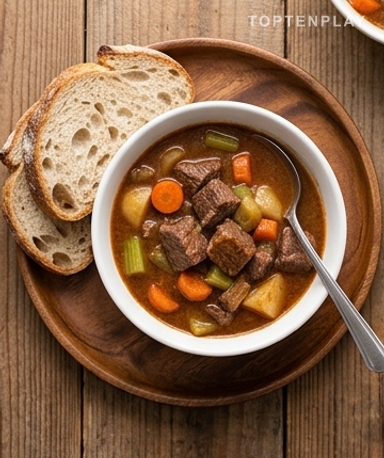
Final result
A generous beef stew, served at the table for a cozy gathering dinner.

Look at this broth. Not clear, not translucent — deep brown, almost mahogany, with that thick gloss you only get after a long cook. The beef chunks have absorbed all of it. They’ve melted into the sauce without disappearing. The carrots have lost their crunch but kept their sweetness. And when you bring the spoon closer, you first smell the thyme, then the beef, then something warm and rounded that you can’t quite name — it’s just pure comfort.

Why you’ll love this recipe

One single pot : Everything happens in the same vessel, from start to finish. Less washing up, less hassle, more time at the table.
It’s better the next day : Like all slow-cooked stews, it’s even better reheated. Make a big batch; you’ll thank yourself tomorrow.
The meat truly melts : No rubbery beef here. With the right cut and the right cooking time, the meat pulls apart with just a fork. That’s the goal.
Vegetables absorb everything : The carrots and potatoes aren’t just a side dish. They cook in the broth, soak it up, and become an integral part of the sauce. It’s a different planet compared to vegetables cooked separately.

Ingredient Notes

Ingredients

Advertisement:

Everything you need for a simple and honest stew: beef, seasonal vegetables, and a good broth.

  • Braising beef : Go for chuck or shank. Definitely not grilling beef — it would turn dry and tough. Chuck is fatty and gelatinous, designed to melt over low heat. Cut it into large 4-5 cm cubes. If they’re too small, they’ll disappear during cooking.
  • Tomato paste : One tablespoon, no more. Its role isn’t to provide a tomato flavor — it’s to deepen the color and add a slight acidity that balances the fat. Sauté it for 30 seconds in the pot before adding the broth; it makes all the difference.
  • Beef broth : Warm if possible. Pouring cold broth into a scorching pot stops the temperature rise and affects the final texture. A good homemade stock is ideal. Otherwise, store-bought cubes or cartons work — choose the lowest sodium you can find, and adjust the seasoning yourself.
  • Carrots : In thick rounds or chunks. Not too thin, or they’ll disintegrate before the end. They’re going to cook for two hours — give them some substance.
  • Thyme and bay leaf : Essential. Two sprigs of fresh thyme and two bay leaves. Avoid dried thyme if you can — the aroma is greener and more vibrant with fresh. Remove the bay leaves before serving; nobody wants to bite into those.

Meat first

Pat your beef chunks dry with paper towels. Don’t skip this step — if the meat is damp, it will boil instead of caramelizing. Heat your pot thoroughly with neutral oil, and place the meat in direct contact with the metal. Hear that loud searing sound? That’s a good sign. Leave them alone for two good minutes. Don’t touch, don’t flip too early. A golden-brown crust, like light caramel, should form on each side. Do this in batches if needed — overcrowding the pot is the classic mistake. Once browned, set the pieces aside on a plate.

Meat first
The key to the stew: a beautiful golden sear on the beef before assembling everything.

Aromatics, in order

In the same pot, without cleaning it — the browned bits stuck to the bottom are gold. Sliced onions, a few minutes over medium heat. They soften, turn golden, and start to smell sweet. Add the minced garlic, stir for thirty seconds. Then the tomato paste — it toasts slightly, takes on a darker hue, and its scent turns caramelized. This exact moment gives the final broth its depth.

Advertisement:

Everything in the pot, then we wait

Put the beef back in. Add the carrots and potato chunks. Pour in the warm broth until almost everything is covered — no need to completely drown it. Thyme, bay leaf, salt, pepper. Bring to a simmer, cover, and turn the heat to the absolute minimum. Now, your work is practically done. The stew will simmer for two hours, sometimes two and a half. You’ll just hear a slight gurgle from time to time under the lid — if it’s boiling hard, it’s too hot. Adjust. Low and slow cooking is what tenderizes without toughening.

How to know it’s ready

Take a fork. Pierce a piece of beef. If it slides in without resistance and the meat tends to pull apart, it’s ready. If you still feel a slight resistance, put the lid back on and wait another twenty minutes. The broth should be thick and coating, not watery. If it’s too thin at the end, remove the lid and let it reduce for a few minutes over medium heat. Double-check the salt one last time before serving.

How to know it's ready
Two hours of patience and the magic happens—the broth deepens, the meat tenders.

Tips & Tricks
  • Prepare it the day before if you can — a night in the fridge really lets the flavors meld. Gently reheated the next day, it’s at its absolute best.
  • Don’t cut your beef chunks too small. Meat shrinks during cooking. 5 cm cubes become 3-4 cm cubes. Aim large at the start.
  • If you want to thicken the sauce without making a roux, mash two or three pieces of potato directly into the pot at the end of cooking. It binds naturally without flour.
Close-up
That moment when the meat pulls apart with a fork is exactly what we look for in a good stew.
FAQs
Advertisement:

Which cut of beef should I choose for the stew?

Chuck (paleron) is the best choice—it’s fatty, gelatinous, and melts during slow cooking. Shin or neck also work very well. Avoid anything meant for grilling (ribeye, rump steak): they toughen instead of becoming tender.

Can I prepare the stew in advance?

Advertisement:

Yes, and it’s actually recommended. A night in the refrigerator allows the flavors to meld together. Reheat over low heat with a little broth if the sauce has thickened too much. It keeps for 3 days in the fridge and freezes perfectly for up to 3 months.

How do I thicken the sauce if it’s too thin?

Remove the lid at the end of cooking and let it reduce for 10-15 minutes over medium heat. You can also mash two or three pieces of potato directly into the pot—it binds naturally without flour or starch.

Advertisement:

Can I make this stew without a cast-iron pot?

Yes, a large heavy-bottomed saucepan will do. The key is that the bottom must be thick enough not to burn during the two hours of cooking. A cast-iron pot retains heat better, but it’s not strictly necessary.

What should I serve with the beef stew?

Advertisement:

Crusty bread for dipping, fresh pasta, or homemade mashed potatoes—all three work perfectly. Rice also absorbs the sauce well if you prefer. The potatoes cooked directly in the stew already make it a complete meal.

Comforting Beef Stew

Comforting Beef Stew

Easy
French
Main Course
Prep Time
20 minutes
Cook Time
2 hours 30 minutes
Total Time
2 hours 50 minutes
Servings
4 servings

A slow-simmered beef stew with carrots, potatoes, and a rich broth. Simple, nourishing, and even better the next day.

Advertisement:

Ingredients

  • 900g beef chuck, cut into 5 cm cubes
  • 3 carrots, cut into chunks
  • 3 medium potatoes, cut into pieces
  • 1 yellow onion, sliced
  • 3 cloves garlic, minced
  • 1 tablespoon tomato paste
  • 750ml warm beef broth
  • 2 celery stalks, cut into chunks
  • 2 sprigs fresh thyme
  • 2 bay leaves
  • 2 tablespoons neutral oil (sunflower or canola)
  • 1 teaspoon salt
  • ½ teaspoon ground black pepper

Instructions

  1. 1Pat the beef chunks dry with paper towels. Heat the oil in a large pot over high heat.
  2. 2Brown the beef in batches, 2 minutes per side, without overcrowding the pot. Transfer to a plate.
  3. 3In the same pot, sauté the onion over medium heat for 3-4 minutes until translucent.
  4. 4Add the minced garlic and stir for 30 seconds, then stir in the tomato paste. Let it caramelize for 1 minute.
  5. 5Return the beef to the pot. Add the carrots, celery, and potatoes.
  6. 6Pour in the warm broth until the ingredients are almost covered. Add the thyme and bay leaves. Season with salt and pepper.
  7. 7Bring to a simmer, cover, and reduce heat to minimum. Simmer for 2h to 2h30, until the meat is fork-tender.
  8. 8Remove the thyme and bay leaves. Taste for seasoning. If the sauce is too thin, simmer uncovered for 10 minutes before serving.

Notes

• Storage: 3 days in the refrigerator in an airtight container, or up to 3 months in the freezer. Reheat over low heat, adding a splash of broth if necessary.

• Make ahead: The stew is even better prepared a day in advance—the flavors develop overnight in the fridge.

• Vegetable variations: You can add sliced button mushrooms (add 30 minutes before the end) or frozen peas (add 5 minutes before serving).

Advertisement:

Nutrition Facts (per serving, estimated)

420 kcalCalories 38gProtein 28gCarbs 16gFat

Advertisement:
Share it!

Thanks for your SHARES!

You might like this

Add a comment:

Latest posts

Guinea Fowl Supreme with Green Asparagus, Hazelnuts and Capers

Vitality Watermelon-Tomato Juice

Slow Cooker Whole Chicken

Crispy Pan-Seared Halloumi

Homemade Pizza Dough

Honey and Soy Sauce Chicken Drumsticks

Potato Gratin with Beef Meatballs and Mozzarella

Grilled Herb and Garlic Shrimp

Air Fryer Steakhouse Potatoes

3-Ingredient Flourless Chocolate Cake

Loading...