📌 Coffee Cream Mocha: how to succeed with the French dessert that sublimes coffee in 3 melting layers
Posted 13 March 2026 by: Admin
The Coffee Cream Mocha, Symbol Of French Pastry
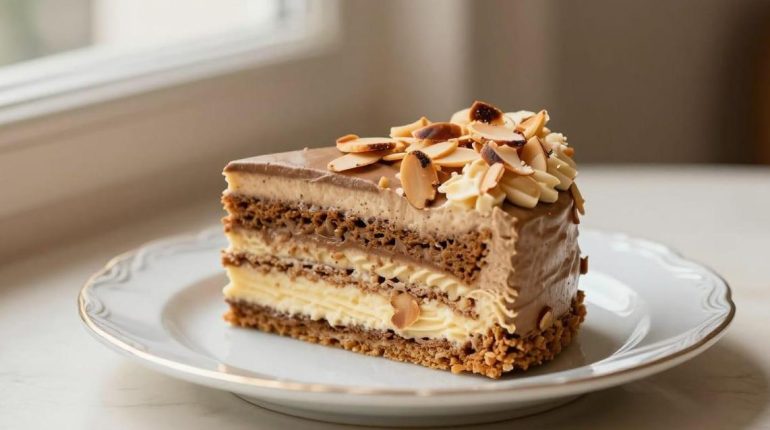
The coffee cream mocha occupies a privileged place in French gastronomic heritage. This refined cake combines aromatic intensity and visual elegance thanks to its tripartite composition: a light sponge cake soaked in flavored syrup, a smooth buttercream, and a decoration of crunchy almonds or chocolate shavings.
Traditionally served on special occasions – birthdays, family parties, celebration meals – the mocha invariably impresses guests. Its deep coffee taste and melting texture make it a dessert of choice in artisanal bakeries, where it sits alongside the great national classics.
Contrary to popular belief, this sophisticated pastry remains accessible to enlightened amateurs. Its success rests on three essential pillars: an airy sponge cake, a syrup that brings moistness and character, and a perfectly balanced coffee buttercream. With a little patience and a few simple techniques, it becomes possible to reproduce this dessert worthy of the best Parisian windows at home.
Mastering these technical fundamentals allows one to transcend the intimidating appearance of the mocha to reveal its true nature: a cake that is certainly demanding, but perfectly achievable in a domestic kitchen. The investment in time – about two hours – transforms into incomparable gustatory satisfaction.
The Three Pillars Of A Successful Mocha
The success of the mocha relies on mastering its three fundamental components, each requiring precision and technique.
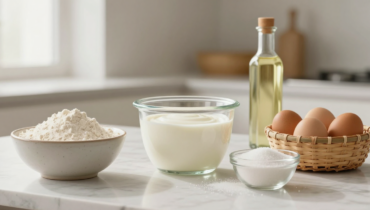
The airy sponge cake constitutes the structural base. It requires six eggs, 150 grams of sugar, supplemented by a mixture of sifted flour and cornstarch in equal parts (50 grams each). The technique of whipping egg whites into stiff peaks proves decisive: delicately folded into the yolks whisked with sugar, they provide that characteristic light texture. Baking at 180 degrees for 18 to 20 minutes produces a sponge cake flexible to the touch, slightly golden.
The coffee-flavored syrup brings the essential moistness. Its minimalist composition – 200 milliliters of water, 100 grams of sugar, two spoons of instant coffee or a strong espresso – hides an essential function: transforming a dry sponge cake into a smooth base permeated with deep aromas.
The buttercream represents the gustatory heart of the dessert. It requires 200 grams of unsalted butter at room temperature, 150 grams of sugar transformed into a light syrup, three egg yolks whisked until foamy, and three spoons of diluted instant coffee. The technique of pouring the syrup in a thin stream over the beaten yolks creates a stable emulsion, gradually enriched by the butter to obtain a smooth and creamy cream.
The total preparation time reaches two hours for six to eight portions, an intermediate level accessible to motivated amateur pastry chefs.
Preparation And Assembly Steps
The technical realization begins with baking the sponge cake at 180 degrees for 18 to 20 minutes. The expected result: a slightly golden disc, flexible under finger pressure, cooled completely before handling.
The coffee syrup is prepared by completely dissolving the sugar in water heated over medium heat. The addition of instant coffee or espresso occurs off the heat, before full cooling. This step guarantees homogeneous soaking without making it soggy.
The buttercream requires special attention: the heated sugar syrup is poured in a continuous stream over the beaten egg yolks, creating a progressive emulsion. Whisking continues until cooled, at which point the soft butter is incorporated piece by piece. The final addition of diluted coffee transforms the preparation into a smooth cream with an intense fragrance.
Assembly begins by cutting the sponge cake horizontally into two or three discs using a cake knife. The first disc, placed on the serving dish, receives a generous soaking with a brush, then a regular layer of cream. The layering of the discs repeats this sequence: syrup, cream, sponge cake. The final coating completely covers the cake.
Decoration with toasted flaked almonds adorns the sides, while the top receives cream rosettes, chocolate coffee beans, or icing sugar according to preference. The mandatory one-hour rest in the refrigerator firms the cream and stabilizes the structure before tasting.
Tips, Variations, And Storage
Three principles determine success: the butter must reach room temperature to avoid any lumps in the cream, the sponge cake requires generous soaking to maintain its moistness, and resting in the cold is essential before serving. These technical precautions transform a correct preparation into a professional result.
The classic allows several variations. Adding cocoa to the buttercream creates a chocolate-coffee mocha with a bolder taste. Partial replacement with a praline cream brings a nutty and caramelized dimension. Incorporating toasted crushed hazelnuts offers a crunchy texture contrasting with the creaminess of the cream.
Liquid accompaniments balance the richness of the dessert: strong espresso, creamy cappuccino, or structured black tea. These drinks cut through the density of the buttercream and reveal the coffee aromas.
The mocha keeps for two to three days in the refrigerator, protected in an airtight container. Take it out twenty minutes before tasting so the cream regains its optimal melt. This anticipation allows the flavors to express themselves fully, as too low a temperature masks the nuances of the coffee.
Each portion provides about 420 calories, a typical distribution for a butter pastry. This figure justifies the festive dimension of the cake, reserved for special occasions rather than daily consumption.