πŸ“Œ Coconut Chicken Curry

Posted 14 April 2026 by: Admin #Recipes

Prep Time
10 minutes
Cook Time
25 minutes
Total Time
35 minutes
Servings
4 servings

Wednesday night. You don’t feel like cooking, but you feel even less like ordering a pizza. This coconut chicken curry is your third option — and it’s the best of the three.
Advertisement:
Final result
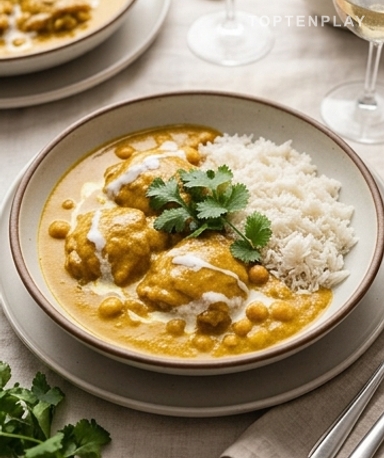
A golden, steaming coconut chicken curry served with basmati rice and a touch of fresh cilantro.

The sauce is a deep yellow, like turmeric mixed with warm honey. It glows. It coats the chicken pieces in a thick, glossy layer, somewhere between cream and soup. The aroma rising from the bowl blends the sweetness of coconut with the slightly camphorous zing of fresh ginger. It’s warm, comforting, and definitely didn’t spend the night in a jar of pre-made sauce.

Why you’ll love this recipe

Just three spices : Curry, turmeric, cumin. You already have them somewhere in the cupboard, behind that nutmeg you never use.
Truly 30 minutes : Not 30 minutes ‘if everything goes perfectly’. Thirty normal minutes, including the time spent looking for your grater.
Chicken won’t dry out : Thighs have intramuscular fat that melts during cooking. Even with two extra minutes on the heat, the meat remains tender. That’s the difference from chicken breast.
A generous sauce for the rice : It’s intentionally liquid. Not a sauce that disappears at the first spoonful — it floods the rice just the right way.

Ingredient Notes

Ingredients

Advertisement:

Everything you need for this curry: chicken, coconut cream, and three spices that make the difference.

  • Fresh ginger and garlic : These carry all the flavor, not the spices. One and a half tablespoons of each, grated — it sounds like a lot, and that’s the point. Without it, the sauce is flat. Use firm ginger without wrinkles. Forget the ginger paste tube.
  • Coconut cream (not coconut milk) : Cream is fattier, thicker, and the sauce reduces much faster. Ayam brand if you can find it — 100% coconut, naturally dense. Low-end versions are diluted with water and result in a bland, watery sauce.
  • Supermarket curry powder : No need for a specialty grocery store. Ordinary curry works great here because we pair it with turmeric and cumin. It’s the combination that creates depth, not the brand.
  • Boneless chicken thighs : No breasts. Thighs are forgiving of cooking errors, breasts are not. If you insist on using fillets, only add them in the last 5 minutes of simmering.
  • Canned chickpeas : Open, rinse, pour. They soak up the sauce like sponges and add volume without extra work. You can also replace them with potato cubes if you prefer something heartier.

Grate the ginger and garlic — don’t chop them

Start here. Grating rather than chopping isn’t perfectionism — it breaks the fibers, releases the juice, and the flavor spreads better through the sauce. Grated ginger gives off an almost lemony, slightly spicy smell, very different from the jarred stuff. Two minutes of work, but it really changes the final result. Put ginger and garlic in the same small bowl; you’ll add them together.

Grate the ginger and garlic — don't chop them
The secret to the flavor: freshly grated ginger and garlic, the aromatic base that changes everything.

Sweat the onion without browning it

In a large pan, heat the virgin coconut oil over medium heat. It melts slowly and gives off a faint nutty smell — not too strong, but there. Add the sliced onion. The goal here isn’t to brown it, but to soften it completely until it’s almost translucent. About five minutes. If it starts to brown on the edges, turn down the heat without hesitation.

Advertisement:

Toast the spices for 30 seconds dry — not a second more

Add the ginger and garlic to the pan, stir for a minute — the smell becomes more intense, warmer, almost earthy. Then add the curry, turmeric, and cumin directly to the pan, no liquid. These thirty seconds without water make all the difference: the spices’ essential oils activate with heat, and the sauce will gain a depth you won’t get otherwise. Stir constantly. The color turns a deep orange-yellow, almost brick-like. It might stick slightly to the bottom — that’s normal, that’s good.

Pour and simmer uncovered

Add the tomato paste first, mix well to incorporate it into the spices. Then the broth, coconut cream, chickpeas, and chicken pieces. Bring to a boil, then lower to medium-low heat. Without a lid, the sauce reduces and thickens naturally. You’ll hear a steady, light gurgling — not a violent boil, just a gentle breath. Thirteen minutes later, the chicken is cooked, the chickpeas have soaked up the sauce, and the consistency is exactly where it should be.

Pour and simmer uncovered
The sauce simmers and thickens slowly — this is where the flavors concentrate.

Tips & Tricks
  • Taste the sauce before serving and adjust the salt. Coconut cream varies a lot in salinity depending on the brand — some are very sweet, others less so. Don’t trust the recipe, trust your palate.
  • If the sauce is still too thin at the end of cooking, turn up the heat and let it reduce uncovered for two minutes while stirring. It thickens quickly once it starts.
  • This curry is even better the next day. The spices have had the night to really settle in. Always make a little more than necessary.
Close-up
The velvety sauce coats every piece of chicken, rich, glossy and irresistible.
FAQs
Advertisement:

Can I use chicken breasts instead of thighs?

Yes, but with one precaution: add the breasts only in the last 5 minutes of simmering. Unlike thighs, they dry out quickly and become rubbery if cooked too long. Thighs are truly better suited for this type of dish.

Can this curry be frozen?

Advertisement:

Yes, it freezes very well for up to 3 months. Let it cool completely before putting it in an airtight container. To defrost, transfer it directly from the container to a saucepan over low heat with a splash of broth if the sauce has thickened too much.

The sauce is too thin at the end, what should I do?

Turn the heat up to medium-high and let it reduce for 2 to 3 minutes uncovered, stirring regularly. Coconut sauce thickens quickly once it starts to concentrate. No need to add starch or flour.

Advertisement:

Can I replace coconut cream with coconut milk?

Yes, but the result will be different: the sauce will be thinner, less rich, and the coconut flavor less pronounced. You will also need to increase the reduction time. Coconut cream is highly recommended for this recipe — the difference is worth the extra cents.

Can I add vegetables to the dish?

Advertisement:

Absolutely. Add potato cubes or carrots with the chicken at the start of simmering, or fresh spinach or peas in the last 2 minutes. The sauce is intentionally generous to accommodate additions without drying out the dish.

Coconut Chicken Curry

Coconut Chicken Curry

Easy
Indian
Main Course
Prep Time
10 minutes
Cook Time
20 minutes
Total Time
30 minutes
Servings
4 servings

A fragrant chicken curry flavored with ginger and coconut cream, ready in 30 minutes with just 3 spices. Flavorful, comforting, and truly easy.

Advertisement:

Ingredients

  • 700g boneless chicken thighs, cut into 3-4 cm pieces
  • 400ml coconut cream (1 can, preferably 100% coconut)
  • 400g canned chickpeas, drained and rinsed
  • 250ml chicken broth
  • 1 large onion, finely sliced
  • 1.5 tbsp grated fresh ginger (about 20g)
  • 1.5 tbsp grated fresh garlic (about 4-5 cloves)
  • 2 tbsp curry powder
  • 1 tsp turmeric powder
  • 1 tsp cumin powder
  • 2 tbsp tomato paste
  • 2 tbsp virgin coconut oil (or other neutral oil)
  • 1 tsp salt, adjust at the end

Instructions

  1. 1Grate the ginger and garlic together in a small bowl. Cut the chicken into 3-4 cm pieces.
  2. 2Heat the coconut oil in a large pan over medium heat. Add the onion and sauté for 5 minutes until translucent.
  3. 3Add the grated ginger and garlic. Sauté for 1 minute, stirring constantly.
  4. 4Pour the curry, turmeric, and cumin directly into the pan. Stir for 30 seconds dry to activate the spices.
  5. 5Stir in the tomato paste and mix well to coat it with the spices.
  6. 6Add the chicken broth, coconut cream, chickpeas, and chicken pieces. Bring to a boil.
  7. 7Lower to medium-low heat and simmer for 13 minutes uncovered, until the chicken is cooked through and the sauce has thickened slightly.
  8. 8Taste, adjust salt, and serve with basmati rice.

Notes

• Storage: keeps for 3 days in the refrigerator in an airtight container. The curry is even better the next day as flavors develop over time.

• Freezing: freezes for up to 3 months. Defrost directly in a saucepan over low heat with a little broth if necessary.

• Vegetable variations: add potato cubes or carrots at the same time as the chicken, or fresh spinach in the last 2 minutes of cooking.

Advertisement:

Nutrition Facts (per serving, estimated)

645 kcalCalories 40gProtein 22gCarbs 44gFat

Advertisement:
Share it!

Thanks for your SHARES!

You might like this

Add a comment:

Latest posts

Build-Your-Own Japanese Bowls β€” Tsukurioki Meal Prep

Vegetable Salad and Carrot Tartare, Chef Style

Homemade Rosemary Tea

Cheesy Pizzettes with Mushrooms and Peppers

Tomato Carrot Lemon Juice

Creamy Cancoillotte Risotto with Crispy Smoked Sausage

Walking Taco Casserole

Homemade Hamburger Steaks

Homemade Oven-Baked Chicken Nuggets

Gua Bao with Marinated Chicken and Crunchy Vegetables

Loading...