Store-bought lasagna is an insult to this dish. What you can make in two hours at home has absolutely nothing in common with those rubbery slabs swimming in watery sauce. A real homemade lasagna is a time investment that pays off from the first bite.
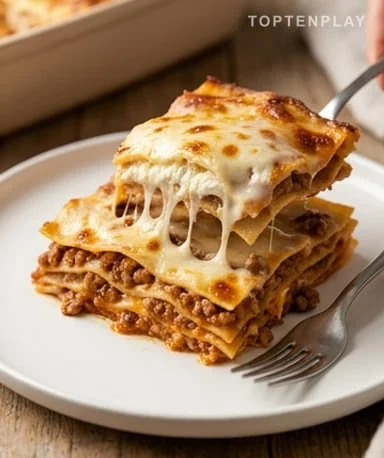
What comes out of the oven after forty-five minutes of baking is a golden mozzarella crust, slightly blistered in spots, still sizzling as you set the dish on the table. Beneath it, the layers remain well-defined: tender pasta, dense dark brown sauce fragrant with oregano, white creamy ricotta acting as mortar between the strata. The smell of concentrated tomato and melted cheese that fills the kitchen during baking is already a promise—and for once, the dish delivers.
Why you’ll love this recipe
Ingredient Notes

All the ingredients gathered: ricotta for creaminess, mozzarella for stretch, ground beef for the sauce, and lasagna noodles ready for assembly.
- Lasagna noodles : They form the backbone of the dish. Store-bought dry noodles work well, but they absorb more sauce than fresh ones—don’t skimp on the bolognese. If you use no-boil noodles, your sauce should be slightly thinner than usual to compensate for absorption during baking.
- Ground beef : Choose beef with 15–20% fat. Too lean, the meat dries out and lacks richness in the sauce; too fatty, the bolognese floats in oil. Hand-chopped beef from a good butcher gives a more rustic and interesting texture than overly fine industrial mince.
- Ricotta : It brings creaminess and mildness between the layers, in direct contrast with the tomato’s acidity. Beaten with an egg, it firms up slightly during baking and acts as a binder. If your ricotta is very watery, drain it in a sieve for thirty minutes before using—otherwise the layers will slide during assembly.
- Shredded mozzarella : Block mozzarella that you shred yourself melts infinitely better than pre-shredded industrial mozzarella, which contains anti-caking agents that slow melting. For the top crust, that’s the difference between a silky crust and a rubbery one.
- Tomato paste : Often underused, it’s what gives depth and brown color to the sauce. Sauté it for a minute directly in the meat before adding crushed tomatoes: it loses its raw bitterness, turns a dark brown, and transforms a basic sauce into something meaty and dense.
- Grated Parmesan : Reserved for the final layer, it brings a more golden and saltier crust than mozzarella alone. Its high salt content elevates the whole dish—so season the bolognese accordingly, and taste before adding salt.
The bolognese deserves time
Most failed lasagnas are due to a rushed sauce. Sauté the onion until translucent, almost lightly golden on the edges—not just two minutes on high heat—that’s the foundation. Garlic follows, just a minute, enough to release its aroma without burning. When you add the ground beef, don’t stir immediately: let it brown in places before breaking it up. This direct contact with the hot pan develops a slightly caramelized brown crust that gives depth to the sauce. The tomato paste deserves special attention: add it to the meat, stir, and let it cook dry for a minute—it changes from bright red to dark brown and loses its raw bitterness. Then come the can of crushed tomatoes, dried herbs, and patience. Twenty minutes of simmering on low heat transforms a watery, acidic sauce into something dense and concentrated, with that slight reduced tomato syrup that starts to stick to the pot’s sides.

Ricotta with egg: the step nobody really explains
Mixing ricotta with a beaten egg is not a decorative step. The egg acts as a coagulant: under oven heat, it slightly solidifies the ricotta which, without it, would liquefy between layers and make the assembly unstable, the slices impossible to serve cleanly. The desired texture in the bowl before assembly is a thick cream that holds its shape on a spoon but spreads without resistance—if it runs, your ricotta was too watery, drain it next time. Season this mixture with a pinch of salt and pepper: plain ricotta is very mild, and without seasoning, those white layers become bland amid the sauce and cheese.
Assembly: a logic, not a gamble
Starting with a thin layer of bolognese at the bottom of the dish is essential—it prevents the first noodles from sticking directly to the ceramic and burning underneath. The logic of assembly is simple and repeats: sauce, pasta, ricotta, sauce, mozzarella. What matters is not overloading each layer. A thin layer of ricotta and enough mozzarella to cover without excess allow heat to penetrate evenly. The final layer is sauce covering all exposed pasta to prevent it from drying during baking, then a generous layer of mozzarella and Parmesan on top. This top must be fully covered—dry areas brown too quickly and exposed pasta hardens and becomes brittle.
Two-stage baking: covered, then uncovered
Covering the dish with aluminum foil for the first twenty-five minutes is not optional. Without a lid, the top browns well before the center has had time to cook. The steam trapped under the foil cooks the lasagna from within and softens the noodles. When you remove the foil, the cheese is already melted but still pale. The next fifteen to twenty minutes uncovered define the result: the mozzarella becomes golden in spots, the Parmesan forms a slightly crispy crust, and the edges begin to sizzle in the dish with a caramelized cheese aroma. Don’t aim for uniformity—the irregularities, the darker spots, the puffed cheese bubbles are precisely what distinguish a homemade lasagna.
Resting: ten minutes that change everything
Taking the lasagna out of the oven and serving immediately is the main mistake. Straight out of the oven, the sauce is still liquid and bubbling between layers—if you cut now, everything collapses and runs onto the plate. Ten to fifteen minutes of resting allows the sauce to tighten and the ricotta to stabilize. The result: clean slices that hold their shape on the plate, with visible layers rather than a steaming heap that falls apart. This resting time is also when the aromas concentrate one last time. Sprinkle with fresh parsley just before serving—its herbaceous, slightly peppery note cuts nicely against the richness of melted cheese and reduced tomato.

Tips & Tricks
- Taste the bolognese before assembling the dish and adjust the salt: once the lasagna is assembled and baked, you cannot fix an undersalted sauce from the inside.
- If your pre-cooked noodles tend to stick together, rinse them with cold water and spread them on a lightly oiled kitchen towel—they will stay separate during assembly without tearing.
- Avoid exceeding four to five layers of pasta in a standard dish: beyond that, the center does not cook evenly and you get soft, undercooked middle layers while the top over-browns.
- To reheat leftovers, cover with aluminum foil and bake at 160°C for twenty minutes rather than microwaving: the heat diffuses gradually, the cheese melts properly, and the edges don’t dry out.

Can lasagna be made the day before?
Yes, and it’s even recommended. Assemble the dish completely, cover with plastic wrap and refrigerate until the next day. The layers consolidate overnight, resulting in cleaner slices when cutting. Expect about 10 minutes additional baking time if you put the dish straight from the fridge into the oven.
Do I have to pre-cook the lasagna noodles?
It depends on the type of noodles. Some are designed to go directly into the oven without pre-cooking—check the package. If you pre-cook them, take them out al dente: they will continue to cook in the dish. No-boil noodles absorb more sauce, so adjust by making your bolognese slightly thinner.
How do I prevent lasagna from releasing too much water during baking?
The problem almost always comes from a sauce that’s too thin or undrained ricotta. Let the bolognese simmer until it really thickens before assembly, and drain the ricotta in a sieve if it’s very wet. Also avoid overloading with mozzarella between the intermediate layers—reserve the generosity for the top.
Can lasagna be frozen?
Absolutely. Freeze it unbaked (assembled but not cooked) or fully baked, in individual portions or as a whole dish. To thaw, put it in the refrigerator overnight and reheat covered with aluminum foil at 160°C for 25–30 minutes. The texture remains very good, with the sauce tightening slightly upon reheating.
How do I get a nicely browned crust without burning the edges?
Cover the dish with foil for the first 25 minutes, then remove for the last 15–20. If the edges brown too quickly, fold a bit of foil over the sides while leaving the center uncovered. The top should reach a golden color with a few darker spots—that’s a sign the cheese has caramelized well.
Can ricotta be substituted?
Yes, with homemade béchamel for a richer, more classic French result. You can also use well-drained full-fat cottage cheese, which yields a lighter but similar result. Avoid spreadable cheeses like St-Môret: too fatty and salty, they unbalance the dish.
Classic Homemade Italian Lasagna
Italian
Main course
Generous lasagna with well-defined layers: simmered beef bolognese, creamy egg-ricotta, and a golden mozzarella-Parmesan crust. A comfort food dish to prepare ahead, even better reheated the next day.
Ingredients
- 12 lasagna noodles
- 2 tbsp olive oil
- 1 onion, finely chopped
- 2 garlic cloves, minced
- 500g ground beef (15-20% fat)
- 800g canned crushed tomatoes
- 170g tomato paste
- 1 tsp dried basil
- 1 tsp dried oregano
- ½ tsp red pepper flakes (optional)
- salt and black pepper
- 425g ricotta
- 1 egg, beaten
- 300g shredded mozzarella
- 50g grated Parmesan
- fresh parsley for serving
Instructions
- 1Preheat the oven to 190°C. Cook the lasagna noodles in a large pot of salted boiling water according to package directions (al dente), then drain and lay them out on a lightly oiled kitchen towel to prevent sticking.
- 2In a large skillet over medium heat, heat the olive oil. Sauté the chopped onion for 5 to 7 minutes until translucent and slightly golden on the edges. Add the garlic and cook for 1 minute more.
- 3Add the ground beef. Let it brown without stirring for 2 minutes, then break it up with a spoon. Once the meat is browned, stir in the tomato paste directly into the skillet and cook for 1 minute, stirring—it should turn from bright red to dark brown.
- 4Pour in the crushed tomatoes, add the basil, oregano, red pepper flakes, salt, and pepper. Stir and let simmer uncovered for 20 minutes until the sauce thickens noticeably.
- 5In a bowl, mix the ricotta with the beaten egg, a pinch of salt and pepper until smooth and thick.
- 6In a baking dish (about 30x20cm), spread a thin layer of bolognese on the bottom. Arrange a layer of lasagna noodles, then half of the ricotta, half of the sauce, and half of the mozzarella. Repeat once. Finish with a layer of sauce covering all the pasta, then top with the remaining mozzarella and all the Parmesan.
- 7Cover tightly with aluminum foil and bake for 25 minutes. Remove the foil and continue baking for 15 to 20 minutes, until the top is golden brown and the edges are slightly sizzling.
- 8Remove from the oven and let rest for 10 to 15 minutes before cutting. Sprinkle with fresh parsley and serve directly from the dish.
Notes
• To make ahead: assemble the dish completely, cover with plastic wrap and refrigerate for up to 24 hours. Add 10 minutes to the covered baking time if baking directly from the refrigerator.
• Leftovers keep for 3 days in the refrigerator and freeze well. Reheat covered with aluminum foil at 160°C for 20 to 25 minutes.
• For a meatless version: replace the beef with a mixture of grilled zucchini, eggplant, and mushrooms. The structure and baking times remain the same.
• If your ricotta is watery, drain it in a sieve lined with a towel for 30 minutes before using to avoid overly wet layers.
Nutrition Facts (per serving, estimated)
| 580 kcalCalories | 35gProtein | 42gCarbs | 28gFat |