Everyone imagines that Sablés Nantais are complicated. A pastry chef thing, with temperatures precise to the degree and professional equipment. The reality? It’s one of the simplest cookies to make, provided you understand two or three things that change everything.
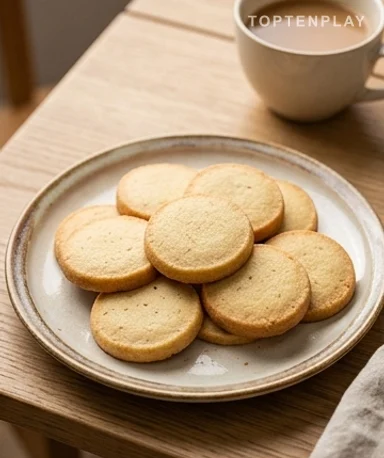
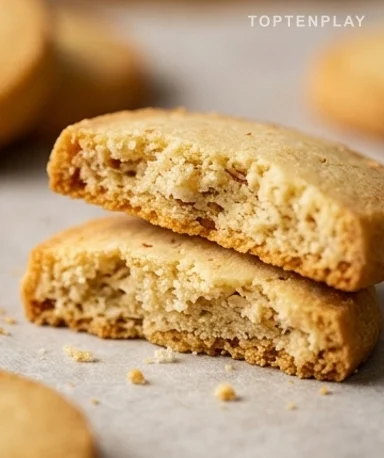
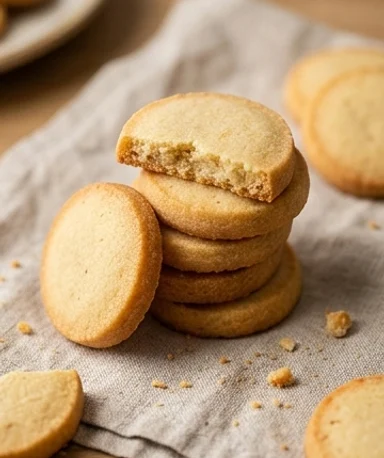
Imagine a light caramel-colored biscuit, slightly cracked on top by the fork’s crosshatch pattern. You pick it up with your fingers — it’s firm but not hard. You bite into it, and there, it breaks softly, almost in silence. Then it melts. Truly melts, with that slightly salted butter and almond taste that settles and stays. The smell coming out of the oven, something between a Breton shortbread and frangipane, is something you’ll keep in mind for a while.
Why you’ll love this recipe
Ingredient Notes
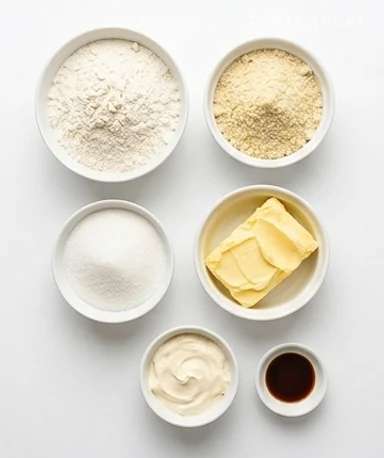
Everything needed to make these cookies: semi-salted butter, almonds, flour, and a touch of cream.
- Semi-salted butter : This is what does all the aromatic work. Get good quality butter, and above all, take it out to room temperature at least two hours before. Butter that is still cold won’t mix properly with the sugar — you’ll get greasy lumps instead of a smooth cream. If you only have unsalted butter, add a small pinch of fleur de sel to the dough.
- Almond flour : It’s directly responsible for that melting texture. Without it, you have an ordinary shortbread. Use it fresh — almond flour that is six months old will have lost its taste and will bring a slight bitterness. If yours is a bit coarse, pulse it for a few seconds in a blender.
- Thick crème fraîche : This is Felder’s little trick. Only ten grams, but it changes the texture: the sablés stay less dry and softer in the center. Use full-fat cream, not light — you can taste the difference.
- Type 55 flour : Type 55 is slightly lower in gluten than Type 45, making the dough easier to work with without it becoming elastic. You can use Type 45, but be even more careful not to over-knead.
Why creaming the butter isn’t a step you can rush
It all starts with the butter and sugar. You mix, you cream, and most people stop too early. The mixture must become truly homogeneous, almost pale, with a texture close to light whipped cream — not butter with sugar grains in it. This is where the final lightness of the cookie is determined. Then we add the almond flour, crème fraîche, and vanilla, mixing gently. Finally, the flour and baking powder come in together, and we stop as soon as the dough is homogeneous. No question of working it more — over-kneaded dough means a hard cookie.
The part everyone misses: chilling the dough
The resulting dough is soft, a bit sticky. Many people want to go straight to the cookie cutter, and that’s where it goes wrong. Without at least an hour in the refrigerator wrapped in plastic wrap, the dough won’t hold during cutting — it spreads, the edges are fuzzy, and the cookies puff up irregularly while baking. This rest time is when the fridge sets the butter and stabilizes the structure. One hour minimum, but a whole night is even better — the dough is easier to work with and the flavors are more developed.
The cookie cutter, the fork, and the egg wash
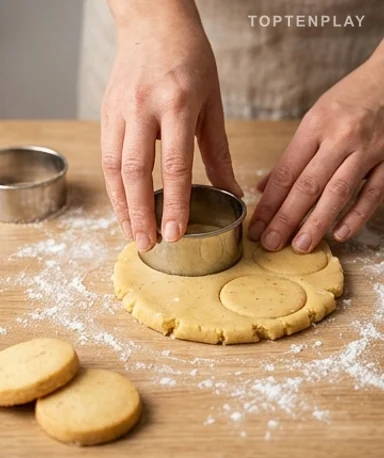
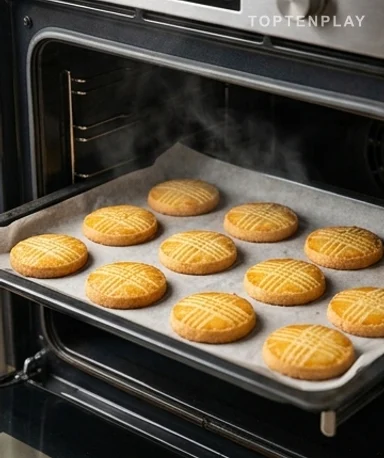
Take the dough out of the fridge, roll it out to 5-6 mm thick on a lightly floured surface. No thinner — at 3 mm, the sablés dry out too fast and lose that melting quality. Cut out your rounds with a 5-6 cm cutter. Place them on a baking sheet covered with parchment paper. Now the wash: mix the egg yolk with a spoonful of water, brush each sablé, and trace a grid with the tines of a fork. This gesture has a function — it helps the dough cook evenly on the surface — but it also gives that slightly cracked, golden texture that is the visual signature of Sablés Nantais.
Baking: ten minutes that count double
Oven at 170°C, fan-assisted if you have one. The sablés bake in 12 to 15 minutes depending on your oven. They should come out a beautiful light caramel — not beige, not brown. The bottom should be slightly darker than the top, which is normal. Don’t yield to the temptation to take them out too early because they still seem soft: sablés harden as they cool. Place them on a rack and resist for ten minutes. When you bite into them while still warm, you’ll understand why they have this reputation.
Tips & Tricks
- Don’t replace semi-salted butter with unsalted butter + fine salt — the salt distribution in semi-salted butter is finer and more regular, giving a more homogeneous result in the mouth.
- If the dough sticks to the rolling pin when rolling, roll it directly between two sheets of parchment paper — no need for extra flour which slightly changes the texture.
- Dough scraps can be gathered and re-rolled once. Not twice — re-worked dough starts to develop too much gluten and the cookies become less melting.
- For an even more consistent result, slide the tray into the freezer for 10 minutes just before baking — the sablés keep their shape better during cooking.
Can I replace semi-salted butter with unsalted butter?
Yes, but it’s not the same. Semi-salted butter brings a slight salinity that balances the sweetness of the sugar and enhances the almond flavor. If you use unsalted butter, add a good pinch of fleur de sel to the dough — about 2g — to compensate.
How long do Sablés Nantais keep?
In an airtight metal tin at room temperature, they keep easily for 7 to 10 days without losing their texture. Avoid plastic containers which soften the cookies. Do not refrigerate them — the cold dries them out.
Can I prepare the dough in advance and freeze it?
Absolutely. The dough freezes very well in a ball, wrapped in plastic wrap, for up to 2 months. Thaw it overnight in the refrigerator before rolling. You can also freeze the already baked cookies — let them come back to room temperature for 30 minutes before serving.
My sablés spread during baking, why?
Two common reasons: the dough didn’t rest long enough in the cold, or the butter was too soft at the time of rolling. Make sure the dough is very firm when coming out of the fridge. If in doubt, slide the prepared tray into the freezer for 10 minutes before baking.
I don’t have almond flour. What can I replace it with?
You can blend whole almonds (with or without skin) until you get a fine powder — the result is often tastier. Hazelnut powder also works and gives a different but very good aromatic profile. Avoid: rice flour or cornstarch, which do not give the same melting texture at all.
Can I flavor the sablés with something other than vanilla?
Yes, and it’s even encouraged. The zest of an untreated lemon in the dough brings a very pleasant freshness. A teaspoon of cinnamon or cardamom works well too. Some add a few drops of orange blossom water for a more Mediterranean version.
Christophe Felder’s Sablés Nantais
French
Biscuits & Pastry
Authentic Sablés Nantais: crumbly, melting, defined by semi-salted butter and almond flour. A professional pastry recipe accessible to everyone.
Ingredients
- 150g Type 55 flour (or Type 45)
- 2,5g baking powder (½ teaspoon)
- 125g powdered sugar
- 125g almond flour
- 125g soft semi-salted butter (taken out 2h before)
- 10g full-fat thick crème fraîche (2 teaspoons)
- 1 teaspoon vanilla powder or liquid extract
- 1 egg yolk (for glazing)
- 1 tablespoon water (for glazing)
Instructions
- 1In a bowl, work the soft butter and sugar with a spatula until creamy and homogeneous.
- 2Incorporate the almond flour, crème fraîche, and vanilla. Mix.
- 3Add the flour and baking powder. Mix gently just until combined — do not overwork.
- 4Form a ball, wrap in plastic wrap, and refrigerate for at least 1 hour (ideally overnight).
- 5Preheat the oven to 170°C fan. Roll out the cold dough to 5-6 mm thick on a floured surface.
- 6Cut out circles with a cookie cutter (5-6 cm diameter) and place them on a tray covered with parchment paper.
- 7Mix the egg yolk and water, brush each cookie, and trace a grid pattern with the tines of a fork.
- 8Bake for 12 to 15 minutes until light caramel colored. Let cool for 10 minutes on a rack before tasting.
Notes
• Storage: up to 10 days in an airtight metal tin at room temperature.
• The dough can be prepared the day before and left overnight in the fridge — the texture will only be better.
• Dough scraps can be gathered and re-rolled once only to avoid developing too much gluten.
Nutrition Facts (per serving, estimated)
| 105 kcalCalories | 2gProtein | 10gCarbs | 6gFat |