📌 Chocolate mousse: avocado replaces cream and delivers an even smoother texture
Posted 15 February 2026 by: Admin
Chocolate Preparation: The Foundation Of The Recipe
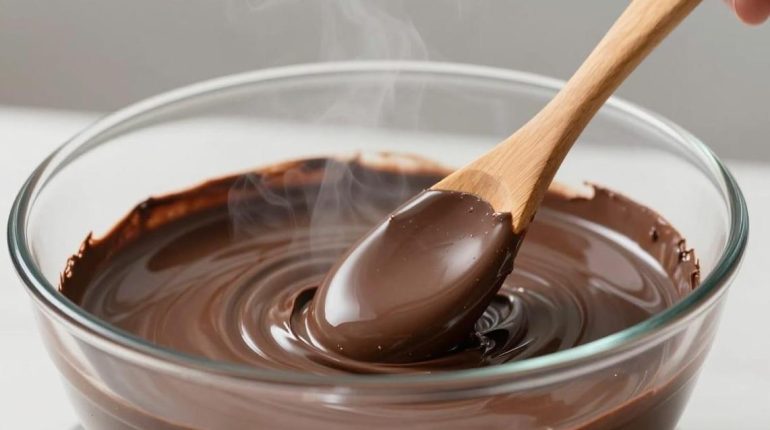
The success of this alternative mousse relies on a first technical step: melting the chocolate in a bain-marie. This ancestral method consists of placing the chocolate in a heat-resistant bowl over a pan of simmering water, without direct contact between the bottom of the container and the water. This precaution avoids sudden overheating which would burn the chocolate and compromise its texture.
Constant stirring during melting guarantees a homogeneous transformation. The chocolate gradually passes from a solid state to a smooth and shiny consistency, a signal that the temperature remains ideal. This delicate phase determines the final quality of the mousse: poorly melted chocolate generates lumps that are impossible to fix during blending.
Mastering the bain-marie is the bedrock of this fusion recipe. Unlike the microwave which heats unevenly, this gentle technique preserves the properties of the chocolate while facilitating its integration with the avocado. Once the perfectly smooth texture is obtained, the melted chocolate becomes the creamy base that will welcome the other ingredients to form this revolutionary mousse.
Innovative Assembly: When The Blender Transforms The Ingredients
Once the melted chocolate is mastered, the next step reveals the disconcerting simplicity of this fusion recipe. The integral blending of the ingredients dissolves all complexity: melted chocolate, avocado flesh, and other components come together in the food processor bowl or under the blades of the immersion blender.
The transformation takes place in a few minutes. The chocolate shards disappear into the creamy mass of the avocado, creating a homogeneous emulsion that erases all traces of the green fruit. The success criterion remains clear: a perfectly smooth texture, without the slightest lump or fibrous residue. This homogeneity is the secret of a smooth mousse that rivals traditional versions made with eggs and cream.
The avocado brings its natural creaminess without imposing its flavor, while the chocolate dominates the taste profile. This counter-intuitive alliance works precisely because prolonged blending fuses the plant fats into an airy and silky texture. No complex technique is involved: the blender performs the emulsion work alone, which usually requires a whisk and skill. The mousse takes shape before your eyes, ready to be poured into ramekins for its cold maturation phase.
Resting Time: Patience And Refined Presentation
The resulting mousse now moves to its final containers. The distribution into 4 to 6 ramekins depends on the desired portion size, but the choice of container transcends simple utility. Martini glasses, with their slender silhouette and flared bowl, transform this healthy dessert into a creation worthy of the finest tables.
Once covered, the ramekins begin their maturation phase in the refrigerator. The minimum time of one hour is not a mere recommendation: this period allows the mousse to set into its final texture, firming up slightly while retaining its signature smoothness. The cold stabilizes the chocolate-avocado emulsion and fully develops the aromas, definitively erasing any plant trace in favor of a cocoa intensity.
This patience contrasts with the immediacy of the previous blending. Refrigeration completes what the technique initiated, freezing the creamy structure in its optimal form. During this suspended hour, the mousse gains density without losing its airy character, setting the stage for the final touch that will seal its professional appearance.
The Final Touch: The Art Of Cocoa Dusting
Once the resting hour has passed, the mousse awaits its visual signature. The light dusting of cocoa is not just a decorative gesture: it provides a chromatic contrast that enhances the deep color of the mousse while adding a subtle note of bitterness that balances the sweetness of the whole.
The tool makes all the difference. A small sieve, held a few centimeters above each glass, allows the cocoa to be dispersed in a fine and regular rain. This professional gesture avoids unsightly clumps and guarantees a homogeneous, almost vaporous coverage. Controlling the quantity remains essential: too much powder would hide the underlying texture, too little would go unnoticed.
This step, although executed in a few seconds, radically transforms the perception of the dessert. The matte cocoa veil on the shiny surface of the mousse creates a play of visual textures that announces the upcoming taste complexity. At this precise moment, the avocado mousse completes its metamorphosis: what began as a nutritional experiment now presents itself as an accomplished pastry creation, where technique and aesthetics converge on the plate.