📌 Chocolate-coconut fondant: this gluten-free and lactose-free recipe reveals the secret of a perfectly melting texture
Posted 26 December 2025 by: Admin
The Allergen-Free Dessert Revolutionizing Home Baking
Does dietary exclusion mean giving up pleasure? This chocolate-coconut fondant proves the opposite with disconcerting evidence. Totally free of gluten and lactose, it competes directly with classic versions thanks to a precise alchemy between baking chocolate and coconut cream.
The characteristic melting texture remains intact despite the absence of traditional ingredients. The chocolate unfolds its aromatic richness while the coconut brings a complementary sweetness, creating a sophisticated taste balance. No compromise, no approximation: this recipe proves that dietary constraints can become true creative catalysts.
Accessibility is its second major asset. The ingredients are easy to find, and the techniques remain simple, even for baking novices. Coconut cream naturally replaces dairy products while maintaining the desired creaminess, while Dr Schär gluten-free flour combined with cornstarch reconstitutes the perfect structure.
This approach breaks the preconceived ideas that confine allergen-free pastry to the shelf of disappointing alternatives. The fondant does not hide its exclusions, it transforms them into an opportunity for gourmet reinvention. Concrete proof that restriction never means creative limitation, provided one understands precisely the role of each component in the final equation.
The Ingredient List Decoded: Each Component Has Its Role
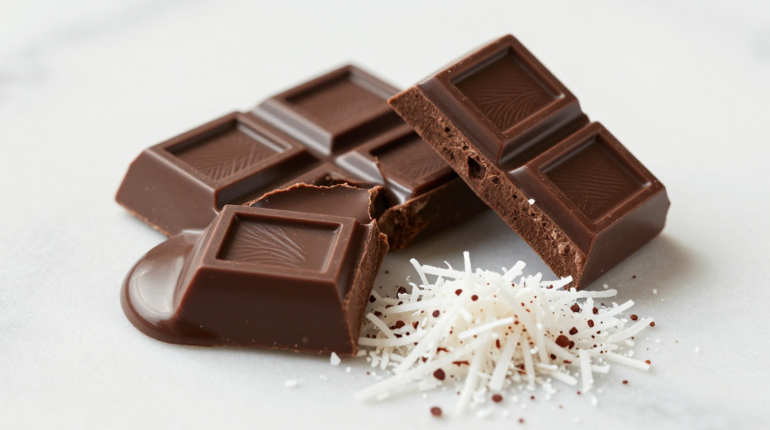
Understanding the precise function of each ingredient reveals the structural logic of this fondant. Coconut cream (20 cl) completely replaces dairy products by providing the necessary creaminess without compromising texture. Baking chocolate (200 g) constitutes the aromatic base, guaranteeing that characteristic taste intensity of successful fondants.
The duo of Dr Schär gluten-free flour (60 g) and cornstarch (50 g) reconstitutes the structure that gluten traditionally ensures. This association compensates for the lack of natural elasticity: the flour provides the hold, the starch preserves the softness. The balance between these two elements directly conditions the success of the desired melting texture.
Brown sugar (60 g) sweetens while bringing a subtle caramelized note, while the two eggs ensure the binding and emulsion between the fat and aqueous phases. The baking powder (1 tsp) delicately aerates the batter without creating an overly honeycomb structure. Each proportion has been calculated to faithfully reproduce the taste experience of the classic fondant.
Grated coconut remains the only variable adjustable according to preferences. This voluntary flexibility allows for intensifying or softening the tropical dimension of the dessert. The substitutions are not a matter of approximation, but of a methodical reconstruction of the physico-chemical properties of the original fondant. The assembly technique will then determine the transformation of these components into a finished dessert.
The Two-Step Technique For A Professional Result
The methodical assembly of the previously decoded components begins with a fundamental step: melting the chocolate in a bain-marie. This technique guarantees a controlled temperature, avoiding overheating that would break the emulsion. The chocolate must reach a smooth and shiny texture, a sign that the cocoa butter crystals have dispersed uniformly throughout the mass.
Once the chocolate is melted, the preparation of the batter is done by progressive incorporation. The eggs beaten with brown sugar create an initial emulsion into which the coconut cream is integrated, providing creaminess. The cooled chocolate then joins this liquid base before adding the sifted dry ingredients: gluten-free flour, starch, and baking powder.
The mixing is done delicately to preserve aeration without developing a non-existent gluten network. The grated coconut is incorporated at the end of the process according to the desired dosage. This chronology is not arbitrary: it respects the logic of emulsion between fat and aqueous phases, a sine qua non for the fondant.
The method remains accessible even to novices in baking, provided the order of operations is scrupulously respected. The bain-marie is the crucial step conditioning final success: correctly melted chocolate preserves its shine and its ability to emulsify with the other components. This technical rigor transforms ingredients constrained by allergens into a sophisticated dessert rivaling traditional versions.
Customization And Adaptability: Your Tailor-Made Fondant
Beyond the technical rigor imposed by the method, this recipe reveals an unsuspected flexibility that transforms it into a personal canvas. The amount of grated coconut is not a fixed measure, but an adjustable variable according to taste preferences: from a few grams for a subtle touch to several spoons for an assertive tropical profile.
The choice of gluten-free ingredients also offers creative leeway. While Dr Schär flour is the cited reference, any certified gluten-free flour will produce convincing results, whether it be rice, buckwheat, or chickpea-based blends. This interchangeability extends to the starch: corn, potato, or arrowroot starch fulfill the same structural function without altering the melting texture.
This adaptability responds to multiple dietary constraints without requiring a complete reformulation. A corn-intolerant person will simply substitute the starch, while an intense chocolate lover will increase the cocoa proportion. The fondant bends to individual requirements while maintaining its basic architecture.
The recipe works as an open system where fundamental proportions remain stable while secondary variables are adjusted. This flexibility explains why this dessert transcends the status of a simple alternative for allergy sufferers: it becomes a personalized creation where everyone adds their preferences without compromising the general balance. The absence of gluten and lactose ultimately imposes no creative restriction, but on the contrary opens up a field of controlled experimentation.