📌 Chocolate cake: liquid cream replaces butter for an even moister texture
Posted 20 March 2026 by: Admin
The Reimagined Chocolate Cake: When Indulgence Meets Lightness
Pastry is undergoing a silent revolution. Faced with new consumer expectations, traditional recipes are reinventing themselves without giving up the essential: pleasure. The moist butter-free chocolate cake perfectly embodies this trend, proving that lightness and indulgence are no longer opposites.
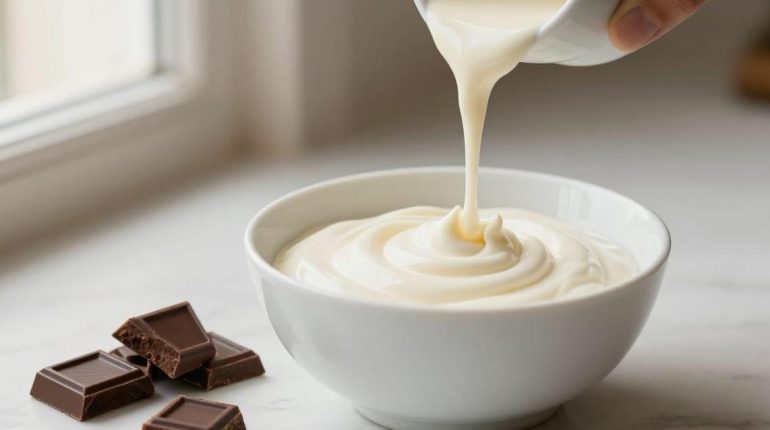
The innovation lies in a simple gesture: replacing butter with liquid cream. This technical choice disrupts the classic equation. The cream provides the desired moisture while offering a lighter feel in the mouth, a melting texture, and easier digestion. The result defies expectations: an intensely chocolatey cake, moist at the core, with a tender crumb and a slightly crispy crust.
This alternative is not a compromise, but a real improvement. Contrary to popular belief, removing butter does not diminish taste intensity. Dark chocolate retains all its richness, eggs structure the preparation, and flour stabilizes the whole. The balance of flavors remains intact, if not strengthened.
This recipe is part of a democratization of light pastries accessible to everyone. Gone are the days when “light” rhymed with “bland.” Quick to prepare and requiring few ingredients, this cake meets the constraints of daily life while preserving the authenticity of a comforting dessert. A modern response to chocolate cravings, without unnecessary guilt.
Behind the Scenes of a Minimalist Recipe: 5 Ingredients for a Maximal Result
This claimed simplicity finds its most obvious expression in the composition. Five ingredients are enough: 200g of dark baking chocolate, 20cl of full-fat liquid cream, 3 eggs, 80g of flour, and 70g of sugar. No endless lists, no hard-to-find ingredients. Just the essentials, precisely measured for 6 to 8 servings.
Each element plays a decisive technical role. Liquid cream replaces the traditional fat and guarantees the characteristic moisture. Dark chocolate ensures the aromatic intensity without which the cake would lose its identity. Eggs provide structure and lightness thanks to their emulsifying power. Flour stabilizes the whole, while sugar balances the bitterness of the cocoa.
Time efficiency is as impressive as the sobriety of the recipe. Fifteen minutes of preparation, thirty minutes of baking: only 45 minutes separate the craving from the pleasure. This speed democratizes home-making, even for busy schedules. An improvised dessert becomes possible even on a weekday evening.
On the nutrition side, each portion contains between 250 and 320 kcal, depending on the cut size. Reasonable values for a chocolate dessert, confirming that removing butter effectively lightens the final result. The precise balance between chocolate, cream, and eggs is the key to this success. Changing these proportions would compromise the desired melting texture. Simplicity hides an indispensable rigor.
Manufacturing Secrets for a Professional Result
This apparent ease conceals precise technical gestures. Success relies first on the ganache: chocolate melted in a bain-marie or in short intervals in the microwave, then heated cream – without boiling – poured gradually over the chocolate. The mixture produces a smooth and shiny texture, the essential base for the final moisture.
Three golden rules condition the result. First, choose a quality chocolate with between 50 and 70% cocoa: below that, the intensity weakens; beyond that, bitterness dominates. Second, master the baking by keeping the center slightly moist, a sign of a successful melting heart. Third, systematically sift the flour to avoid lumps and heaviness.
Professionals gladly share their intensification tips. A pinch of salt reveals chocolate aromas by contrast. A spoonful of liquid coffee deepens the aromatic palette without betraying its presence. Vanilla or orange zest add a subtle olfactory dimension. These infinitesimal touches transform a good cake into a memorable creation.
The cooling time before unmolding conditions the final hold. This often-neglected step allows the cake to firm up while preserving its interior moisture. Patience becomes a full-fledged ingredient here. The balance between chocolate, cream, and eggs remains essential: any modification disrupts the sensory architecture. The apparent simplicity hides a professional rigor accessible to all.
A Chameleon Dessert: Infinite Variations and Personalizations
This structural plasticity opens up remarkable adaptation possibilities. The molten heart version simply requires reducing the baking time: the center remains liquid, creating a spectacular thermal and textural contrast. Adding hazelnut powder generates additional richness, amplifying the indulgence without weighing down the structure.
Dietary constraints find concrete answers here. The gluten-free version substitutes flour with cornstarch or almond powder, preserving the characteristic moisture. For a sugar-reduced variant, the decrease in this component is accompanied by a milder chocolate, maintaining the overall taste balance.
The accompaniment transforms the sensory experience. A custard (crème anglaise) brings a milky creaminess, vanilla ice cream creates a revealing thermal shock, red fruits introduce a welcome acidity, and chocolate coulis intensifies the cocoa dimension. Each association redefines the dessert without changing its base.
Strategic storage extends availability: two days at room temperature is enough for immediate use, four days in the refrigerator for weekly planning, and freezing allows for a permanent reserve. This versatility of use – snack, formal dessert, birthday, spontaneous craving – explains why this recipe quickly becomes a staple.
Simple, effective, and deeply satisfying, it embodies the democratization of pastry excellence. Total flexibility guarantees adaptation to every palate, every diet, every occasion. The cake transcends its recipe to become a repertoire of gourmet possibilities.