📌 Chimichurri Steak Bites
Posted 4 April 2026 by: Admin
Cubed steak is objectively better than a whole steak. Every piece develops its own crust, its own caramelized base, and the chimichurri sauce clings everywhere instead of sliding off a single surface. It’s a simple technique that makes every bite better than the last.
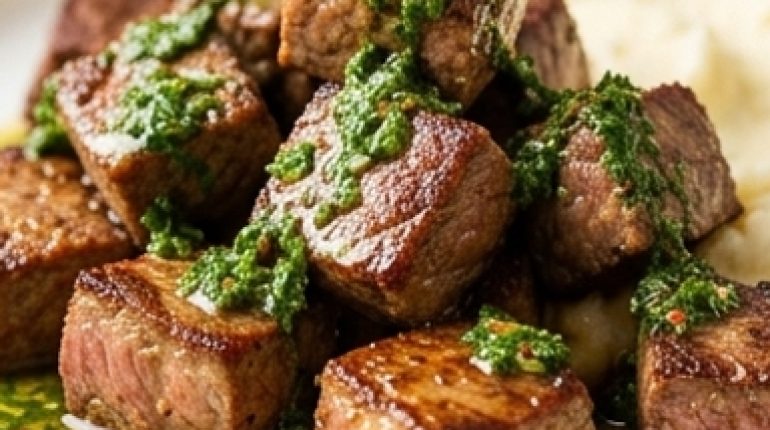
Imagine ribeye cubes sitting on a thick, creamy mash. The green sauce flows slowly between the pieces — almost fluorescent, a green reminiscent of wet parsley leaves just after the rain. The crust on each cube is a deep dark caramel, almost chocolate-colored. As you bring the plate closer, raw garlic hits first, then the smoky undertones of meat seared at high temperature. Under the fork, the initial resistance gives way to a pink, supple interior, still warm at the core.
Why you’ll love this recipe
Ingredient Notes
Ribeye, fresh parsley, garlic, red wine vinegar, Thai chili: everything you need for a chimichurri that really pops.
- Ribeye (entrecôte) : The right choice here because its intramuscular fat melts during searing and keeps the cubes juicy. Avoid tenderloin: too lean, it dries out under intense heat. A striploin works if that’s what you have — slightly less melt-in-the-mouth but very decent.
- Flat-leaf parsley : Curly parsley has no place in this recipe. Flat-leaf parsley has more flavor, a suppler texture, and withstands chopping with a knife without turning into mush. Get it as fresh as possible — limp stems make for a dull sauce.
- Red wine vinegar : This is what gives chimichurri its characteristic bite. It tempers the heaviness of a pure oil sauce and cuts through the fat of the meat. Apple cider vinegar can substitute if needed — the result will be slightly sweeter and fruitier.
- Thai chili (Bird’s eye) : More direct and fresher than dried red pepper flakes. One or two are enough depending on your tolerance. If you can’t find any, a small fresh red chili works perfectly — remove the seeds to stay reasonable.
- Fresh garlic : Chopped with a knife, not a garlic press. A press crushes the cells differently and releases a bitterness that becomes aggressive after a few minutes in the sauce. Two to three cloves depending on size, finely minced.
Chimichurri first
Start with the sauce, not the meat. Chimichurri needs to rest for at least twenty minutes so the flavors can meld — raw garlic is aggressive right off the knife, the vinegar too acidic, the dried oregano still dusty. Chop the parsley with a knife, take your time. A few passes on a clean board without pressing too hard: you hear the knife rhythmic strike on the wood, the leaves piling up in bright green mounds. Mix everything in a bowl — parsley, garlic, oregano, vinegar, olive oil, salt, chili — and set it aside. It does its work while you handle the rest.
Mash in the meantime
Potatoes in well-salted cold water, high heat. By the time they are tender under the point of a knife, about twenty minutes, the sauce will have rested and the meat will be ready. Mash them while still hot with cream cheese and a knob of butter — the steam rising when you start mashing smells like brown butter. The texture we’re looking for: dense, creamy, not liquid. It should hold the weight of the meat cubes without vanishing on the plate.
Dry and seasoned meat
Dry the ribeye cubes with paper towels. This is the detail most people skip, and it’s precisely what makes the difference between a caramelized crust and meat steaming in its own liquid. Season generously: salt, black pepper, paprika, garlic powder. Distribute well on all sides. The meat should be at room temperature — take it out twenty minutes before cooking, not cold from the fridge.
The sear: fast and loud
Heat a cast iron or a heavy pan on maximum heat. Truly maximum. When a drop of water disappears in less than a second, you’re good. Pour in the oil, wait ten seconds, then add the cubes in a single layer without crowding them. The sound is immediate: a loud, sharp crackling, almost violent, that fills the kitchen at once. Don’t touch for sixty to ninety seconds — let the crust form on its own. Flip once, same duration. That’s it. Off the heat, the cubes finish cooking while you plate up.
Tips & Tricks
- Don’t overcrowd the pan. If the cubes touch, they steam instead of searing — the result is gray and soft, not what we’re after. Work in two batches if necessary: you lose two minutes, you gain a real crust.
- Taste the chimichurri just before serving and adjust the salt. The acidity of the vinegar mellows after resting; sometimes the sauce needs an extra drizzle or another pinch of salt at the last moment.
- Prepare the mash first, lid on, and handle the meat last. The mash stays warm easily for five to ten minutes. The meat, however, shouldn’t wait — it serves immediately, still sizzling.
Can I replace the ribeye with another cut of beef?
Yes. Striploin works very well and is often cheaper. Flank or hanger steak are also good choices for a quick sear. Avoid tenderloin: it’s too lean, dries out at high heat, and loses its appeal in cube form.
How do I know if the pan is hot enough before adding the meat?
Flick a drop of water into the hot pan: it should disappear in less than a second. If it slides around and takes time to evaporate, the pan isn’t at temperature yet. Cast iron usually takes 2 to 3 minutes to reach heat on maximum flame.
Can I make the chimichurri in advance?
Yes, and it’s actually recommended. Chimichurri keeps for up to 3 days in the refrigerator in an airtight jar. The olive oil will solidify in the cold — take it out 30 minutes before serving and stir well. The taste is often better the next day.
The meat is still pink inside after 90 seconds per side, is that normal?
Completely normal, and that’s exactly what we want. A ribeye cube seared for 60 to 90 seconds per side will be medium-rare at the core with a caramelized crust outside. If you prefer medium, add 30 seconds per side — no more, or the cubes will dry out.
Can I serve the steak bites without the mash?
Absolutely. These bites work great with basmati rice, grilled pita bread, or simply on their own as an appetizer with toothpicks. The mash is the ideal accompaniment for a full meal, but the recipe doesn’t depend on it.
Chimichurri Steak Bites
Argentinian
Main Course
Ribeye cubes seared over high heat with a caramelized crust, drizzled with a fresh and herby chimichurri sauce, served over creamy cream cheese mash.
Ingredients
- 650g ribeye (entrecôte), cut into 2-3 cm cubes
- 1 tsp paprika
- 1 tsp garlic powder
- 2 tbsp olive oil (for searing)
- Salt and black pepper to taste
- 30g fresh flat-leaf parsley (about 1 bunch), hand-chopped
- 3 garlic cloves, finely minced
- 1 tsp dried oregano
- 45ml red wine vinegar (3 tbsp)
- 80ml extra virgin olive oil
- 1 to 2 Thai chilies, finely sliced
- 800g starchy potatoes (like Bintje/Russet), peeled and chopped
- 100g cream cheese (Philadelphia type)
- 30g butter
Instructions
- 1Prepare the chimichurri: in a bowl, mix the chopped parsley, minced garlic, oregano, vinegar, olive oil, chili, salt, and pepper. Let rest for 20 minutes at room temperature.
- 2Place the potato pieces in a large pot of well-salted cold water and bring to a boil. Cook for 20 minutes until tender under the point of a knife.
- 3Drain the potatoes and mash while still hot with the cream cheese and butter. Salt, mix well, and cover to keep warm.
- 4Pat the ribeye cubes dry with paper towels. Toss with paprika, garlic powder, salt, and black pepper.
- 5Heat the oil in a cast iron pan over maximum heat. Sear the cubes in a single layer without crowding, 60 to 90 seconds per side without touching between flips.
- 6Spread the mash onto plates, top with the steak bites, and drizzle generously with chimichurri. Serve immediately.
Notes
• Chimichurri keeps for 3 days in the fridge in a closed jar. Oil solidifies when cold: take out 30 minutes before serving and mix well before use.
• For medium-rare, 60 seconds per side is enough. For medium, count 90 seconds. Beyond that, the cubes begin to dry out.
• If the pan isn’t large enough, sear the meat in two batches rather than overcrowding — cubes that touch will steam instead of caramelizing.
Nutrition Facts (per serving, estimated)
| 560 kcalCalories | 34gProtein | 28gCarbs | 34gFat |