
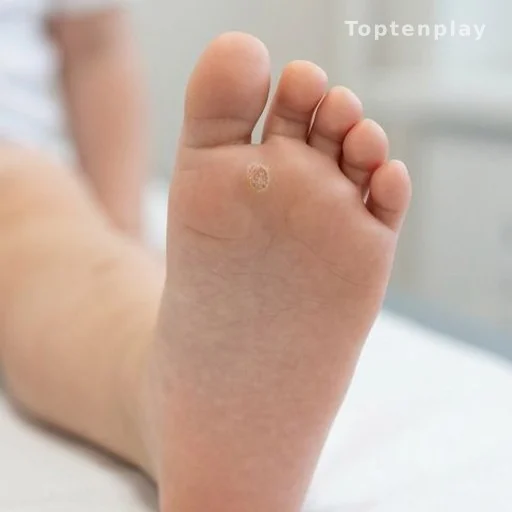
The black dots that make this condition so recognizable are not dirt or debris. According to health guidance on the subject, they are tiny clotted blood vessels that have grown into the wart tissue — a detail that sets plantar warts apart from other foot complaints.
Plantar warts can range in size from a few millimeters to roughly a centimeter. Because they sit on pressure points, they can cause sharp pain when standing or walking. The rough, thickened skin that forms over them can make them look like a callus at first glance, which is why careful examination matters.
What is a plantar wart?
Plantar warts are benign skin growths caused by certain strains of the human papillomavirus (HPV). They are particularly common in children and teenagers, who tend to spend time in shared spaces like swimming pools and locker rooms where the virus spreads easily on wet surfaces. Unlike warts on other parts of the body, plantar warts grow inward due to the pressure of walking, which is what makes them painful.
Plantar wart, callus, blister, or splinter: how to tell the difference
Not every painful spot on a child’s foot is a plantar wart, so a careful look at the affected area is the right first step. A plantar wart is round, rough, and clearly marked by those characteristic tiny black specks. Pressing directly on it typically produces a sharp, localized pain.

A callus, by contrast, is a broader area of thickened skin built up by repeated pressure or friction. It may feel rough to the touch but lacks dark spots and is generally much less painful when pressed. A blister is fluid-filled and linked to friction or heat — again, no black dots. A splinter usually has a visible entry point or an embedded object just beneath the skin surface.
If the spot matches the plantar wart description — round, rough, black specks, pain on direct pressure — that identification should guide the next steps. When in doubt, a podiatrist or pediatrician can confirm the diagnosis quickly during a consultation.
Fast relief at home: soaking, padding, and over-the-counter options
For quick pain management before a performance or a doctor’s appointment, several at-home steps can help. Soaking the foot in warm water for 10 to 15 minutes softens the skin around the wart and can ease immediate discomfort. Following that with an over-the-counter salicylic acid treatment — applied according to package directions — can begin to break down the wart tissue, though full removal typically takes several weeks of consistent use.
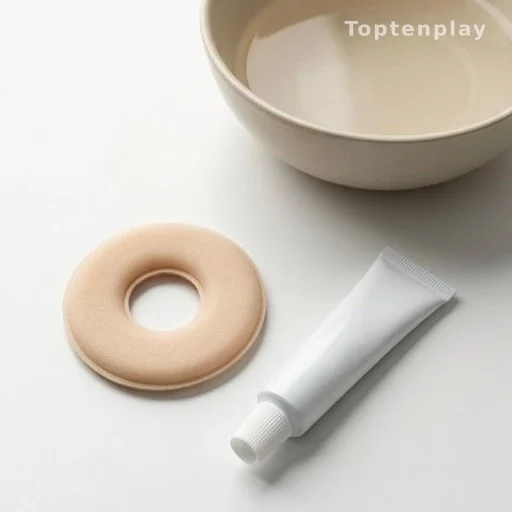
Pressure relief is just as important as any topical treatment. Placing a cushioned, donut-shaped adhesive pad with a hole in the center directly over the wart redistributes the load away from the painful spot while walking. Securing it with medical or athletic tape — snug but not tight enough to restrict circulation — keeps it in place during activity. Adding a gel insole inside the shoe provides an extra layer of cushioning.
Suggested Posts

The Oregon man jailed for water collection — and why your rain barrel is different
The story of an Oregon man jailed over water collection has fueled widespread alarm about rain barrels. But the reality behind that case is…