📌 Chicken Nanban
Posted 30 March 2026 by: Admin
We all think Japanese fried chicken has to be complicated. Professional deep fryers, hard-to-find ingredients, hours in the kitchen. The reality of chicken nanban: less than an hour, a deep frying pan, and things you probably already have in your pantry — and your guests will think you went to a lot of trouble.
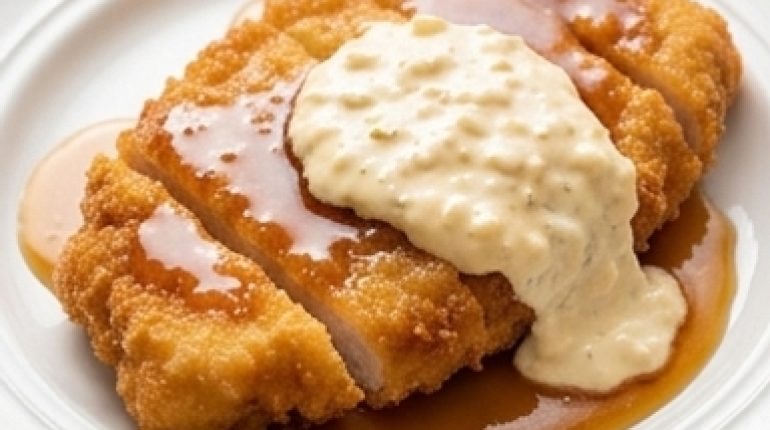
In front of you: two light caramel-colored chicken cutlets, coated in a sauce that glitters slightly under the light. The tartar sauce sits on top in small, creamy dollops. When you slice the first piece, the crust cracks cleanly under the knife — a brief, almost satisfying sound. Inside, the meat is white and juicy, having absorbed that vinegary-sweet taste of the nanban sauce right to the core.
Why you’ll love this recipe
Ingredient Notes
Everything you need to successfully make real chicken nanban at home, from simple ingredients to stunning results.
- Rice vinegar : This is what defines the nanban sauce. Much milder than white vinegar — a rounded acidity, almost sweet, nothing aggressive. You can find it in supermarkets in the Asian aisle. A light apple cider vinegar can work in a pinch, but the result will be more rustic.
- Kewpie Mayonnaise : Not interchangeable with classic mayo. Creamier, richer in egg yolk, with a hint of built-in acidity that makes all the difference in the tartar sauce. Find it at Asian grocery stores or order online. Without it: mix normal mayo with a splash of rice vinegar — it’s a decent approximation.
- Rice syrup (instead of mirin) : Original mirin is a sweet Japanese condiment that gives shine and roundness to nanban sauce. We replace it with rice syrup — same effect, same amount. Otherwise, a tablespoon of honey diluted in a little warm water works very well.
- Chicken breast : Get thick breasts if you can. Thin fillets are less forgiving of frying and dry out quickly. The butterflying step is not optional — chicken of uneven thickness is a guarantee of one side being overcooked. If you prefer thighs, they stay juicier and are more tolerant of approximations.
Nanban sauce: three minutes, but do it first
Everything starts here, before you even take the chicken out of the fridge. In a small saucepan, combine rice vinegar, soy sauce, rice syrup, and a pinch of sugar. Bring to a simmer — a few lazy bubbles, not a violent boil — and turn off the heat. The smell that rises is sharp and sweet at the same time, close to a teriyaki but sharper. It must cool completely before being used. If you pour it hot over the chicken, it softens the crust instead of soaking into it.
Homemade tartar sauce, because store-bought just won’t do
The hard-boiled egg, finely chopped. The onion, very small, soaked for ten minutes in cold water — this soaking removes the bite that would otherwise overpower everything else, don’t skip it. Finely diced cucumber for crunch. Mix with the Kewpie, a splash of rice vinegar, salt, and pepper. Taste it: it needs to be tangy, creamy, with a light bite. It’s prepared in advance and waits in the fridge — cold on hot chicken, it’s precisely this contrast that makes the recipe.
The part everyone gets wrong: why double-frying is not optional
One fry is good. Two fries make it chicken nanban. First, dip the breaded chicken in 170°C oil — hot enough for the crust to form, not enough to char the outside before the inside is cooked. Don’t touch the chicken for the first minute. If you move it too soon, the coating tears. After a two-minute break out of the oil, plunge each piece back in for thirty seconds per side. The crust goes from pale blond to amber caramel, and it becomes rigid under your fingers. That’s when it’s ready.
Why I never make fried chicken anymore without coating it immediately
As soon as the chicken comes out of the oil, ladle the nanban sauce over it. Not in two minutes. Now, while the crust is still burning hot. The breading absorbs it in seconds, like a blotter drinking ink — the liquid disappears into the crust and that is the dish. Waiting means missing this absorption. Once coated, slice diagonally, place on the plate, and top with the cold tartar sauce. It’s ready.
Tips & Tricks
- Prepare the tartar sauce the day before and let it sit overnight in the fridge — the flavors blend and it’s much better than a last-minute tartar sauce
- Only one piece at a time in the fryer: if you put two or three in together, the oil temperature drops and you get oily, soft chicken instead of crispy
- If you don’t have a thermometer, test with a few drops of water — if it sizzles immediately with a sharp sound without violent splashing, you’re at the right temperature
Can chicken nanban be prepared in advance?
Yes, and it’s even recommended for the tartar sauce — prepared the day before, it’s even better. The nanban sauce can also be made in advance and kept in the fridge for several days. On the other hand, the fried chicken should be made at the last minute: a reheated fried crust never has the same texture as fresh.
Can I use chicken thighs instead of breasts?
Absolutely, and it’s actually more forgiving. Thighs stay juicy even if you cook them a bit too long. Flatten them with a mallet or cut them into uniform sized pieces before breading for even cooking.
How to store leftovers and reheat them properly?
Coated chicken keeps in the fridge for up to 2 days. To reheat without losing the crust, put it in the oven at 180°C for 8 to 10 minutes — avoid the microwave, which makes it completely soft. Cold directly from the fridge in a lunch box is also a very good option.
I don’t have Kewpie mayonnaise, what can I replace it with?
Mix classic mayonnaise with a splash of rice vinegar and a pinch of sugar — you’ll get close to the richness and acidity of Kewpie. The result is slightly less creamy but perfectly fine for the tartar sauce.
How to prevent the crust from getting soggy in the sauce?
Two things: double frying (it makes the crust thicker and more resistant), and coating immediately out of the oil while the chicken is still burning hot. The thermal shock helps the breading absorb the sauce rather than getting soaked.
Can this recipe be made without a deep fryer?
Yes, a high-sided pot or a deep sauté pan works very well with 4 to 5 cm of oil. A kitchen thermometer is useful to maintain 170°C, but you can test with a few drops of water — if it sizzles sharply and steadily without splashing, the temperature is good.
Chicken Nanban
Japanese
Main Course
Crispy fried chicken coated in a sweet-vinegary sauce, served with chilled homemade tartar sauce. A Japanese classic ready in under an hour.
Ingredients
- 600g chicken breasts (about 4 pieces)
- 60g flour
- 3 eggs
- neutral oil (sunflower or peanut) for frying
- salt and pepper
- — Nanban sauce —
- 80ml rice vinegar
- 60ml soy sauce
- 40ml rice syrup (or 1 tbsp honey diluted in 2 tbsp hot water)
- 1 tbsp sugar
- — Tartar sauce —
- 120g Kewpie mayonnaise (or classic mayo + splash of rice vinegar)
- 2 hard-boiled eggs
- 60g onion (½ medium onion)
- 80g cucumber (about ½ cucumber)
- 1 tbsp rice vinegar
- salt and black pepper
Instructions
- 1Prepare the tartar sauce: finely chop the hard-boiled eggs, the onion (soaked 10 min in cold water) and the cucumber. Mix with mayo, rice vinegar, salt, and pepper. Set aside in the fridge.
- 2Prepare the nanban sauce: heat the rice vinegar, soy sauce, rice syrup, and sugar in a small saucepan until just simmering. Turn off the heat and let cool completely.
- 3Prepare the chicken: butterfly each breast to get a uniform thickness of about 1.5 cm. Season with salt and pepper.
- 4Bread the chicken: coat each piece in flour, shake off the excess, then dip in the beaten eggs.
- 5First fry: heat 4 to 5 cm of oil to 170°C. Fry the chicken one piece at a time, for 4 to 5 minutes, without moving it during the first minute. Drain on paper towels and let rest for 2 minutes.
- 6Second fry: plunge each piece back in for 30 seconds per side until you get an amber caramel crust. Drain.
- 7Coat immediately: place the chicken in a dish and ladle the nanban sauce over both sides while it’s still burning hot.
- 8Serve: slice diagonally, arrange on plates, and top with the cold tartar sauce.
Notes
• The tartar sauce is ideally prepared the day before — a night in the fridge allows the flavors to blend and the result is much better.
• Leftovers can be kept in the fridge for up to 2 days. To reheat without losing the crunch, put in the oven at 180°C for 8 to 10 minutes.
• Juicier variation: replace breasts with chicken thighs flattened with a mallet, adding 2 to 3 minutes to the first fry.
Nutrition Facts (per serving, estimated)
| 620 kcalCalories | 35gProtein | 26gCarbs | 38gFat |