The most critical instruction in the entire recipe concerns the cheese: it must be grated fresh from a block. Pre-shredded bagged cheese is coated in cellulose — an anti-caking agent — that prevents proper melting and will not form the crispy, golden crust the dish depends on. This is a step where cutting corners visibly changes the outcome.
The finishing touch: fresh lemon that cuts through the richness
Once the asparagus comes out of the oven, the recipe adds what it calls «The Bright Finish»: a squeeze of fresh lemon juice and a little grated lemon zest applied directly before serving. The acidity cuts through the richness of the melted cheese, lifting the entire dish and preventing it from feeling heavy.
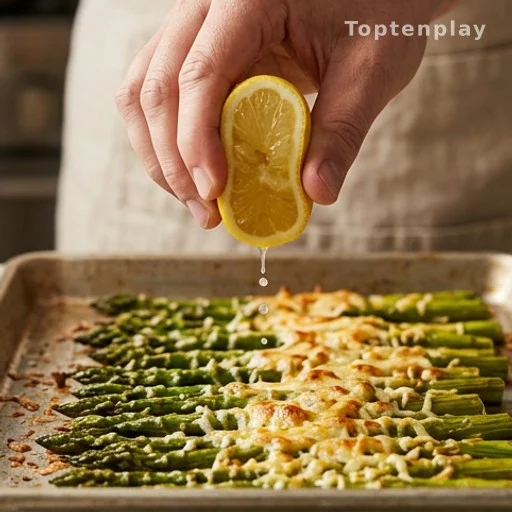
This step is deliberately timed for the last moment. Adding lemon juice earlier, during roasting, would cause the acid to react with the asparagus’s chlorophyll, dulling its vibrant green color. Applied after cooking, it preserves both the visual appeal and the fresh citrus character.
The complete dish — roasted stalks, golden cheese crust, bright lemon finish — is designed to be served straight from the sheet pan. According to the recipe, the platter is «completely scraped clean before the main course is even served,» which may be the most reliable measure of a side dish’s success.
The next practical step is sourcing the right asparagus: markets in mid-summer carry thick-stalked bunches best suited to high-heat roasting, and the recipe specifically flags tightly closed tips as the freshness indicator to look for. For anyone scaling the dish up for a larger gathering, the main variable to watch is oven crowding — a single layer on the sheet pan is essential to maintain the dry heat that makes both the roasting and the cheese crust work. The question of which cheese — Parmesan for a sharper, saltier crust or sharp cheddar for a richer, creamier melt — remains an open choice the recipe leaves to the cook.