Everyone imagines Chawanmushi is some out-of-reach Japanese restaurant specialty. A chef’s dish, technical, mysterious. In reality, it’s a custard. A steamed custard of formidable delicacy, but a custard nonetheless — and that changes everything about how you approach it.
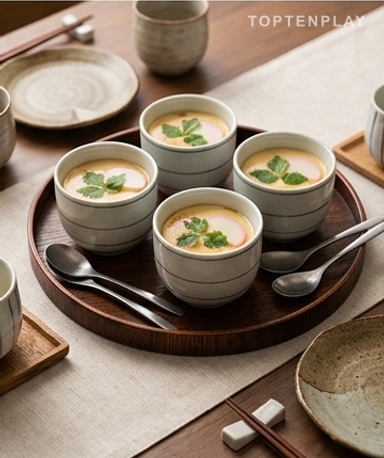
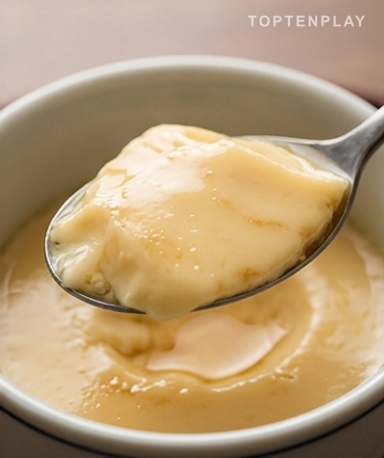
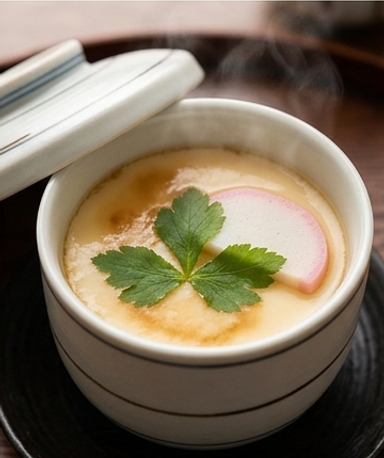
Inside the cup, the surface is as smooth as a mirror, a slightly amber ivory, with a few slices of pale pink kamaboko and mushrooms emerging discreetly. You dip your spoon and there is that moment — almost zero resistance, as if you were cutting through thickened air. The smell is subtle: the dashi provides a delicate marine background, almost briny, which the heat gently amplifies. In the mouth, it’s warm, silky, and surprisingly comforting.
Why you’ll love this recipe
Ingredient Notes
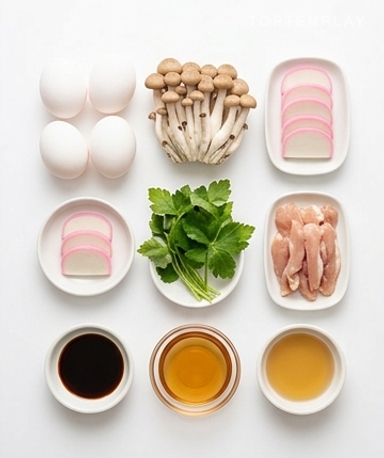
All chawanmushi ingredients gathered: fresh eggs, shimeji mushrooms, kamaboko, chicken, and mitsuba herbs.
- Dashi : This is the foundation. Without a good dashi, chawanmushi is bland — an egg custard with no personality. Instant dashi packets (Ajinomoto or Kayanoya are good) work very well. If you really don’t have access to dashi, a light vegetable broth can help in a pinch, but the result will be clearly less deep in flavor.
- Eggs : The egg-to-dashi ratio is everything. This recipe uses 1 to 2.5 — slightly richer than the classic 1 to 3 ratio. Concretely: more egg = firmer and denser custard. Take them out of the refrigerator at least 20 minutes before — cold eggs disturb coagulation and result in an irregular texture.
- Kamaboko : This pressed Japanese surimi cake, often pink on one side, is found in Asian grocery stores as a rectangular block. If you can’t find it, classic surimi sticks will work fine — the taste is similar, though the presentation is less refined.
- Shimeji mushrooms : Small, in clusters, with a slight bitterness that disappears when cooked. Their texture after 20 minutes of steaming is perfect — neither soft nor crunchy. Enoki or thinly sliced shiitakes work very well as replacements.
- Mitsuba : This slightly anise-flavored Japanese parsley is mainly used as a final garnish. Outside of Japanese grocery stores, a few sprigs of chives or a pinch of watercress have exactly the same effect. The idea: a touch of fresh green on top, nothing more.
The ratio that separates a trembling custard from a failed omelet
It all comes down to the egg-dashi proportion. Too much egg and you get something firm, rubbery, and disappointing. Not enough and it won’t set. The golden rule: for 1 whole egg, 2.5 times its volume in dashi. This is slightly richer than the standard version, and the difference is clearly felt — a silkiness that holds up without being heavy. Once the mixture is made, add light soy sauce (usukuchi if you have it, it keeps the custard pale and delicate), a spoonful of chicken broth instead of sake, and a little touch of honey diluted in water to replace the mirin. Whisk gently — no air, no foam. Then strain.
The part everyone skips — and it costs nothing to fix
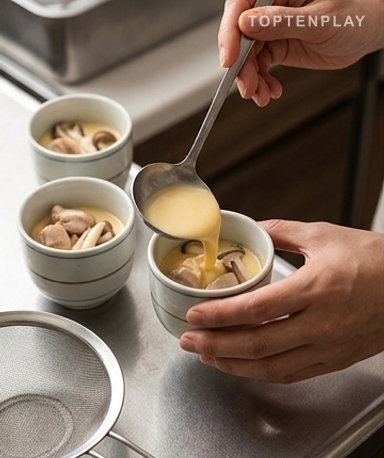
Straining. Almost everyone skips it because it seems superfluous. Mistake. The egg mixture contains chalazae — those little white strings that connect the yolk to the white — and air bubbles incorporated during whisking. Without straining, you end up with a surface pitted like a sponge, with unappealing craters. Thirty seconds of effort, visible results. After filling the cups, let them rest for two minutes before cooking — the last bubbles will rise and burst on their own at the surface. Simple.
Gentle and patient steam — why complicate life?
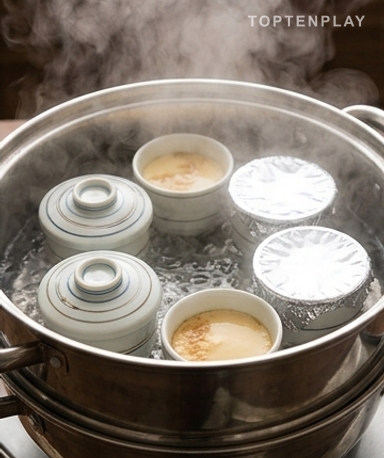
We often hear about special steamers or elaborate techniques. A large pot with a little hot water does the exact same job. The cups go in, the water comes up halfway, you cover each cup with aluminum foil and place the pot lid slightly ajar — one centimeter is enough so the steam doesn’t stagnate and create condensation that would drip onto the custards. Heat at the absolute minimum. You should hear a slight simmering of the water, never a full boil. Twenty minutes later, the custard is set, still slightly trembling in the center when you move the cup — exactly like a successful flan. If the surface has bubbles or craters after cooking, the heat was too high.
The filling: what’s inside matters less than you think
The classic base is chicken, kamaboko, and mushrooms. Marinate the diced chicken breast for ten minutes in a little light chicken broth — this tenderizes the meat slightly even before steaming. The chicken cooks gently with the eggs, becoming tender, almost shredded, and absorbing the dashi flavor from the inside. The shimeji bring a slight textural contrast to the smooth cream. The kamaboko adds a discreet marine note — its slightly bouncy pale pink slices remain firm after cooking, a pleasant surprise for the spoon. Assemble in balanced layers in the cups, pour the mixture to 80% full — no more, it swells a little.
Tips & Tricks
- Bring all ingredients to room temperature before starting — cold eggs and dashi from the fridge disturb coagulation and give an irregular texture, firmer on the edges than in the center.
- If you see bubbles on the surface after pouring the mixture into the cups, pop them with a toothpick before cooking — they would leave unattractive little holes after cooking.
- Do not lift the lid during the first 20 minutes. Each opening drops the temperature and lengthens the cooking time — and the difference in the final texture is real.
I don’t have a steamer — can I still make chawanmushi?
Yes, no problem. A large pot with a little hot water works perfectly. Place the cups inside, the water should reach halfway up the cups, cover each cup with aluminum foil and leave the pot lid slightly ajar by one centimeter. Heat at the absolute minimum for 20 minutes — identical result to a steamer.
Why is my custard full of holes and bubbles after cooking?
It is almost always a problem of excessive heat. Too much steam creates air bubbles that get trapped in the coagulating custard. Reduce the heat to the minimum and leave the lid slightly ajar to let out excess steam. Careful straining before filling the cups also helps eliminate existing bubbles.
Can I prepare chawanmushi in advance?
Yes, but it must be served hot. You can assemble the cups with the fillings and the filtered egg mixture a few hours in advance, then keep them in the refrigerator covered with plastic wrap. Start the steaming process just before serving — the 20 minutes of cooking can easily be timed alongside a main course.
How to store leftovers and can they be reheated?
Chawanmushi can be kept for 1 to 2 days in the refrigerator, well-covered. To reheat, put the cups back in the steamer over low heat for 8 to 10 minutes — the microwave completely changes the texture and turns the custard into something grainy and unpleasant. Steaming remains the only acceptable option.
I can’t find dashi — what can I replace it with?
Instant dashi packets (available in most Asian grocery stores) are the simplest solution and the result is very good. If unavailable, a light unsalted vegetable broth can work, but the characteristic umami taste will be less present. Avoid overly strong chicken broths or classic bouillon cubes that dominate and overpower the delicacy of the custard.
Can a vegetarian version be made?
Absolutely. Replace the chicken and kamaboko with seasonal vegetables: blanched spinach, precooked diced carrots, diced firm tofu, various mushrooms. Use a vegan dashi made from kombu alone instead of the classic dashi. The technique and egg-to-dashi ratio remain identical.
Chawanmushi
Japanese
Appetizer
Silky Japanese steamed egg and dashi custard, topped with chicken, shimeji mushrooms, and kamaboko. Ready in 20 minutes of cooking without special equipment.
Ingredients
- 3 whole eggs (at room temperature)
- 375 ml dashi (instant packets or homemade)
- 1 tbsp light soy sauce (usukuchi)
- 1 tsp honey diluted in 1 tsp hot water
- 1 tbsp light chicken broth (for chicken marinade)
- ¼ tsp salt
- 150 g chicken breast, cut into 2 cm cubes
- 80 g kamaboko (Japanese surimi cake), sliced
- 100 g shimeji mushrooms, separated into clusters
- 8 stems of mitsuba or chives
- 20 g ginkgo nuts (optional)
Instructions
- 1Cut the chicken breast into 2 cm cubes and marinate in the chicken broth for 10 minutes.
- 2Slice the kamaboko into 5 mm rounds, separate the shimeji mushrooms into small clusters, prepare the mitsuba or chives.
- 3Prepare the dashi according to packet instructions or homemade recipe. Let it cool until lukewarm.
- 4In a bowl, gently beat the eggs without incorporating air. Add the dashi, soy sauce, diluted honey, and salt. Mix gently.
- 5Pass the egg mixture through a fine mesh strainer placed over a pitcher. Discard residues and bubbles.
- 6Distribute the chicken, kamaboko, and mushrooms into 4 heat-resistant cups or ramekins.
- 7Pour the filtered egg mixture into each cup until 80% full. Pop surface bubbles with a toothpick.
- 8Cover each cup with aluminum foil. Place the cups in a large pot with hot water reaching halfway up.
- 9Cover the pot, leaving the lid slightly ajar (1 cm). Cook over minimum heat for 20 minutes.
- 10Check doneness: the custard should be set on the edges and slightly trembling in the center. Garnish with mitsuba or chives and serve immediately.
Notes
• The custard keeps for 1 to 2 days in the refrigerator. To reheat, steam again over low heat for 8 to 10 minutes — absolutely avoid the microwave as it alters the texture.
• For a vegetarian version, replace the chicken and kamaboko with diced firm tofu and seasonal vegetables (spinach, carrots), and use kombu dashi instead of classic dashi.
• If the surface has holes or craters after cooking, the heat was too high; next time, reduce to the absolute minimum and ensure the lid is slightly ajar.
Nutrition Facts (per serving, estimated)
| 150 kcalCalories | 16gProtein | 6gCarbs | 6gFat |