📌 Chamomile, Rosemary, and Cinnamon Infusion
Posted 2 April 2026 by: Admin
Medicinal herbal teas are often ruined before they even start. We throw everything into boiling water, wait two minutes, and complain that it doesn’t work. This three-ingredient recipe deserves better than that — and it will reward you for it.
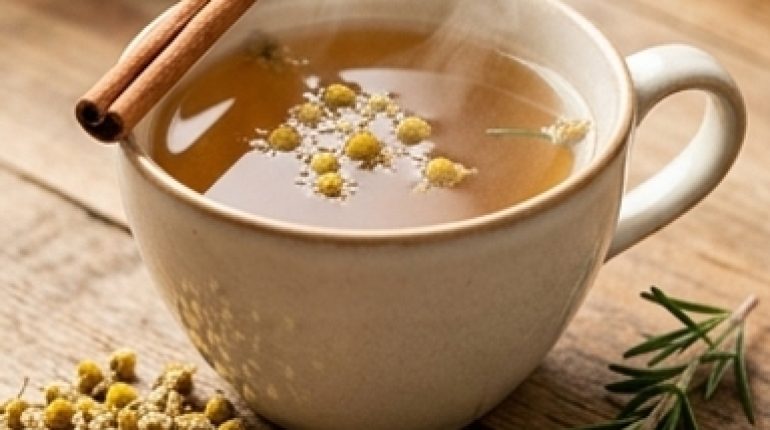
In the cup, it’s a light amber liquid, almost topaz, with reflections reminiscent of a light tea brewed just right. Lean in: the scent arrives in two waves. First the cinnamon, warm and slightly spicy, then behind it something softer, floral — the chamomile. The rosemary is barely noticeable, like a green note in the background. On the palate, it is surprisingly complex for just three ingredients.
Why you’ll love this recipe
Ingredient Notes
Dried chamomile, fresh rosemary, cinnamon stick, lemon, and honey: four simple ingredients for a powerful infusion.
- Dried chamomile : Get real chamomile — whole dried flowers, not a supermarket tea bag that’s been sitting there for two years. You can easily find a small box at a herbalist or organic grocery store for a few euros. Well-dried flowers have a slightly honeyed apple scent when crushed between your fingers. If you only have tea bags, it works, but it’s significantly less aromatic.
- Rosemary : Fresh or dry, both work. Fresh gives something more vivid, almost resinous. Dry is more concentrated and discreet. A single sprig is enough — rosemary has character and can quickly dominate if you use too much. Avoid powdered rosemary: it clouds the infusion and leaves an unpleasant sediment at the bottom.
- Cinnamon stick : A real stick, not ground cinnamon. First, because powder doesn’t filter well and leaves a pasty brown bottom in your cup. Second, because the stick releases its aromas gradually during cooking, yielding a rounder, less aggressive flavor. Ceylon cinnamon — lighter and more delicate — is preferable to Cassia cinnamon, which is darker and more pungent.
- Honey and lemon : Optional, but a squeeze of lemon juice is a game-changer. It wakes up the aromas and creates a balance between the heat of the cinnamon and the floral chamomile. Add them after filtering, never during cooking — heat destroys some of the honey’s aromas and makes the lemon bitter.
The part everyone rushes: Cinnamon first
Cinnamon isn’t just steeped. It’s cooked. This is the fundamental difference between this recipe and an ordinary herbal tea. You bring two cups of water to a boil, toss in the stick, and let it simmer for five minutes. The water takes on a very light caramel color — not dark brown tea, but something paler, like slightly tinted rice water. The scent begins to rise, warm and spicy without being aggressive. This step gives the entire drink its aromatic depth. Skipping it — by putting the cinnamon in at the same time as everything else — results in a flat, characterless tea.
Rosemary and chamomile: Kill the heat—it’s crucial
Once the cinnamon is cooked, remove the pot from the heat. Completely. Add the rosemary and chamomile off the heat, cover, and let infuse for ten minutes. Why? Because the essential oils in chamomile and rosemary are volatile — prolonged boiling destroys them before they can even transfer into the water. Under the lid, the steam circulates and falls back into the liquid instead of evaporating. After ten minutes, when you lift the lid, a small aromatic puff escapes all at once, sweet and slightly herbal. That’s the sign it’s ready.
Filtration: The satisfying moment they never show you
A fine strainer, a bowl underneath, and pour slowly. The liquid that passes through is a beautiful amber hue, translucent, with golden reflections like light caramel when it hits the light. Take a second to look. It’s one of the small satisfactions of this preparation — seeing what looked like a pot of floating herbs become something clean and appetizing. If you have lemon, squeeze half now. Just a dash, not a lemonade. And the honey, a teaspoon, no more — we’re looking to balance, not to sweeten.
Tips & Tricks
- Always cover the pot during infusion — not just for heat, but to keep the aromatic oils inside. A tea brewed uncovered loses half of its flavor profile.
- Make two cups at once and keep the second in a thermos. It will still be good in the evening, gently reheated over very low heat — without re-boiling it this time, or you’ll lose everything you preserved.
- If using dried rosemary, reduce to half a teaspoon. Dry rosemary is twice as concentrated as fresh and can easily overpower the chamomile.
- Bulk chamomile should be stored in an airtight jar away from light. Avoid cardboard boxes that have been open for a long time — the aromas evaporate, leaving you with a characterless tea.
Can this infusion be prepared in advance?
Yes, you can make two cups at once and keep the second in a thermos or a sealed jar in the refrigerator for up to 24 hours. Reheat it gently over very low heat without re-boiling — repeated boiling destroys the essential oils of the chamomile and rosemary.
Can I use ground cinnamon instead of a stick?
It’s possible in a pinch, but not ideal: the powder doesn’t filter out completely and leaves a sediment at the bottom of the cup. If you have no choice, use a quarter teaspoon and filter through a fine cloth. The whole stick remains the best option here.
What time of day should I drink this herbal tea?
One cup in the morning on an empty stomach and another in the evening before bed is the classic rhythm. The evening version is particularly effective: chamomile and rosemary have relaxing properties that promote quality sleep. In case of intense pain, a third cup in the mid-afternoon is possible.
Can I use store-bought chamomile tea bags?
Yes, two bags replace one tablespoon of dried bulk flowers. The result will be slightly less aromatic, as bags often contain more finely ground and less fresh chamomile. It remains a good option if that’s what you have on hand.
Are there any contraindications to be aware of?
This infusion is not recommended for pregnant women or people on anticoagulants or blood pressure medication, due to the active properties of rosemary and cinnamon. If in doubt, medical advice is the best precaution before regular consumption.
Can I drink this herbal tea cold in summer?
Absolutely. Let the filtered tea cool to room temperature, then refrigerate. Serve over ice with a few lemon slices and a sprig of fresh rosemary. The flavor is different — fresher, less enveloping — but very pleasant in high heat.
Chamomile, Rosemary, and Cinnamon Infusion
Traditional
Hot beverage
A golden herbal tea with anti-inflammatory properties, prepared in 20 minutes with three simple ingredients. Ideal in the morning on an empty stomach or as an evening ritual.
Ingredients
- 500 ml water
- 1 stick (approx. 7g) Ceylon cinnamon
- 1 tbsp (approx. 4g) dried chamomile flowers
- 1 sprig fresh rosemary (or 1/2 tsp if dried)
- 1 tsp pure honey (optional)
- 15 ml (juice of 1/2 lemon) fresh lemon juice (optional)
Instructions
- 1Bring 500 ml water to a boil in a small saucepan.
- 2Add the cinnamon stick and simmer over medium heat for 5 minutes.
- 3Remove the saucepan from the heat. Add the chamomile flowers and rosemary sprig.
- 4Cover and let infuse off the heat for 10 minutes.
- 5Filter the infusion into two cups through a fine strainer.
- 6Add lemon juice and honey if desired. Serve hot.
Notes
• Storage: keeps for up to 24h in the refrigerator in an airtight jar. Reheat gently without re-boiling.
• Cold variation: let cool, then serve over ice with lemon slices and a sprig of fresh rosemary.
• Do not exceed 3 cups per day. Not recommended for pregnant women and people on anticoagulants.
Nutrition Facts (per serving, estimated)
| 25 kcalCalories | 0gProtein | 6gCarbs | 0gFat |