📌 Cauliflower and cashew curry: the complete recipe in 10 minutes of cooking that transforms your winter vegetables
Posted 21 February 2026 by: Admin
The Aromatic Base: Building the Foundations of the Curry
The excellence of a plant-based curry is determined in the very first minutes, in that crucial phase where aromas are built layer by layer. It all starts with the tomatoes: blanched, precisely peeled, then cut into regular cubes that will melt into the sauce without compromising its texture. This often-overlooked step eliminates the bitterness of the skin and guarantees perfect creaminess.
The sliced onion then meets Kikkoman Sesame Oil, whose toasted richness anchors the dish’s aromatic profile. Gentle cooking reveals its natural sugars before the arrival of the garlic and curry paste, an alliance that fills the kitchen with spicy scents. The spinach is then integrated, followed by the prepared tomatoes, a splash of water, and Kikkoman Less Salt Soy Sauce.
This signature duo radically transforms the taste balance: sesame oil brings a warm, nutty depth, while soy sauce injects that umami dimension that intensifies every ingredient without ever dominating. The salt reduction allows for precise dosing, avoiding the frequent pitfall of overly salty curries that mask delicate flavors.
This aromatic base constitutes the pedestal upon which the final harmony of the dish will rest, a flavorful foundation now waiting for its plant-based protagonist.
The Plant Heart: Cauliflower and Coconut Milk in Symbiosis
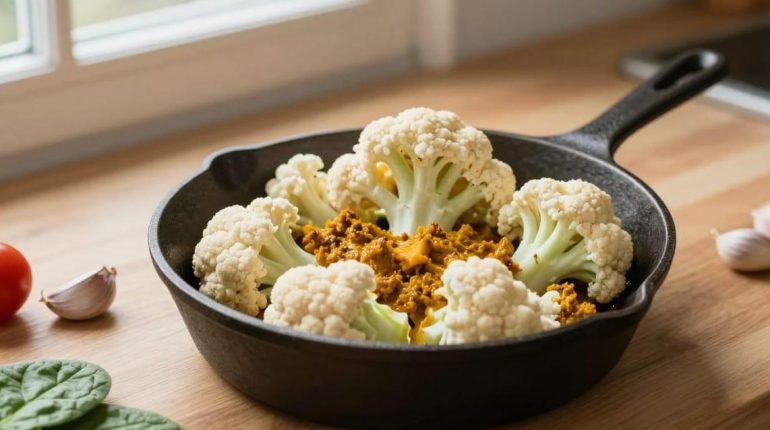
The cauliflower makes its entrance, cut into small florets calibrated for even cooking. This meticulous cutting determines the final success: too large, and they will remain raw in the center; too fine, and they will fall apart into mush. The optimal size is around three centimeters, guaranteeing perfect aroma penetration while preserving a satisfying structure to the bite.
The coconut milk then radically transforms the sauce. Its creaminess envelops each floret, creating that velvety texture characteristic of great curries. The milk’s natural fat captures and diffuses the spices, while its sweetness balances the vibrancy of the curry paste. The alchemy happens under the lid: the trapped steam cooks the cauliflower gently, infusing it progressively without drying it out.
The ten minutes of covered cooking represent the exact, non-negotiable timing. This precise countdown preserves that delicate crunch that offers slight resistance before yielding, the signature of mastered cooking. Beyond this threshold, the cauliflower softens and loses that textural dimension that makes all the difference between a mediocre curry and a remarkable preparation.
This simmering phase also releases the essences of the cauliflower, which intertwine with the spicy broth in a progressive fusion. The sauce thickens naturally, concentrating its flavors to reach that ideal coating consistency. Now, only a touch of contrast is missing to complete the balance.
The Signature Crunch: Dry-Roasted Cashews
This harmonious fusion now calls for a decisive textural counterpoint. The cashews take the stage, roasted in a perfectly dry pan, without a single drop of oil. This seemingly rudimentary technique reveals an unsuspected sophistication: the direct heat of the metal extracts the natural oils trapped within the nut’s flesh, which caramelize on their surface, developing complex toasted notes.
Dry roasting radically transforms the aromatic profile of the cashews. Their initial bland sweetness gives way to a nutty, almost buttery depth that the addition of fat would have paradoxically stifled. The dry heat also triggers a Maillard reaction that slightly browns their surface, creating that caramelized flavor impossible to reproduce otherwise.
Visual monitoring is essential: the cashews must reach a uniform golden color without tipping into the bitterness of being burnt. A few minutes in a hot pan are enough, stirring constantly to avoid carbonization points. This simple gesture definitively separates this curry from an ordinary version.
These crunchy shards will provide the essential final contrast, opposing their dry and brittle texture to the velvety creaminess of the sauce. All that remains is to orchestrate the final assembly that will transform these scattered elements into a finished composition.
The Final Assembly: Presentation and Packaging
These perfectly mastered elements now converge toward their final destination. The rice, cooked according to classic proportions, finds its place in individual containers that radically transform the purpose of this curry. This packaging strategy is not simple pragmatism: it anticipates the contemporary reality of pre-prepared meals while preserving the visual and gustatory integrity of the dish.
Each container becomes a miniature stage where the presentation is orchestrated. The rice forms the neutral base over which the curry sauce is generously poured, coating the grains with its colorful creaminess. The cauliflower florets partially emerge from this golden layer, revealing their preserved texture. This arrangement leaves nothing to chance: it guarantees that every bite captures the intended balance between starch, vegetable, and sauce.
The final touch is applied with rigor. The roasted cashews are scattered on the surface, punctuating the curry with their golden shards that promise the saving crunch. Fresh cilantro, chopped at the last moment, brings its vivid herbaceous note that counterbalances the richness of the coconut milk. This plant-based finish visually awakens the dish while signaling its freshness.
This assembly method transcends simple culinary preparation to offer a meal-prep solution that refuses any aesthetic compromise. Individual packaging not only preserves distinct textures until tasting but transforms each portion into an autonomous experience, ready to travel without losing its character.