📌 Cardamom: how this spice improves your digestion, your circulation and naturally reduces your blood pressure
Posted 15 February 2026 by: Admin
Digestive Benefits Of Cardamom: Beyond Just A Spice
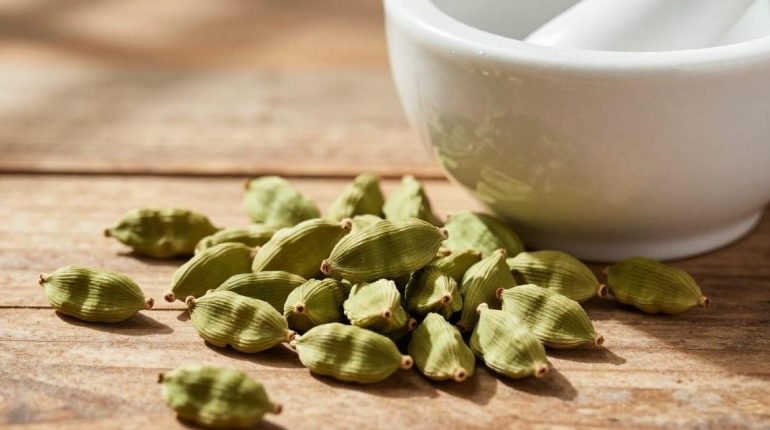
These small green pods that flavor oriental dishes hide a millenary secret: they effectively relieve digestive disorders. Clinical research conducted between 2020 and 2025 in India, Iran, and Saudi Arabia confirms what Ayurveda has practiced for centuries.
Cardamom acts as a powerful natural carminative, eliminating bloating and flatulence after heavy meals. The volatile oils it contains — notably 1,8-cineole and terpinyl acetate — stimulate the production of digestive enzymes while relaxing intestinal muscles. This dual mechanism explains its remarkable effectiveness documented in several human studies.
Clinical trials also reveal its soothing action on the gastric mucosa. People suffering from gastroesophageal reflux disease (GERD) and functional dyspepsia report a significant decrease in symptoms after regular consumption of cardamom tea. The active compounds reduce acid secretion without disturbing the digestive balance.
The simplest protocol? Chew 2 to 3 seeds after each meal or infuse 1 to 2 crushed pods in hot water. This ancestral practice, now scientifically validated, transforms post-prandial discomfort into smooth digestion. Study participants observe results within the first few weeks of daily use.
This digestive effectiveness is however only the first part of this spice’s therapeutic capabilities. Its influence extends far beyond the gastrointestinal system.
Cardamom And Cardiovascular Health: A Natural Ally Against Hypertension
Beyond digestive comfort, cardamom exerts a measurable action on blood pressure. Human trials conducted between 2018 and 2023 reveal a precise mechanism: its bioactive compounds act as natural calcium channel blockers, relaxing vascular walls and facilitating blood circulation.
Clinical studies document a reduction of 3 to 10 mmHg in systolic and diastolic pressure in people suffering from mild hypertension. This decrease is obtained with a daily dose of 3 grams of powder — about half a teaspoon added to morning coffee or tea. A simple gesture that produces tangible cardiovascular effects without medication.
Trial participants also report an improvement in peripheral circulation. Cold extremities, frequent after age 50, gradually warm up thanks to the vasodilation induced by cardamom’s essential oils. This phenomenon is explained by the relaxation of the smooth muscles of the blood vessels.
Daily integration requires no effort: half a spoon of ground cardamom in the morning drink is enough. The first results appear after 2 to 4 weeks of regular use. This gentle approach is particularly suitable for people seeking natural support before considering pharmacological treatment.
But the influence of this spice is not limited to the cardiovascular system. Other remarkable properties deserve attention.
From Oral Health To Mental Clarity: The Multiple Virtues Of Cardamom
This vascular influence is accompanied by equally remarkable effects on the oral sphere. Eugenol and cineole — two molecules concentrated in the seeds — exert a documented antibacterial action against major oral pathogens: Streptococcus mutans and Porphyromonas gingivalis, responsible for dental plaque and gingivitis.
Comparative studies demonstrate that chewing 1 to 2 pods after meals reduces plaque formation and halitosis with an effectiveness comparable to some antiseptic mouthwashes. The traditional Indian ritual thus finds its scientific validation: spitting out the shell once the flavor is exhausted is enough to benefit from this natural disinfection.
Cardamom also acts on the respiratory system. Its expectorant and anti-inflammatory properties, confirmed in the laboratory, explain its ancestral use against coughs, congestion, and irritated throats. Two to three pods infused in hot water with honey form an effective remedy during seasonal episodes.
Even more surprising: animal studies reveal promising neuroprotective effects. The aromatic compounds stimulate brain activity and reduce oxidative damage related to stress. Ayurvedic medicine already qualified cardamom as a “brain tonic” — an intuition that modern research is beginning to document. A morning tea could thus promote concentration and emotional balance.
It remains to be determined how to concretely integrate this spice into daily life, with the necessary precautions for safe and sustainable use.
Instructions For Use And Precautions: Integrating Cardamom Safely Into Daily Life
To transform these scientific discoveries into tangible benefits, the recommended dosage is between 2 and 6 pods daily, equivalent to half to one teaspoon of powder. Food quantities guarantee optimal effectiveness without risk of overdose.
Four simple methods allow for immediate integration. Cardamom tea — 2 to 4 crushed pods infused for 8 to 12 minutes in 250 ml of hot water — is consumed morning or evening. Chewing 1 to 2 pods after meals provides both fresh breath and digestive comfort. Adding half a crushed pod to morning coffee is the most discreet method. Traditional golden milk (warm milk, half a spoon of turmeric, 2-3 cardamom pods, a pinch of black pepper, honey) combines several natural anti-inflammatories.
The optimal frequency is 5-7 days weekly for 4 to 8 weeks, then 4-5 days per week. A one-week break every 6 to 8 weeks prevents habituation. Effects on digestion, circulation, and energy become perceptible after 2 to 8 weeks of regular use.
Certain situations, however, require precautions. People on anticoagulants should consult a doctor: cardamom has mild antiplatelet effects that may interact with warfarin or aspirin. Low blood pressure requires increased monitoring due to vasodilatory properties. Paradoxically, some sensitive individuals report worsening acid reflux — reducing the dose or consuming with meals generally resolves this problem. Finally, biliary stimulation contraindicates use in the presence of large gallstones.