📌 Caramelized banana flan: the bain-marie technique for a perfectly smooth texture
Posted 18 February 2026 by: Admin
Caramelized Banana Flan: A Gourmet Dessert Between Tradition and Exoticism
Melting, fragrant, delicately sweet — some desserts don’t need long speeches to make an impression. The caramelized banana flan is one of them. From the first bite, it displays a remarkable balance: the exotic sweetness of the banana merges with the creaminess of a classic flan, while the amber caramel brings that slight toasted note that enhances the whole without ever weighing it down.
This dessert embodies a form of accessible elegance. Neither too sophisticated nor too simple, it fits perfectly into the tradition of creamy flans while reinventing them with a tropical touch. The result? A dessert that impresses at the table without requiring extraordinary technical mastery.
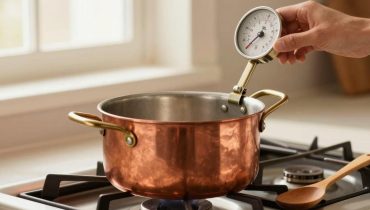
On the logistics side, the recipe is designed for 6 people, with only 20 minutes of active preparation — a particularly generous effort/pleasure ratio. Cooking in a bain-marie, essential to the success of this flan, guarantees a smooth and silky texture, without imperfections or unwanted bubbles.
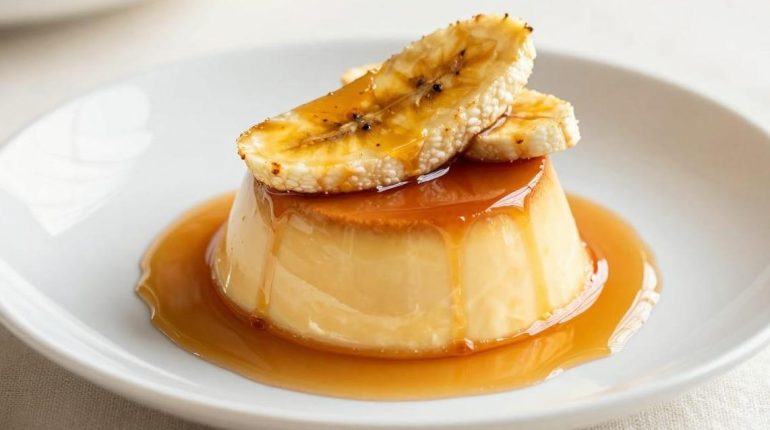
The amber caramel, poured over the bananas browned in butter, creates a spectacular visual and taste effect when unmolded. It is precisely in this marriage of textures and flavors that the whole secret of the recipe lies — and in the meticulous choice of each ingredient that composes it.
Ingredients and Secrets of a Successful Recipe
Behind the elegance of this dessert lies a list of ingredients of remarkable simplicity. For six people, the recipe relies on 500 ml of whole milk, 150 ml of heavy cream, 4 eggs, and a teaspoon of vanilla extract — classic bases that form the creamy foundation of any successful flan.
The central element remains the banana. Three large, well-ripened bananas, about 350 g, are essential: it is precisely their advanced stage of maturity that releases the maximum aromas and natural sugars, guaranteeing that intense and fragrant flavor sought in this dessert. A firm, too young banana would bring infinitely less character.
Butter, used for caramelizing the fruit, also plays a decisive role: it coats the slices in a thin golden film that intensifies their taste and texture even before baking.
Finally, the most revealing detail of this recipe is perhaps the most discreet: two portions of 100 g of sugar are necessary — one integrated into the flan mixture for taste balance, the other exclusively reserved for the caramel. This sugar balance, precisely thought out, avoids any excess while guaranteeing that characteristic aromatic depth.
Each ingredient, in its right measure, sets the stage for a realization technique that also holds its own secrets.
Step by Step: The Technique That Makes All the Difference
These carefully measured ingredients only reach their full potential through a rigorous technique, where every gesture counts.
It all starts with the caramel. Sugar and water heated over medium heat, without stirring — absolute vigilance is required here, as a few seconds separate a perfect amber caramel from a burnt and bitter one. Once the ideal color is obtained, it must be poured immediately into the mold and tilted quickly to coat the entire base before it sets.
Next comes the caramelization of the bananas. Thick slices, sautéed for 2 to 3 minutes in melted butter, develop a slightly golden surface that concentrates their aromas. Arranged on the hardened caramel, they form the fruity heart of the dessert.
The flan mixture requires special attention: beating the eggs with the sugar and vanilla without over-whisking is essential to avoid the formation of bubbles, which would create an irregular texture during cooking. The warm milk-cream mixture is incorporated gradually, then filtered through a fine sieve — an often neglected yet decisive step for obtaining a perfectly silky cream.
Bain-marie cooking at 170°C for 45 to 50 minutes does the rest. The golden rule: a flan slightly jiggly in the center when taken out of the oven is a sign of perfect cooking. Too firm, and it would lose its characteristic creaminess.
Chef’s Tips, Variations, and Unmolding: The Art of the Final Touch
Once the cooking is mastered, patience takes over. Before any unmolding, the flan must rest in the refrigerator for at least 3 hours — a non-negotiable step. It is during this rest time that the cream firms up, the flavors meld, and the texture reaches that characteristic silky smoothness.
For those who wish to intensify the presence of the banana, a chef’s tip is recommended: blend one fruit directly into the hot milk before preparing the mixture. The result is striking — the banana scent then permeates every layer of the dessert, from the first glance to the last bite.
The recipe also lends itself to beautiful exotic variations. Pineapple or mango, caramelized using the same method, offer equally generous variations, ideal for surprising guests or adapting the dessert to the season.
Finally comes the moment of unmolding, as decisive as a stage performance. After running a knife blade along the edges, simply place the serving dish over the mold and flip with a quick and steady gesture. The caramel then flows naturally, coating the golden bananas and the flan with a spectacular amber veil.
A dessert that, from the first pan stroke to the last drizzle of caramel, rewards every bit of attention paid to its creation.