📌 Car air conditioning: why the air recirculation button reduces your fuel consumption
Posted 22 February 2026 by: Admin
The Mystery Button Hiding On Your Dashboard
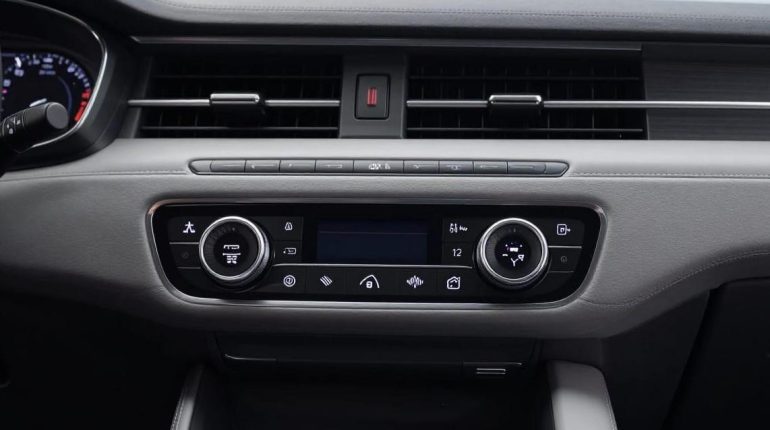
This small enigmatic symbol adorns practically all modern dashboards: a car surrounded by a circular arrow. Most drivers recognize it, but few truly understand its purpose. Yet, this discreet button controls your vehicle’s air recirculation system, a seemingly trivial feature that can radically transform your driving experience.
Far from being a simple technical detail, this control directly influences three essential aspects of your driving: thermal comfort, air quality, and even fuel consumption. Whether you’re facing a summer heatwave, stuck behind a diesel truck in traffic, or driving through pollen-heavy areas in spring, knowing when to activate or deactivate this function can transform every journey.
The paradox is striking: this button is among the most accessible controls in your cabin, yet remains one of the least utilized by motorists. This lack of knowledge deprives millions of drivers of a simple, immediately available tool capable of considerably improving their daily automotive life. Understanding how it works becomes much more than a simple mechanical curiosity: it’s about mastering a concrete lever for optimizing your vehicle.
Two Modes, Two Philosophies: Understanding The Ventilation System
Behind this button lies a surprisingly simple mechanism. Your air conditioning and heating system operates according to two radically different logics, each suited to specific circumstances.
In fresh air mode, when recirculation is deactivated, your vehicle continuously draws in outside air. This flow first passes through the cabin filter which traps dust and particles, then the system heats or cools it according to your settings before diffusing it into the cabin. A constant renewal that guarantees optimal ventilation, but forces your air conditioning to relentlessly process new air.
Activate recirculation, and everything changes. A small internal flap closes, blocking the intake of outside air. Your HVAC system then switches to a closed circuit, processing only the air already present in the cabin. The air circulates in a loop: drawn in, conditioned, diffused, then drawn in again to be reprocessed.
This seemingly minor technical difference leads to major consequences. In a closed circuit, your air conditioning gradually cools the same volume of air, quickly reaching pleasant temperatures. In an open circuit, it perpetually fights the arrival of hot or cold air depending on the season. Two opposite strategies that do not suit the same situations, and whose mastery determines the real efficiency of your ventilation system.
When To Activate Recirculation: Situations Where This Button Becomes Your Ally
The strategic use of this closed mode radically transforms the efficiency of your air conditioning. Understanding when to activate it saves you comfort while lowering the energy bill.
In heatwave conditions, recirculation stands out as your best asset. Rather than forcing your system to continuously cool overheated air coming from outside, you allow it to cyclically process the same volume of already tempered air. Result: your cabin reaches a pleasant temperature twice as fast, and your compressor puts less strain on your engine.
This increased efficiency translates directly into reduced consumption. In a closed circuit, the air conditioning maintains comfort with minimal effort, whereas fresh air mode forces it to run at full speed to compensate for the constant influx of burning air. The difference becomes particularly noticeable during short trips in full heat, where every minute counts.
Beyond thermal performance, this mode offers an often overlooked advantage: it creates an effective barrier against external pollutants. Stuck in a traffic jam behind a diesel vehicle, crossing an agricultural area during spraying, or driving through a tunnel saturated with exhaust fumes, activating recirculation temporarily isolates you from these nuisances. The cabin filter blocks particles, but stopping the intake of outside air prevents their massive entry into your driving space.
When To Deactivate Recirculation: The Risks Of Prolonged Use
This protective barrier however has its limits, and its excessive use exposes you to unsuspected dangers. Knowing when to deactivate this mode is as crucial as knowing when to engage it.
In winter, maintaining prolonged recirculation creates a formidable trap: fogging. Without an intake of fresh outside air, the humidity generated by your breathing and perspiration accumulates in the cabin. This increasing humidity level condenses on cold glass surfaces, drastically reducing your visibility. Defogging systems lose their effectiveness against this saturation, turning a cost-saving gesture into a major safety risk.
Indoor air quality also degrades in a closed circuit. Without renewal, carbon dioxide levels gradually increase, causing drowsiness and reduced concentration. On the highway or during night trips, this discreet but real alteration of your cognitive abilities compromises your reflexes at the wheel.
Manufacturers therefore recommend alternating modes depending on the context. Use recirculation in short sequences during pollution peaks or to quickly cool the cabin, then return to fresh air mode as soon as the situation allows. This alternation guarantees an optimal balance between protection, thermal comfort, and respiratory safety.