📌 Canned Spam: the transparent jelly is normal and here is why it preserves the meat
Posted 1 February 2026 by: Admin
Transparent Jelly In Spam: A Little-Known Natural Phenomenon
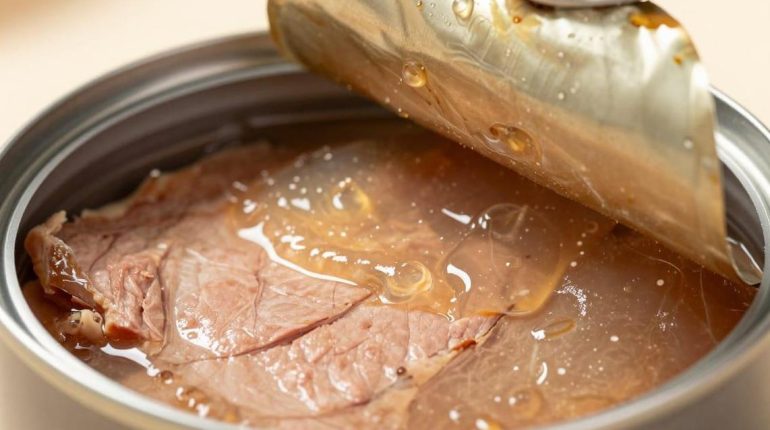
Opening a can of Spam and discovering the meat bathing in a transparent gelatinous substance often causes concern. This clear jelly, far from being an anomaly, is a normal characteristic of the product. It results from the transformation of collagen present in the pork-ham mixture during the industrial cooking process.
During manufacturing, high temperatures break down the collagen proteins naturally contained in the meat. This breakdown generates gelatin which, when hot, remains liquid and mixes with the cooking juices. As the sealed can cools, this gelatin gradually solidifies to form the clear substance observed upon opening.
This natural jelly serves an essential function: it maintains the moisture of the meat and preserves its flavor throughout its shelf life. Without this gelatinous protection, Spam would lose its characteristic moist texture and dry out quickly. The substance also acts as a protective barrier against bacteria and oxidation.
Normal jelly is distinguished by its transparent or slightly amber appearance, its smooth texture, and the total absence of a strong odor. These characteristics indicate a perfectly preserved product, ready for consumption. Understanding this phenomenon helps avoid unnecessary food waste and allows for consuming Spam with confidence.
The Manufacturing Process: Why This Gelatin Forms
The transformation of collagen into gelatin follows a precise thermochemical process, mastered since the early days of industrial Spam production in the 1930s. When the pork-ham mixture reaches high cooking temperatures, the long protein chains of collagen fragment and gradually dissolve into the surrounding liquid.
This thermal conversion represents a fundamental culinary phenomenon, identical to what occurs when preparing a homemade meat broth. Heat breaks the molecular bonds of collagen, transforming it into a soluble substance that uniformly permeates the meat. In the hermetically sealed can, this liquid gelatin envelops each portion of Spam while it is still hot.
Gradual cooling then triggers solidification. The liquid gelatin, cooled to room temperature and then stored, adopts this characteristic semi-solid texture. This natural cycle requires no artificial gelling additives: the meat itself provides all the elements necessary for this transformation.
This intentional preservation method serves a dual strategic function. On one hand, it creates a protective barrier against bacterial contamination by isolating the meat from residual air in the can. On the other hand, it maintains a constant moist environment that preserves the texture and taste of the product for years. This ingenious process explains the remarkable stability of Spam for nearly a century.
Identifying Signs Of Spoilage: Differentiating Normal From Problematic
While this gelatin results from a controlled natural process, certain indicators nevertheless reveal potential contamination. Healthy jelly maintains a clear or slightly amber hue, without a strong odor, with a homogeneous and flexible consistency to the touch. Conversely, a cloudy appearance, greenish coloration, or unusual thickness signals concerning degradation.
Visual examination of the meat itself is also necessary. Spam should have a uniform pink color across its entire surface. The appearance of gray or brown spots or discolored areas betrays advanced oxidation or microbial activity. These chromatic alterations constitute reliable warning signals, easily detectable upon opening the can.
Beyond appearance, olfactory clues provide decisive information. A sour, rancid, or simply unusual smell indicates the proliferation of bacteria producing foul-smelling volatile compounds. This phenomenon often precedes visual manifestations of spoilage, hence the importance of a systematic smell test before consumption.
Finally, the physical integrity of the can itself requires special attention. A bulging lid or liquid leaks reveal active bacterial contamination generating fermentation gases. In these circumstances, the content presents a proven risk of food poisoning and must be discarded without even opening it. Health safety always takes precedence over economic considerations.
Sensory Examination: Using Your Senses To Evaluate Freshness
This vigilance regarding structural anomalies is extended into a methodical sensory analysis, the consumer’s first line of defense. Visual inspection begins with a careful examination of the jelly: a clear to amber color indicates a preserved state, while a greenish, dark brown, or black tint reveals advanced microbial degradation. Texture also deserves attention – a fluid gelatinous consistency remains acceptable, unlike a thick or viscous substance suggesting bacterial proliferation.
Smell, however, surpasses sight in diagnostic efficiency. Upon opening the container, the aroma should remain discreet, slightly salty, characteristic of traditional cooked pork. Any olfactory deviation – sour, rancid, or simply unusual notes – signals the production of volatile compounds from microbial activity. These foul-smelling molecules often appear before visual manifestations, giving the smell test superior predictive value.
The reliability of the nose as a detection tool is based on solid scientific foundations. The bacteria responsible for spoilage generate chemical substances identifiable by human olfaction at tiny concentrations. This natural sensitivity allows for intercepting emerging contaminations long before they reach dangerous health thresholds.
Faced with the slightest olfactory suspicion, the decision is clear: discard the can immediately. The precautionary health principle transcends any economic consideration, as the consequences of food poisoning far exceed the market value of a tin can. This sensory approach transforms every consumer into a responsible actor for their own safety.