📌 Candied orange peels: the anti-waste technique that transforms your citrus waste into a homemade treat
Posted 12 February 2026 by: Admin
The Peel Renaissance: Transforming Waste Into Delight
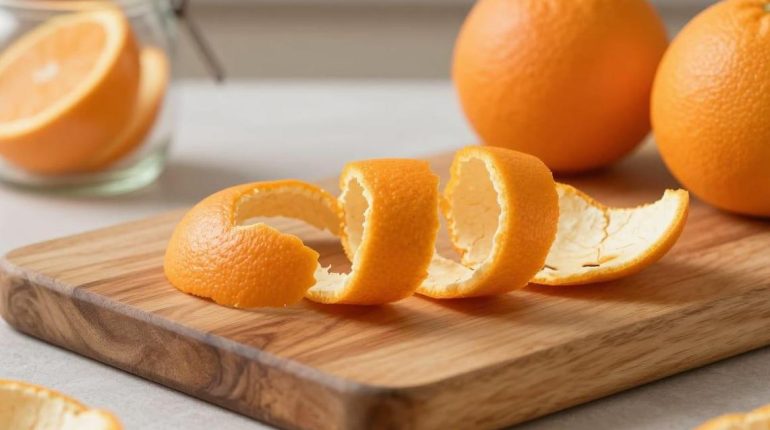
Throwing away orange peels is now an unpardonable waste. This artisanal confectionery, inherited from European culinary traditions, transforms in a few hours what most consider waste into a refined delicacy. The process requires only three oranges, 200 g of sugar, orange juice, and water – a simplicity of ingredients that contrasts with the aromatic intensity of the final result.
This ancestral technique embodies a “zero waste” philosophy before the term appeared. The peels, blanched to eliminate their natural bitterness, then simmer in a sugar syrup before being dried and coated in crystals. This triple treatment radically transforms their texture and flavor, producing a soft confectionery with balanced citrus notes.
The approach particularly appeals to sustainability-conscious cooks: 100% plant-based and lactose-free, it fully utilizes the citrus fruit without compromising on taste. Unlike industrial confectionery, these peels retain the authenticity of manual know-how passed down from generation to generation. Their preparation requires no advanced technical skills, just patience and respect for the fundamental steps.
The process reveals how traditional gastronomy had already solved contemporary ecological issues: every part of the fruit finds its function, nothing is lost. This exemplary efficiency explains why the recipe crosses centuries without losing its relevance.
Alchemy In Three Steps: The Secret To Perfect Confectionery
This triple treatment that transforms bitter peel into a treat relies on a precise chemical logic. The initial blanching, often neglected by neophytes, is nevertheless the crucial step: plunging the peels into boiling water eliminates the phenolic compounds responsible for the characteristic bitterness of citrus fruits. Without this prior purge, no syrup will mask the harsh taste of the zest.
Slow cooking in the sugar-water-orange juice mixture then operates a double transformation. The syrup gradually penetrates the plant fibers, replacing natural moisture with a concentrated sugar solution. Simultaneously, the gentle heat softens the cellular structure, giving that soft texture typical of successful candied peels. Rushing this phase would compromise the uniform impregnation of the sugar.
Final drying and coating in granulated sugar provide the essential textural contrast. The slightly crunchy surface contrasts with the tender heart, creating a layered taste experience. This coating in granulated sugar also prevents clumping during storage, guaranteeing individual pieces and not a sticky mass.
The final result – translucent strips with amber reflections – reveals a perfect balance between sugary sweetness and lemony liveliness. This harmony is not a matter of chance, but of scrupulous respect for each phase of the process. Patience here becomes the invisible ingredient that separates success from mediocrity.
Gourmet Versatility: Five Reasons To Adopt This Recipe
Beyond the technical satisfaction offered by this successful transformation, candied peels reveal remarkable adaptability in the kitchen. Their derisory cost – a few oranges and sugar – produces a result worthy of artisanal confectionery, accessible even to modest budgets. This economy is accompanied by a simplicity of execution that completely demystifies the art of homemade confectionery.
The universality of the technique extends to all citrus fruits: lemons, mandarins, grapefruits follow the same protocol. Each variety brings its own aromatic signature, from slightly bitter grapefruit to tangy lemon, opening an unsuspected taste spectrum. This flexibility allows the intensity to be adjusted according to individual preferences or seasonal availability.
The end-of-year holidays find in these candied peels an authentic gourmet gift, wrapped in a transparent jar decorated with a ribbon. Their elegant presentation rivals commercial products while retaining the handmade cachet. For a premium version, dipping them halfway into 70% dark chocolate creates a spectacular visual and taste contrast.
Their use is not limited to solitary tasting. Finely chopped, they flavor panettones and brioches. Whole, they crown lemon tarts and chocolate mousses. This functional versatility fully justifies the initial time investment, transforming each batch into a sustainable culinary resource. However, storage conditions must be mastered to preserve these organoleptic qualities intact.
Storage And Dosages: The Keys To Success
The longevity of these artisanal sweets relies on rigorous storage in an airtight container, placed in a dry place away from light. Under these conditions, the peels preserve their soft texture and intact aroma for two full weeks. Humidity is the main enemy: it softens the granulated sugar and promotes microbial development, drastically reducing the product’s shelf life.
Freezing, often considered to extend storage, proves counterproductive. Ice crystals irremediably alter the cellular structure of the peels, producing a soggy texture after thawing, devoid of the characteristic crunch. It is better to prepare small quantities regularly than to compromise quality through unsuitable storage.
The proportions for three oranges follow a precise ratio: 200 grams of sugar, 120 grams of freshly squeezed orange juice, and 340 grams of water. This balance guarantees a syrup concentrated enough to impregnate the peels without excessively soaking them. Brown sugar advantageously replaces white for those seeking a subtle caramelized note, although the final color then leans towards dark amber rather than the traditional translucent yellow.
These standardized measures allow for perfect reproducibility, eliminating the guesswork that compromises so many first attempts. Mastering these technical fundamentals transforms an occasional recipe into sustainable know-how, transmissible and adaptable according to the needs of the moment.