📌 Candied Lamb Shank with Caramelized Shallots
Posted 23 April 2026 by: Admin
This is a Sunday lunch kind of dish in November, the sort you put on the stove while guests arrive and serve two hours later as if it were nothing. Candied lamb shanks with caramelized shallots have this reputation for being a gourmet dish even though it requires almost nothing — just time and a good Dutch oven. The perfect idea to impress without playing chef.
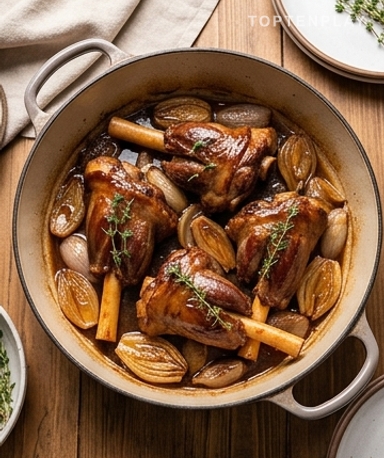
On the table, the steaming pot releases a sweet and savory scent that blends honey caramel, roasted lamb, and thyme. The meat is a deep brown, almost mahogany, and it still holds together — but just barely. The shallots have taken on a golden hue like light caramel, glistening, candied in their own sugars and the meat juices. You place a spoon on it and it sinks effortlessly into a flesh that breaks into tender shreds. The bone is clean. The sauce glazes everything.
Why you’ll love this recipe
Ingredient Notes
A few simple ingredients: lamb shanks, whole shallots, honey, garlic, and herbs. Time does the rest.
- The lamb shanks : It’s the lower part of the back leg. A cut with long fibers, surrounded by collagen, which needs long, gentle heat to become what it is meant to be. Get them from a butcher if you can, they will be better trimmed. Count one piece per person; they usually weigh between 350 and 450g each.
- The shallots : Use whole shallots, not onions. The difference? A natural sweetness and a texture that stays firm after an hour of cooking, whereas an onion would disintegrate. Long ‘banana’ type shallots work very well. 400g for 4 people is generous — and that’s intentional.
- The honey : No need for high-end honey. A liquid acacia honey or a wildflower honey does the job perfectly. It serves to kickstart the caramelization of the shallots and bring a roundness that balances the powerful side of the lamb.
- The broth : Beef or poultry broth — both work. If you don’t have homemade broth, a cube diluted in hot water is more than enough. The important thing is not to use water alone: the broth brings body and depth that water will never give to the sauce.
Why I never skip the searing
Many pot recipes mention ‘browning the meat’ as if it were optional. It isn’t. When you place the shanks in a very hot pot with oil and butter, you must hear a distinct sizzle — the sound of a steak hitting a griddle. If you hear nothing, the pot isn’t hot enough and you’ll steam your meat instead of searing it. Take 3 to 4 minutes per side, without moving the piece. The surface should reach a dark brown, almost caramel color, with almost black areas on the ridges. Those juices stuck to the bottom of the pot will give all the depth to the sauce. Never clean the pot between searing and the shallots.
Honey shallots: the detail everyone underestimates
Once the meat is set aside, pour the shallots into the same pot, directly onto the juices. They will sizzle on contact with the hot bottom, absorb the fat, and pick up everything that’s stuck. Let them cook for 5 minutes over medium heat, stirring occasionally — they should start to become translucent and lightly golden. Then add the honey, mix, and let caramelize for 2 to 3 minutes. You’ll see the color change: the shallots take on an amber, almost orange hue, and a light sweet smoke rises from the pot. This is where the sauce truly builds. This moment matters as much as the slow cooking that follows.
The part everyone fails at: trying to go fast
Put the shanks back on the shallots, pour in the broth and water, add the thyme and bay leaf, cover and turn the heat to very low. Now, you wait. One and a half hours minimum, two hours if you can. The classic trap is lifting the lid every 15 minutes out of curiosity — each time, you lose steam and slow down the cooking. At 1h15, you can test with the tip of a knife: it should sink in without resistance and the flesh should shred when you press it lightly. If it still holds, cover and continue. Turn the shanks once or twice along the way, no more.
The sauce at the end of cooking: two minutes that change everything
If the sauce seems too liquid at the end of cooking, remove the lid, slightly increase the heat and let it reduce for 10 to 15 minutes. It will thicken, the shallots will become even shinier and the color will darken slightly. It should coat a spoon — not run like water, not stick like caramel. Taste and adjust the salt only at this moment: during reduction the sauce concentrates, so what seemed a bit bland before can become perfect after a few minutes.
Tips & Tricks
- Prepare it the day before: candied lamb shank reheats perfectly over very low heat, covered, for 20 minutes. The sauce is even better after a night in the fridge, and you can easily degrease the surface when it’s cold — the fat solidifies into a layer that you can remove at once.
- Don’t salt the meat before searing. It draws out surface moisture and you’ll get steamed meat rather than properly seared. Salt at the end of cooking, after the sauce reduction.
- For a bit more complexity in the sauce without alcohol, add a small teaspoon of balsamic vinegar just before covering for the slow cook — it brings a discreet acidity that balances the honey without being identifiable.
Can I prepare the lamb shanks the day before?
Yes, and it is even recommended. Once cooked, let them cool in the pot with the sauce, then refrigerate. The next day, reheat over very low heat for 20 minutes, covered. The meat will be even more melting and the sauce more concentrated.
How do I know if the meat is perfectly cooked?
Poke the tip of a knife into the flesh: it should sink in without any resistance. You can also grab the bone and turn it slightly — a well-cooked shank lets the bone detach almost on its own. If the meat still resists, cover and continue cooking for 20 more minutes.
Can I replace the shallots with onions?
Yes, but the result will be less refined. Onions tend to disintegrate after 2 hours of cooking while shallots keep their shape and texture. If you only have onions, cut them into large wedges so they withstand the heat better.
What kind of pot should I use for this recipe?
An enameled cast iron Dutch oven is ideal: it distributes heat evenly and maintains a stable temperature throughout the slow cooking process. A heavy-bottomed stainless steel pot also works. Avoid pots that are too light or thin — hot spots will burn the sauce.
Can I freeze candied lamb shanks?
Yes, for up to 3 months. Always freeze the meat with its sauce — this is what preserves the texture and prevents the meat from drying out during reheating. Thaw overnight in the refrigerator and reheat covered over very low heat.
Candied Lamb Shank with Caramelized Shallots
French
Main course
Lamb shanks slow-cooked over low heat with honey-candied shallots and a fragrant broth. The meat melts, the sauce glazes, and everything is prepared in a single pot.
Ingredients
- 4 lamb shanks (about 400g each)
- 400g whole shallots, peeled
- 3 garlic cloves
- 2 c.s. olive oil (30ml)
- 20g butter
- 1 c.s. honey (15g)
- 1 c.s. sugar (12g) — optional
- 250ml beef or poultry broth
- 100ml water
- 1 sprig of thyme
- 1 bay leaf
- salt and freshly ground black pepper
Instructions
- 1Heat the olive oil and butter in a large Dutch oven over high heat until the mixture is very hot.
- 2Place the lamb shanks in and brown for 3 to 4 minutes on each side until they reach a dark brown color. Remove and set aside.
- 3In the same pot without cleaning it, sauté the shallots and lightly crushed garlic cloves over medium heat for 5 minutes.
- 4Add the honey and sugar if using, mix, and let caramelize for 2 to 3 minutes until the shallots take on an amber hue.
- 5Put the lamb shanks back in the pot over the shallots, then pour in the broth and water.
- 6Add the thyme and bay leaf, season with salt and pepper, then cover.
- 7Cook over very low heat for 1h30 to 2 hours, turning the shanks 1 to 2 times during cooking.
- 8At the end of cooking, remove the lid if the sauce is too liquid and let reduce uncovered for 10 to 15 minutes.
- 9Serve hot with the candied shallots and the sauce generously poured over the meat.
Notes
• Make ahead: this dish is ideally prepared the day before. Reheat covered over very low heat for 20 minutes. The sauce is even better after a night in the fridge.
• Storage: 3 days in the refrigerator in the pot or in an airtight container. Freezes very well for up to 3 months — always with the sauce.
• Recommended side dishes: homemade mash, roasted potatoes, creamy polenta, or tender green beans.
Nutrition Facts (per serving, estimated)
| 670 kcalCalories | 55gProtein | 20gCarbs | 40gFat |