Preparing the Homemade Coffee Cream
The success of an authentic café liégeois relies first on a smooth and fragrant base: the coffee cream. This preparation requires precise technical mastery, far from approximation. It all begins by dissolving the cornstarch in a little cold milk, an essential step to avoid lumps that would ruin the desired silky texture.
Meanwhile, the rest of the milk heats gently with a freshly prepared espresso, releasing its powerful aromas. Simultaneously, the egg yolks are whisked with sugar until they reach a light and frothy consistency, a sign of a successful emulsion. Incorporating the dissolved cornstarch into this mixture is the pivotal step: it guarantees thickening without a floury texture.
The hot coffee-infused milk is then poured over the preparation while whisking vigorously to temper the yolks without cooking them. Everything then goes back into the saucepan for cooking over low heat, without stopping the movement of the spatula. This constant vigilance prevents the cream from sticking to the bottom and ensures a homogeneous consistency.
When the cream coats the spoon, it is immediately poured into the glasses. Plastic wrapping “at contact,” directly on the hot surface, is necessary: it blocks the formation of an unsightly skin during complete cooling. This precision in every gesture determines the rest of the assembly and the final harmony of the dessert.
The Technique for Firm Isigny Whipped Cream
Once the coffee cream has cooled and been wrapped, attention turns to the element that crowns the café liégeois: the chantilly cream. Here, the choice of raw material determines everything. Isigny Sainte-Mère cream, recognized for its richness and stability, must be perfectly cold before any handling. This low temperature determines the success of the whipping and the subsequent stability of the assembly.
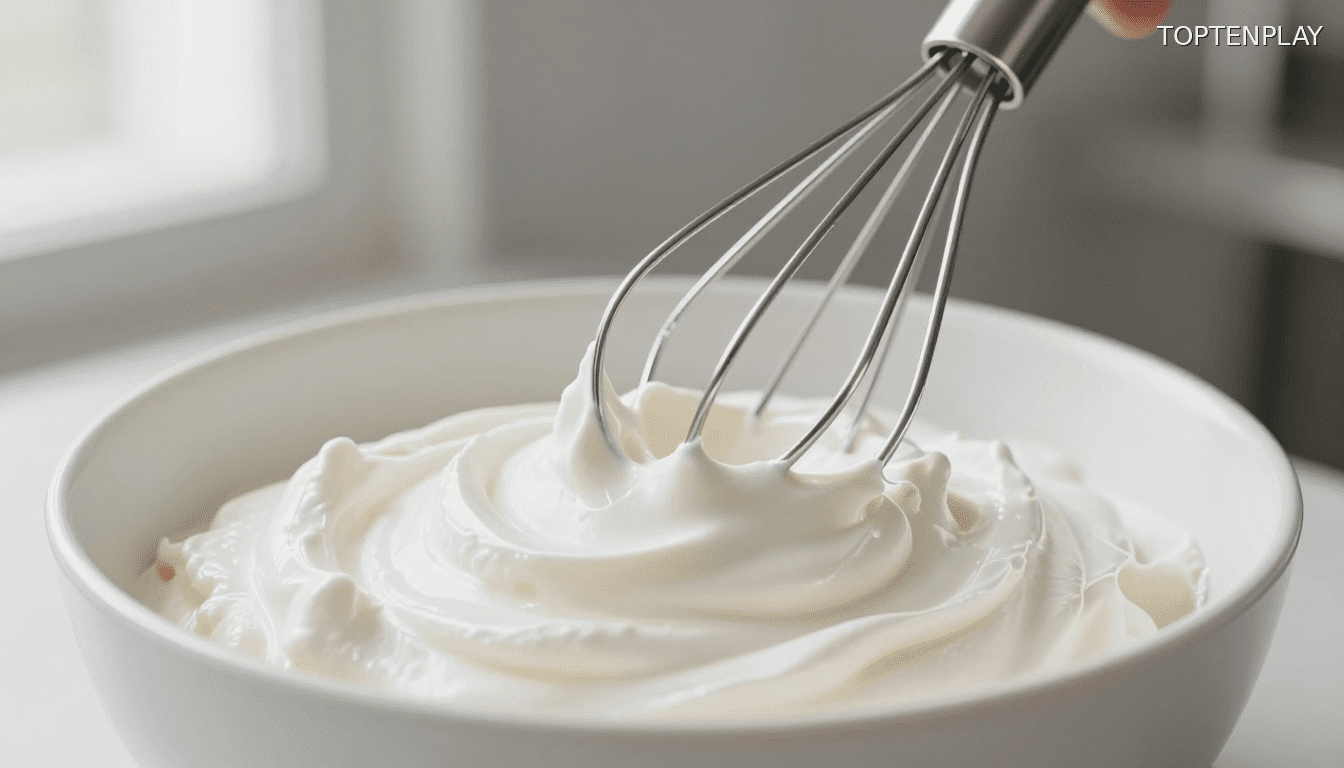
Whipping is done with icing sugar, whose fineness promotes homogeneous and rapid incorporation. The goal is not a simple airy foam, but a firm chantilly, capable of maintaining its structure on the coffee cream without sagging or running. This firmness is obtained by progressive but sustained whipping, until the cream forms stiff peaks that hold without bending.
Immediate storage in the refrigerator preserves this texture until final serving. Any ambient heat would melt the work accomplished and compromise the visual balance of the dessert. This thermal vigilance, from start to finish, separates a professional chantilly from an approximate foam.
This requirement for firmness finds its justification in the next step: serving in glasses requires a chantilly that stands proudly, creating that visual contrast between the dark base and the immaculate top that defines the identity of the café liégeois.
Elegant Assembly in Glasses
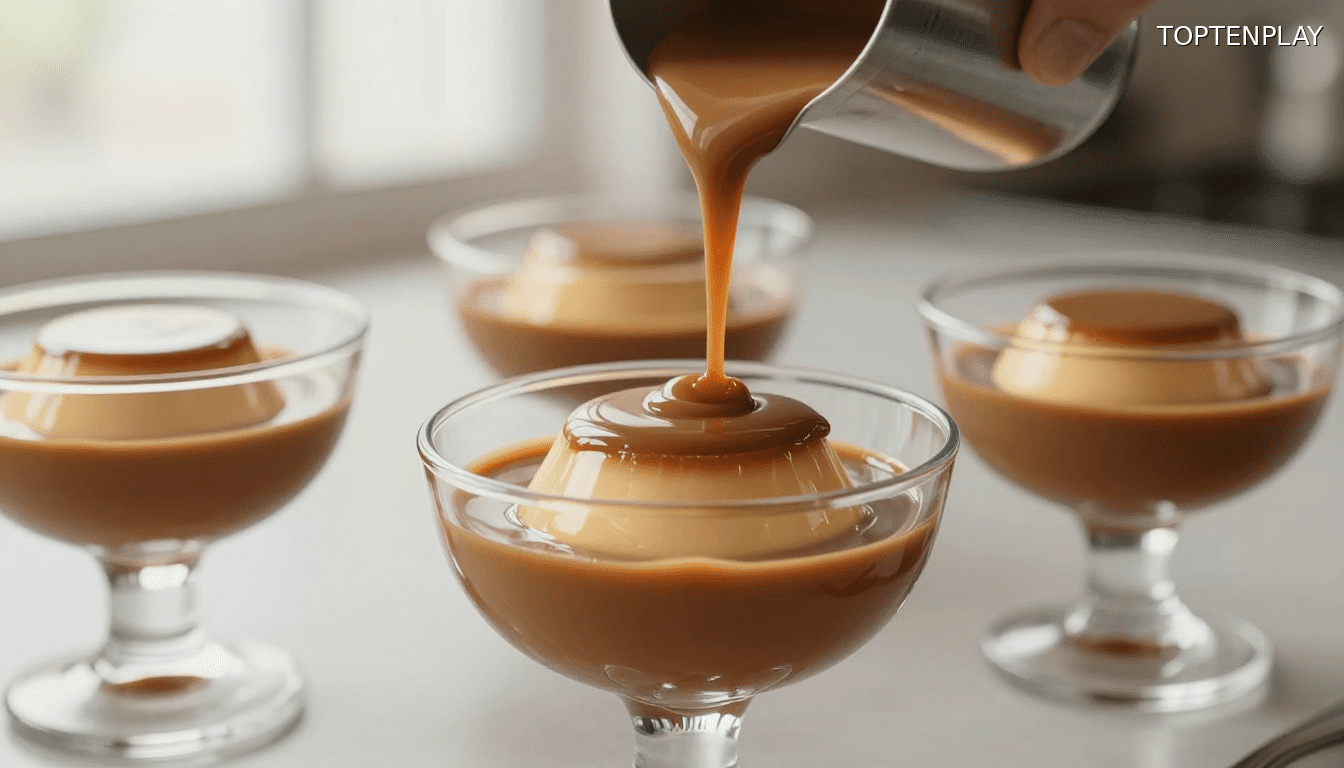
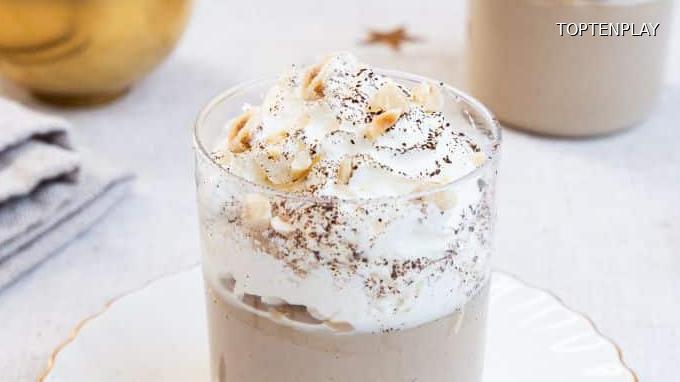
The coffee cream, now cooled, reveals its smooth texture while the firm chantilly waits in the cold. Assembly can begin. Pouring the coffee pastry cream into the glasses is done with precision, ensuring the preparation is distributed evenly to guarantee a perfectly smooth base.
Contact wrapping occurs immediately after. This technique, often neglected in amateur baking, prevents the formation of a skin on the surface that would alter the desired silky texture. The film is stretched as close as possible to the cream, creating a protective barrier until complete cooling. This step determines the structural success of the dessert: lukewarm cream under the chantilly would cause an inevitable collapse.
Once the base is completely cold, the chantilly is piped on either with a pastry bag for a professional look with generous swirls, or with a spoon for a more artisanal style. In both cases, the firmness obtained previously allows the chantilly to stand proudly, creating that iconic visual contrast between the dark cream and the immaculate top.
This careful layering, where each layer retains its identity without mixing, gives the café liégeois its distinctive character. But this play of textures calls for one last intervention to transform this dessert into a true pastry creation.
The Gourmet Final Touch
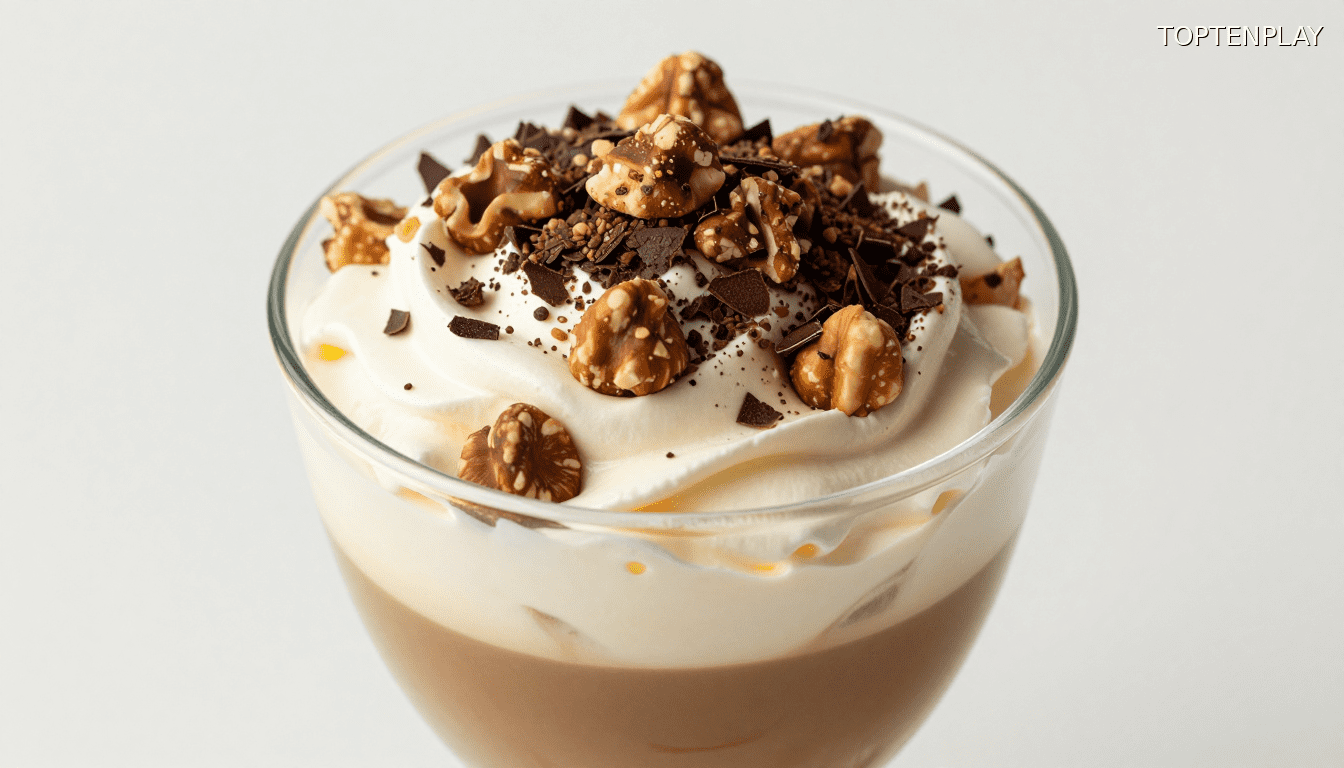
The layered glass awaits its signature. Roasted hazelnuts, coarsely crushed, are scattered over the chantilly, releasing their toasted aromas. Their toasted crunch contrasts with the creaminess of the cream, creating that break in texture that transforms every spoonful into a complete sensory experience.
Grated chocolate then punctuates the composition. A few shavings are enough: too little and the balance tips toward the exclusive sweetness of the chantilly, too much and the bitterness masks the subtle notes of the coffee. A fine grater or a knife allows for these irregular shards that catch the light and add an elegant visual dimension.
This double garnish is not just aesthetic. The hazelnuts provide the vegetable fat that prolongs the taste perception of the coffee, while the chocolate reinforces the aromatic depth without ever overpowering it. The alliance works because each element retains its integrity: the hazelnut crunches, the chocolate melts slowly, the chantilly envelops, the cream reveals.
The homemade café liégeois thus completed goes beyond the simple Belgian frozen dessert. This methodical construction — from the precise cooking of the pastry cream to these final decorative touches — elevates a traditional recipe to the rank of a mastered pastry creation, where every detail counts and every gesture finds its culinary justification.