📌 Butterscotch pudding: 4 ingredients are enough to recreate this forgotten dessert from the early 20th century
Posted 3 February 2026 by: Admin
A Comforting Dessert That Spans Generations
Four ingredients. One saucepan. Fifteen minutes flat. This homemade butterscotch pudding reconciles the authenticity of old-fashioned desserts with the reality of busy days. No electric mixer, no complex double boiler, just that smooth texture that immediately evokes afternoons at grandma’s.
Butterscotch made its appearance in American cookbooks in the early 1900s, driven by an almost minimalist formula: brown sugar, butter, milk. This founding simplicity explains its longevity. Unlike sophisticated pastries that require precision and equipment, this pudding tolerates improvisation and forgives approximations. It is prepared on a corner of the stove while the pasta water boils, slips into the refrigerator before the children go to bed, and waits patiently to be savored.
“Tastes like a hug in a bowl” perfectly summarizes the essence of this dessert. Neither too sweet nor too rich, it occupies that rare space between nostalgic comfort and modern practicality. When the brain refuses to plan an elaborate dessert after an exhausting day, this recipe offers a credible escape from industrial preparations. The result? That comforting feeling of having cooked something real, without having turned the kitchen into a battlefield.
Accessible Simplicity: Ingredients And Versatility
Two cups of whole milk, half a cup of packed brown sugar, three tablespoons of cornstarch, two tablespoons of unsalted butter. That is the entirety of what is needed to produce four servings of authentic pudding. No exotic ingredients, no emergency run to the specialty grocery store. Everything is already in the cupboard or the refrigerator.
This accessibility contrasts radically with commercial powdered preparations, often packed with additives with unpronounceable names. Here, each component is instantly recognizable. The milk provides the creaminess, the brown sugar that caramelized depth characteristic of butterscotch, the cornstarch structures the texture, the butter enriches the whole. Simple, readable, effective.
The recipe adapts to all scenarios: an improvised dessert on a tired Tuesday night, a sweet finale for an unpretentious dinner with friends, a little treat to prepare while the children finish their homework. Cooking on the stove takes less time than a restaurant delivery. A nice bonus: the pudding improves in the refrigerator, allowing for stress-free advance preparation.
For those seeking more aromatic complexity, the optional addition of a quarter teaspoon of salt and a teaspoon of vanilla extract subtly transforms the experience. But even without these enhancers, the result already holds up. This versatility explains why some recipes cross decades without major modification.
The Art Of Gourmet Personalization
The plain pudding is more than enough. But a few strategic touches propel it into another taste dimension. A swirl of whipped cream, a few crystals of fleur de sel: the sweet-salty balance instantly recalls artisanal cafe desserts, without their exorbitant price or endless wait.
Crunchy accompaniments provide the textural contrast that transforms a decent dessert into a memorable experience. Butter cookies, crumbly shortbread, or graham crackers dip perfectly into the velvety texture. For lovers of bolder contrasts, coarsely crushed pretzels or lightly toasted nuts create that salty tension that awakens the taste buds between two sweet spoonfuls.
Fruit integration works remarkably well. A few banana slices slipped into the bottom of the ramekin before pouring the still-hot pudding, or a handful of fresh raspberries arranged in a crown: the acidic freshness cuts through the creaminess without weighing it down. An extra tip for creative parents trying to get recalcitrant children to eat fruit.
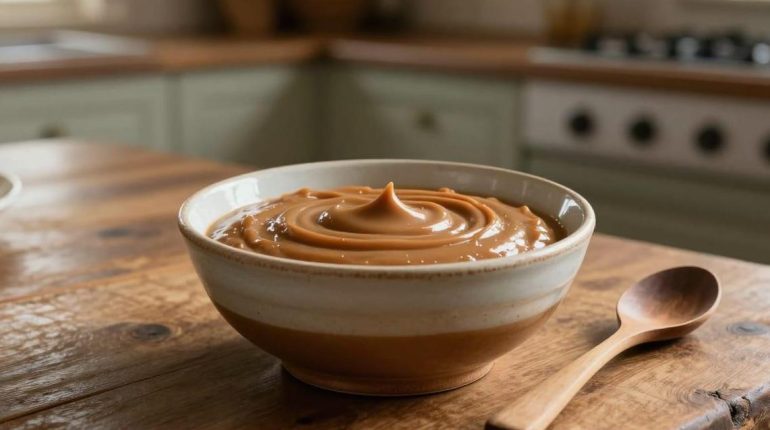
Individual presentation in transparent glasses or small ramekins immediately gives the impression of a thoughtful dessert, almost professional. No special skills required: the pudding visually does the work itself, its caramel color catching the light generously. This minimal aesthetic transformation produces a disproportionate effect on the final perception of the dessert.
Service Strategy And Easy Hosting
The decisive advantage of butterscotch pudding lies in its anticipatory nature. Prepared the day before or in the late afternoon, it rests quietly in the refrigerator while you live your life. When your guests arrive or the craving hits after dinner, the dessert is already waiting, perfectly set, freeing your brain and your schedule from any last-minute logistics.
The “dessert board” concept radically simplifies modern hospitality. Bring out the pudding in its serving dish or individual ramekins, arrange a platter of assorted cookies, some roughly sliced fruit, and start the coffee maker. This setup naturally invites casual sharing, with everyone picking according to their desires without protocol or formal service. The atmosphere remains convivial, the host relaxed.
This approach perfectly embodies contemporary culinary philosophy: impressing without exhausting oneself. Homemade pudding signals attention to detail, the quality of real ingredients rather than the ease of an industrial mix. But its simplicity of execution spares you the anxiety of complex multi-step recipes. Result: you actually enjoy your evening instead of spending it locked in the kitchen.
The “minimal effort, maximum comfort” formula thus becomes much more than a marketing slogan. It defines a viable strategy for anyone who refuses to choose between gourmet authenticity and preserved mental health. Butterscotch pudding proves that a dessert worthy of the name requires neither a culinary marathon nor compromises on taste.