📌 Build-Your-Own Japanese Bowls — Tsukurioki Meal Prep

Posted 17 April 2026 by: Admin #Recipes

Prep Time
60 minutes
Cook Time
90 minutes
Total Time
3 hours
Servings
4 to 6 servings

The smell of toasted sesame starting to heat up in a pan — that’s the Sunday signal. You prep everything at once, pack it into containers, and the rest of the week takes care of itself in three minutes flat each night. Tsukurioki is the method Japanese people have practiced for generations, and once you adopt it, Western meal prep feels frankly limited.
Advertisement:
Final result
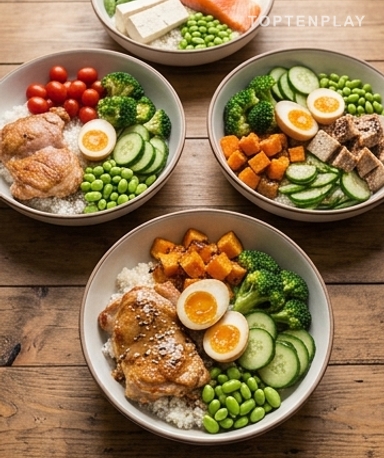
Three different bowls, one single prep session: that’s the whole principle of Japanese meal prep.

In the bowl, the white rice forms a compact base, slightly sticky under the spoon. On top, pieces of chicken glazed in a warm brown — almost light caramel — sit next to bright green broccoli and vibrant orange carrot sticks. A spoonful of sesame sauce, thick and creamy, coats everything just before eating. The ramen egg cut in half reveals a deep orange yolk, still slightly runny in the center.

Why you’ll love this recipe

It never feels like leftovers : Each element is stored separately and assembled at the last minute. Thursday’s bowl tastes as fresh as Monday’s. That’s the main difference from classic meal prep where you reheat the same dish five times in a row.
Everyone builds their bowl how they like : The one who doesn’t like broccoli takes carrots and edamame. The one eating low-carb places their proteins on salad. You cook once for different tastes without having to make several separate meals.
The sauce does all the work during the week : Proteins and vegetables are only lightly seasoned during prep. The sauce chosen that evening — sesame, ponzu, soy-chive — sets the tone for the entire meal. Change the sauce, and the bowl is different.
90 minutes on Sunday, zero cooking the rest of the week : The math is simple. One prep session, and all you have to do is assemble. You don’t need to be naturally organized — you just need containers and a fridge.

Ingredient Notes

Ingredients

Advertisement:

Everything you need for a week of varied bowls — proteins, vegetables, and bases gathered before cooking.

  • Chicken thighs : Thighs, not breasts. Breast meat dries out when reheated and becomes cottony by the third day. The thigh is forgiving: it stays moist even cold, and its surface caramelizes well in the pan with the soy-ginger marinade.
  • Extra firm tofu : If you’ve never really liked tofu, it’s probably because you didn’t get the right kind. You need extra firm, seriously drained for at least 20 minutes under a weight. Then a thin layer of cornstarch before pan-frying in a drizzle of oil: the crust becomes golden like a shortbread cookie, while the inside stays supple.
  • Ramen egg : This is the element that takes the bowl from practical to truly great. Cooked for exactly 6 minutes 30 in boiling water, then plunged into ice water. A night in a soy-water marinade gives it that mahogany tint and sweet-salty taste that disappears too quickly from the fridge.
  • Sesame paste (for goma dare) : Not hummus tahini — look for Japanese or Korean white sesame paste, which is milder and less bitter. It forms the base of the sesame sauce with toasted sesame oil, soy sauce, and rice vinegar. Two spoonfuls in a jar, mixed with a fork, and you’re set.

Why I never go without the 90-minute Sunday rule anymore

The oven preheats to 200°C, and you start with what takes the longest. The cubed butternut squash goes in to roast for 25 to 30 minutes — it comes out with slightly caramelized edges and flesh that melts under the fork. Meanwhile, the chicken. Thighs marinated in light chicken broth, soy sauce, garlic, and grated ginger go for 15 to 20 minutes in the pan over medium-low heat. The smell rising up is exactly like a Japanese restaurant — soy gently caramelizing, ginger evaporating in the steam. The tofu follows: well-patted dry, cornstarch, hot pan. You have to resist the urge to stir it — wait until it releases on its own to get that crust.

Why I never go without the 90-minute Sunday rule anymore
The prep work, the founding step of tsukurioki: every vegetable cut and ready to be cooked separately.

The part everyone gets wrong: over-seasoning

It’s the classic mistake. We want it to have flavor, so we salt generously and add sauce — and by the fourth day, the bowl is cloying because the flavors concentrated while resting. The rule here is the opposite: season light now, sauce later. Blanched vegetables — broccoli, snap peas — plunge for two minutes into boiling salted water, then into ice water. They keep their neon green color and that clean crunch that makes a sharp sound when bitten. Julienned carrots stay raw or just 30 seconds in hot water. Cucumber isn’t cooked — sliced thin, it stays fresh to counterbalance the heat of the proteins.

Advertisement:

The sauces: prep two, not one

The sesame sauce thickens as it sits, so start with that. Two spoons of sesame paste, one spoon of toasted sesame oil, two spoons of soy sauce, one spoon of rice vinegar, a drizzle of cold water to adjust consistency. It takes two minutes with a fork in a small jar. The onion-soy sauce takes five minutes more: pour hot water over sliced green onions, add chili, sesame oil, sugar, rice vinegar, and soy sauce. It’s pungent, slightly acidic, and wakes up any flat bowl. Keep the two jars separate in the fridge — having a choice in the evening is exactly what makes the system enjoyable.

Assembly: the only moment you have nothing to decide

On a weeknight, assembly takes three minutes. Choose your base — white rice reheated for 90 seconds in the microwave, or salad leaves if you want to go light. Arrange the proteins, add two or three vegetables of different colors. One green, one orange, one white. Some toasted sesame seeds, chopped chives, or furikake if you want it really good with zero effort. And the sauce just before eating — never before. This detail keeps the bowl fresh and not soggy, even after several days of storage.

Assembly: the only moment you have nothing to decide
Roasted chicken on one side, squash in the oven on the other — batch cooking saves time without sacrificing quality.

Tips & Tricks
  • Label every container with the date. Proteins last 3 days, cooked vegetables 4 days, raw ones a bit longer. It’s not paranoia — it’s just practical when you open the fridge on Thursday night and can’t remember how long the broccoli has been there.
  • Never put the sauce in the bowl before storing. Even 12 hours of contact and your broccoli softens, your rice becomes pasty. The sauce stays in its jar until serving time.
  • If you make ramen eggs, prep double what you think you’ll eat. They disappear at an astonishing speed, especially tucked into next day’s lunch boxes.
Close-up
The detail that makes all the difference: a perfect soft-boiled egg and a glossy sesame sauce that binds the whole bowl together.
FAQs
Advertisement:

How long do the prepared ingredients keep in the refrigerator?

Cooked proteins (chicken, tofu) keep for a maximum of 3 days. Blanched vegetables last 4 days, sliced raw vegetables (cucumber, carrot) up to 5 days. Sauces keep for one week in airtight jars — label each container with the prep date so you don’t have to guess.

My tofu isn’t forming a crust — what am I doing wrong?

Advertisement:

Two possible reasons: the tofu wasn’t drained enough, or the pan wasn’t hot enough. You must press the tofu for at least 20 minutes under a weight before coating it in starch, and wait until the oil is very hot before adding the cubes. Above all, don’t stir it — let each side release on its own before flipping.

Can white rice be replaced with something else?

Yes, it’s actually part of the concept. Brown rice works very well (longer cooking, firmer texture). Udon noodles reheated in hot water are an excellent alternative. For a carb-free base, salad leaves or finely shredded cabbage hold up well under warm proteins and sauces.

Advertisement:

Can prepared ingredients be frozen?

Cooked chicken freezes very well — in individual portions, it reheats in 2 minutes in the microwave. Tofu, however, changes texture when frozen (it becomes spongy, which isn’t necessarily unpleasant but different). Blanched vegetables can be frozen but will lose their crunch — best reserved for bowls where texture matters less.

How do I stop rice from hardening in the fridge?

Advertisement:

Let the rice cool completely before putting it in the container, then add a damp paper towel on top before closing the lid. When serving, reheat for 90 seconds in the microwave with the paper still on — the steam it releases rehydrates the rice and restores its original sticky texture.

Is the sesame sauce mandatory or can it be simplified?

Not mandatory at all. A quick mix of store-bought ponzu sauce with a few drops of toasted sesame oil is more than enough. If you don’t have ponzu, soy sauce diluted with lemon juice and a pinch of sugar gives an honest result in 30 seconds.

Advertisement:
Build-Your-Own Japanese Bowls — Tsukurioki Meal Prep

Build-Your-Own Japanese Bowls — Tsukurioki Meal Prep

Medium
Japanese
Main Course
Prep Time
60 minutes
Cook Time
90 minutes
Total Time
3 hours
Servings
4 to 6 servings

The Japanese tsukurioki method: each ingredient prepared separately on Sunday, assembled into a fresh bowl every night of the week. Flexible, balanced, never boring.

Ingredients

  • 400g Japanese short-grain rice (Koshihikari type)
  • 600g boneless, skinless chicken thighs
  • 300g extra firm tofu
  • 4 eggs
  • 300g broccoli, cut into florets
  • 2 medium carrots (about 200g), julienned
  • 1 cucumber (about 150g), thinly sliced
  • 150g frozen edamame, thawed
  • 200g butternut squash, cubed
  • 20g cornstarch
  • 2 c. à soupe olive oil
  • 60ml light chicken broth (for chicken marinade, replacing sake)
  • 4 c. à soupe soy sauce (chicken marinade)
  • 2 garlic cloves, grated
  • 10g fresh ginger, grated
  • 60ml soy sauce (egg marinade)
  • 60ml water (egg marinade)
  • 3 c. à soupe white sesame paste
  • 1 c. à soupe toasted sesame oil
  • 2 c. à soupe soy sauce (sesame sauce)
  • 1 c. à soupe rice vinegar
  • 2 c. à soupe cold water (to adjust sauce)
  • 2 c. à soupe toasted sesame seeds
  • 3 green onions, sliced

Instructions

  1. 1Cook the rice according to package instructions. Let cool completely, then store in an airtight container with a damp paper towel placed on top.
  2. 2Bring a large pot of water to a boil. Submerge the eggs for 6 minutes 30, then transfer immediately to a bowl of ice water. Once cooled, peel them and place in a mixture of 60ml soy + 60ml water. Marinate for at least 4 hours in the refrigerator.
  3. 3Preheat the oven to 200°C. Arrange butternut squash cubes on a tray, drizzle with olive oil and a pinch of salt. Roast for 25 to 30 minutes until edges are golden like light caramel.
  4. 4Mix chicken broth, soy sauce, grated garlic, and ginger. Marinate chicken thighs for 30 minutes in this mixture, then cook in a pan over medium heat for 15 to 18 minutes, turning halfway through. Let rest for 5 minutes before slicing.
  5. 5Drain tofu for 20 minutes under a weight. Cut into 2cm cubes, coat with cornstarch. Heat olive oil in a non-stick pan over high heat, then brown the tofu without stirring until it releases on its own — about 3 minutes per side.
  6. 6Bring a pot of salted water to a boil. Blanch broccoli for 2 minutes, then plunge into ice water. Drain and set aside. Leave julienned carrots and sliced cucumber raw.
  7. 7Prepare the sesame sauce: whisk sesame paste, toasted sesame oil, soy sauce, and rice vinegar. Add cold water tablespoon by tablespoon until it reaches a coating consistency.
  8. 8Store each component in a separate airtight container. Label with the date. Keep sauces in small jars in the refrigerator.
  9. 9When serving: reheat rice for 90 seconds in the microwave. Assemble the bowl with your chosen base, proteins, two or three vegetables of different colors, and toppings. Pour the sauce only at the moment of eating.

Notes

• Storage: cooked proteins 3 days, blanched vegetables 4 days, raw vegetables 5 days, sauces 7 days. Never mix components before serving.

Advertisement:

• Protein variant: salmon works very well instead of chicken — season with salt, black pepper, and a drop of sesame oil, then pan-fry for 4 minutes per side.

• For a gluten-free version, replace soy sauce with tamari in all preparations.

Nutrition Facts (per serving, estimated)

520 kcalCalories 34gProtein 52gCarbs 18gFat

Advertisement:
Share it!

Thanks for your SHARES!

You might like this

Add a comment:

Latest posts

Vegetable Salad and Carrot Tartare, Chef Style

Homemade Rosemary Tea

Cheesy Pizzettes with Mushrooms and Peppers

Tomato Carrot Lemon Juice

Creamy Cancoillotte Risotto with Crispy Smoked Sausage

Walking Taco Casserole

Homemade Hamburger Steaks

Homemade Oven-Baked Chicken Nuggets

Gua Bao with Marinated Chicken and Crunchy Vegetables

Ultra-Juicy Oven-Baked Turkey Cutlets

Loading...