📌 Braised lamb with dried fruits: the soy-honey-spice marinade that transforms meat into a melt-in-the-mouth dish
Posted 10 January 2026 by: Admin
Preparing The Aromatic Marinade
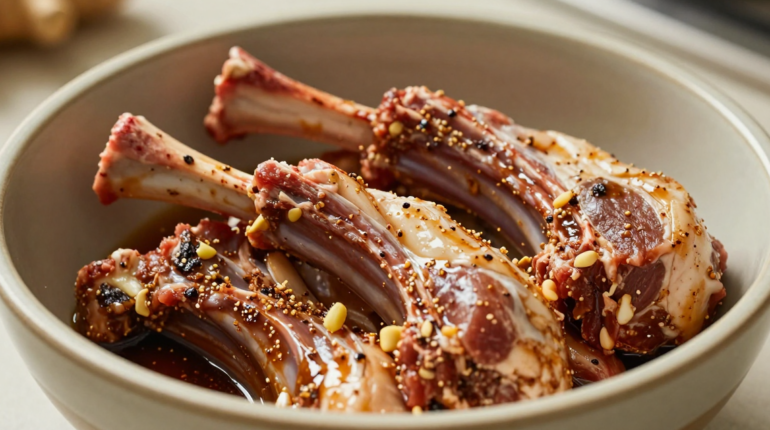
The secret of this dish lies in a marinade that defies traditional culinary boundaries. In a bowl, Kikkoman soy sauce meets crushed garlic, black pepper, fresh ginger, cumin, turmeric, vinegar, and a touch of honey. This alliance between Japanese condiments and oriental spices creates an aromatic synergy impossible to reproduce with separate ingredients.
Thoroughly rubbing this preparation onto every inch of the meat is not just a simple technical step. It opens the muscle fibers to allow for deep penetration of flavors. Time then does its work: a few hours minimum, ideally overnight. During this refrigerated maceration, the enzymes in the soy sauce tenderize the meat while the spices gradually seep in.
The patience invested in this preparatory phase radically transforms the final result. Lamb marinated for thirty minutes versus lamb macerated overnight shows measurable taste differences from the first bite. The aromatic molecules travel slowly to the heart of the tissues, creating the complexity that demanding cooks seek.
This aromatic base establishes the foundations on which the entire dish will rest. Every grain of spice counts, every hour of rest amplifies the taste impact.
Searing And Flavor Development
Olive oil heated in a pan marks the beginning of a decisive chemical transformation. The marinated lamb, emerging from its night of aromatic impregnation, meets intense heat. The Maillard reaction occurs instantly: the proteins and sugars in the marinade caramelize on the surface, creating that golden crust that traps the juices inside.
Every side of the meat must undergo this treatment. The juices escape, sizzle, and adhere to the bottom of the pan. These golden residues, far from being cooking waste, constitute the aromatic treasure that professional chefs call “fond.” Once the meat is transferred to its roasting dish, the still-hot pan welcomes the diced onion.
Two minutes are enough for these translucent pieces to turn golden. During this concentrated lapse of time, the onion absorbs the caramelized juices left by the lamb. This methodical recovery of flavors illustrates a fundamental principle of technical cooking: nothing is lost, everything is transformed. The aromas accumulate, layer upon each other, and create a depth of flavor impossible to achieve through shortcuts.
This searing step takes only a few minutes, but it determines the final intensity of the dish. Controlled heat captures the very essence of the preparation before slow cooking takes over.
Assembling The Spice Mix And Broth
Coriander seeds crushed in a mortar release their volatile oils with a dry crack. This manual crushing, an ancestral gesture of oriental kitchens, reveals aromas impossible to extract from pre-ground industrial spices. Turmeric, ginger, and cumin blend with this fresh powder, forming an aromatic concentrate whose intensity surpasses any commercial mix.
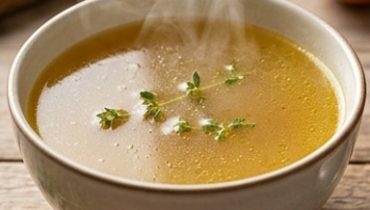
This spice preparation joins the golden onion in the still-hot pan. One minute of contact with the caramelized bottom is enough for the aromatic molecules to activate, diffusing their warm and earthy notes. Kikkoman soy sauce and broth then dilute these concentrated essences, creating a sauce that captures every layer of flavor built since the beginning.
The transfer of this liquid to the roasting dish marks the final assembly. The dried fruits – apricots, prunes, or figs – gradually absorb this spicy juice during cooking. Rosemary, slipped between the pieces of meat, distills its resinous notes into this multi-layered preparation. Every ingredient finds its place in this gustatory architecture where nothing is left to chance.
The chemistry of freshly ground spices transforms a classic braise into a complex gastronomic composition, where each layer of taste dialogues with the previous one.
Slow Cooking And Final Plating
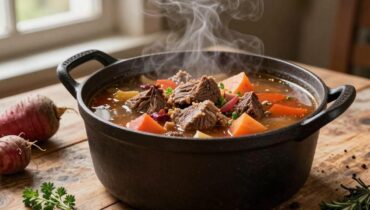
The covered dish disappears into an oven at 180°C. This temperature, neither too brutal nor too timid, triggers a cellular transformation: the lamb fibers gradually break down, and the collagens melt into a smooth gelatin. Exactly sixty minutes are enough to reach this optimal tenderness where the meat separates under the fork without collapsing into mush.
During this braising, the dried fruits swell in the spicy juice. The apricots become translucent, gorged with soy sauce and cumin. The prunes release their concentrated sweetness, creating an unexpected contrast with the salty notes of the cooking juices. The rosemary infuses slowly, its needles yielding their essential oils drop by drop into this reduced broth.
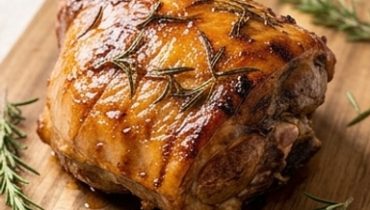
Coming out of the oven reveals a transformed meat. Slicing exposes rosy slices where every fiber is soaked in the amber juice. The final glaze – this sauce naturally thickened by evaporation, dotted with swollen and shiny fruits – transforms the plate into a gastronomic painting. Every bite combines the melting texture of the lamb, the fruity acidity of the accompaniments, and the aromatic depth built layer by layer.
This calculated patience distinguishes amateur braising from culinary mastery: one hour at a constant temperature where time does the work that haste would irremediably ruin.