📌 Boiled eggshells: how to transform them into a free resource for home and garden
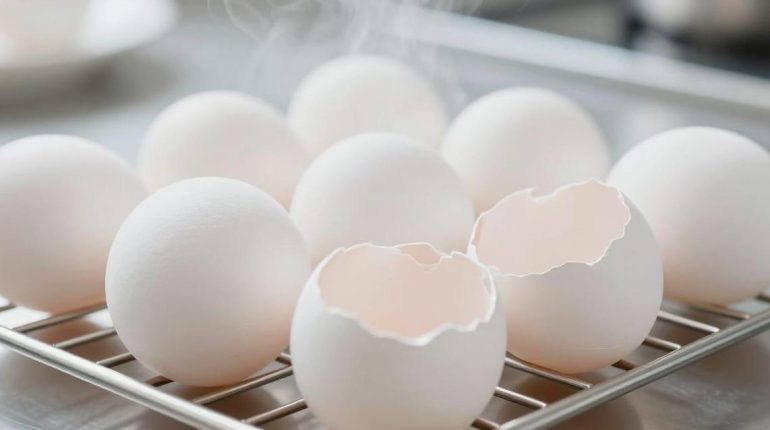
Posted 13 February 2026 by: Admin
Preparation And Sterilization Of Eggshells: An Essential Sanitary Step
Raw eggshells potentially harbor Salmonella bacteria, making their sterilization non-negotiable before any domestic reuse. This health precaution, far from being simple advice, constitutes the foundation of a responsible valorization of these calcium-rich food residues.
The treatment protocol relies on two proven methods. The first consists of rinsing the shells carefully to remove the inner membrane, then immersing them in boiling water for 10 to 15 minutes. This prolonged boiling effectively neutralizes pathogens while preserving the structural integrity of the shells. The second approach favors baking in the oven at 200°F for 20 minutes, particularly suitable when transformation into powder is intended.
In both cases, complete drying represents the critical final step. Damp shells promote microbial development and compromise preservation. Spread on a tray at room temperature or dehydrated in the oven at low temperature, they must reach absolute dryness before being stored in an airtight jar.
This methodological rigor transforms daily waste into a secure raw material, ready to reveal its potential in various domestic applications. Sterilization is not a constraint, but the sine qua non condition for a circular economy applied at the household scale.
The Boiling Method: Versatile Technique For Multiple Uses
This thermal approach stands out as the reference treatment for the majority of domestic applications. The process begins with a meticulous rinse under running water, removing organic residues and membrane fragments likely to alter the final quality of the product.
The cleaned shells are then placed in a pot of cold water, with the liquid covering them completely. Full immersion guarantees homogeneous exposure to heat during the temperature rise. Once boiling is reached, the heat is reduced to maintain a constant simmer for 10 to 15 minutes—a duration sufficient to eradicate pathogens without degrading the limestone structure.
Draining precedes a decisive drying phase. Arranged on a tray, the shells dry naturally in the open air in a few hours. To speed up the process, a stint in the oven at 200°F for 20 minutes completes dehydration while strengthening the friability of the material, facilitating subsequent grinding if necessary.
Storage in an airtight jar preserves this optimal dry state for several months. This simple and accessible method requires only standard kitchen utensils, making the valorization of shells practicable without specialized equipment. The versatility of the result obtained allows for both gardening applications and household uses, fully justifying this methodological preference for food recycling novices.
The Oven Baking Method: Solution For Powder Transformation
The thermal alternative proves particularly effective when the goal is to obtain a fine powder. This procedural variant favors dry heat over liquid immersion, combining sterilization and dehydration in a single operation.
After prior rinsing, the shells go directly onto a baking sheet preheated to 200°F. Twenty minutes of exposure is enough to simultaneously eliminate bacterial residues and residual moisture. Unlike boiling, which maintains a certain flexibility in the limestone material, this baking generates a brittle structure, almost crumbly to the touch.
This weakening is precisely the desired advantage. Shells treated this way are easily pulverized with a mortar, a blender, or even manually in a sealed bag, producing a powder with a fineness comparable to talc. This micronized form optimizes calcium assimilation in soils and facilitates incorporation into certain domestic preparations requiring a homogeneous texture.
The time saving represents an additional asset: no water level monitoring, no draining, integrated drying in the thermal process. The method is ideally suited for large volumes treated in series, as baking sheets accommodate more shells than a standard pot. This operational efficiency particularly appeals to regular gardeners and fans of intensive domestic composting.
Domestic Applications: From The Garden To Natural Cleaning
This transformed limestone material deploys its potential in two complementary areas. First in the garden, where it addresses a frequent deficiency in acidic soils. The powder or crushed fragments provide bioavailable calcium which gradually corrects the pH while strengthening plant cell walls. Tomatoes, peppers, and squash, particularly sensitive to calcium deficiencies, benefit directly from this amendment incorporated at the start of the season or mixed with compost.
Incorporation at the base of plants also reduces certain physiological diseases such as blossom end rot, that brown rot which compromises summer harvests. Coarser fragments, arranged in a ring around young shoots, form a deterrent abrasive barrier against slugs and snails.
On the cleaning side, the slightly grainy texture of crushed shells works as a gentle abrasive to scrub pots, sinks, and tiles without scratching delicate surfaces. Mixed with white vinegar or liquid soap, this powder effectively exfoliates stubborn residues while neutralizing persistent odors in drains.
This dual gardening-cleaning functionality establishes eggshells as a complete domestic resource. What kitchens generate daily becomes reusable raw material, concretely illustrating the zero-waste philosophy without material investment or particular technical skill.