π Black Pepper Beef and Cabbage Stir-Fry
Posted 19 April 2026 by: Admin
Everyone thinks Asian stir-fries are reserved for restaurants, requiring a professional wok and ten years of experience. The reality? It’s the easiest weeknight meal there is. Thirty minutes, a pan that gets nice and hot, and you get something that far surpasses what most takeout places offer.
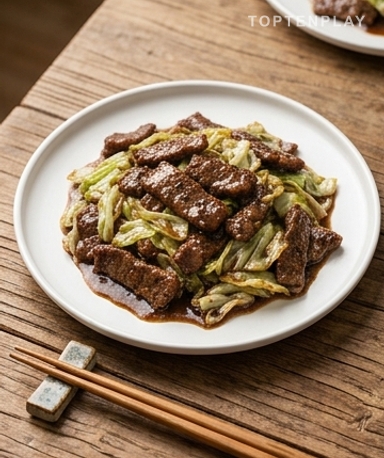
The black pepper sauce takes on a shiny mahogany hue as it finishes reducing — not black, not brown, exactly in between. The beef strips stay tender to the bite, the cabbage keeps a slight crunch, and that smell of toasted pepper mixing with fresh ginger gets you off the couch. On the table, it looks like an elaborate dish. In the pan, it was almost too easy.
Why you’ll love this recipe
Ingredient Notes
Everything you need for an express stir-fry: beef, cabbage, and a pepper sauce that packs a punch.
- Beef (flank steak or bavette) : Flank steak is ideal here — just marbled enough not to dry out over high heat. Always cut against the grain, otherwise you’ll be chewing for ten minutes. Target thickness: 3 mm maximum. Put the meat in the freezer for 20 minutes before slicing; it will be much easier to work with.
- White cabbage : A quarter of a cabbage, no more. It will reduce in the wok and you want it to keep some bite. Cut into wide strips rather than fine julienne — they hold up better during cooking and offer a better mouthfeel.
- Whole black peppercorns : Buy whole grains and crush them in a mortar or under the flat of a pan. The difference from pre-ground pepper is stark — the essential oils are intact, the fragrance incomparably more powerful. It’s the main ingredient, don’t skimp.
- Dark soy sauce : If you can find it, get dark soy sauce — it gives that deep mahogany color and a rounder taste. Light soy sauce also works, the tint will just be a bit less intense. Avoid low-sodium soy sauces; they lack character.
- Cornstarch (Maizena) : It does two things here: it tenderizes the beef when you marinate it before cooking, and it thickens the sauce at the end. Essential for that shiny glaze that clings well to the meat.
Slice the beef thinly — that’s where everything is decided
Before you touch the wok, take the time to prepare the meat well. When cold, beef slices cleanly. Ideally, put the piece in the freezer for 20 minutes to firm it up slightly — you’ll feel the difference with the knife, the slices fall away cleanly. Cut against the grain, three millimeters thick. To the touch, the strips should be supple, almost silky. Mix them with soy sauce, a spoonful of starch, a drizzle of neutral oil, and half of the crushed pepper. Five minutes of marinating is enough.
The wok must be smoking before you put anything in it
This is the most common mistake with stir-fries. People put meat into a pan that’s too cold; it releases water, steams, and becomes gray and rubbery. To avoid this: heat your pan on maximum heat, with nothing in it, for two good minutes. When you throw in a drop of water and it evaporates with a dry, violent crackle, it’s ready. Add the oil, wait ten seconds, then the beef. The sound should be aggressive — a short, loud hiss. Good sign.
Don’t touch anything for 90 seconds
Once the beef is in the wok, resist the urge to stir. Let it sear without moving, 60 to 90 seconds, until a dark brown crust — dark caramel color, almost toasted — forms underneath. This caramelization provides the flavor. Then flip the pieces, 30 seconds more, and take the meat out of the wok. It continues to cook off the heat, so don’t delay. Set aside on a plate while you start on the cabbage.
The cabbage goes in at the last minute — not before
In the same wok without even cleaning it, toss in the ginger and minced garlic. Ten seconds, no more — the smell will change, going from raw to golden, almost sweet with a slight toasted bitterness. Add the cabbage strips and turn the heat to maximum. Two to three minutes of sautéing: the cabbage will turn slightly translucent on the edges while keeping its center firm, exactly what you want. Put the beef back in, pour in the rest of the sauce, add a small splash of water if it sticks, and let everything bind while stirring vigorously for one minute.
Tips & Tricks
- Prepare all your ingredients before turning on the heat — once the wok is hot, it goes very fast and you won’t have time to look for anything in the cupboards.
- If your beef releases water while cooking, the wok wasn’t hot enough or you put too much in at once. Cook the meat in two batches if your pan is small.
- Black pepper must be omnipresent in this dish — if you don’t feel like you’ve put too much in, you haven’t put enough.
Can I use a classic frying pan instead of a wok?
Yes, no problem. The equipment isn’t the key; the heat is. Take your largest pan, heat it fully for two minutes before adding anything. A stainless steel or heavy cast iron pan gives excellent results.
Why is my beef tough and rubbery?
Two possible reasons: the pan wasn’t hot enough (the beef steamed instead of searing), or you cut with the grain rather than against it. The starch in the marinade also helps tenderize — don’t skip this step.
Can I prepare this dish in advance?
You can slice and marinate the beef up to 24h in advance in the refrigerator. However, the wok cooking is done at the last moment — the cabbage loses its crunch and the beef dries out if you reheat it.
What can I substitute for dark soy sauce if I can’t find it?
Regular soy sauce works very well; the result will just be a little less colorful. You can also add half a spoonful of oyster sauce to compensate for the depth of flavor.
Can I use other vegetables besides cabbage?
Yes, and it’s a great way to vary the recipe. Pak choi, bell peppers, zucchini, broccoli florets, or a mix — they all follow the same rule: go in last, sautéed over high heat, no more than 3 minutes.
Black Pepper Beef and Cabbage Stir-Fry
Asian
Main course
An express Asian-inspired stir-fry: thinly sliced beef seared over high heat, crunchy cabbage, and a glossy black pepper sauce. Ready in 30 minutes.
Ingredients
- 500g bavette beef (or flank steak), cut into 3mm strips against the grain
- 300g white cabbage, cut into wide strips
- 4 garlic cloves, finely minced
- 20g fresh ginger, grated (about 2 cm)
- 3 càs neutral oil (sunflower or peanut), divided
- 2 càs dark soy sauce (for marinade)
- 1 càs cornstarch (for marinade)
- 4 càs dark soy sauce (for sauce)
- 2 càs oyster sauce
- 1 càc granulated sugar
- 1 càc cornstarch (for sauce)
- 60ml water
- 2 càc whole black peppercorns, coarsely crushed in a mortar
Instructions
- 1Mix the beef strips with 2 tbsp dark soy sauce, 1 tbsp starch, 1 tbsp oil, and half of the crushed pepper. Let marinate for 10 minutes.
- 2In a bowl, mix the dark soy sauce, oyster sauce, sugar, remaining starch, and water. Set aside.
- 3Heat the wok or a large pan over maximum heat for 2 minutes, until a drop of water evaporates instantly.
- 4Add 1 tbsp oil, then the beef in a single layer. Sear without stirring for 60 to 90 seconds until deep brown, flip for 30 seconds and set aside on a plate.
- 5In the same wok, add the remaining oil, garlic, and ginger. Sauté for 10 seconds while stirring.
- 6Add the cabbage and stir-fry over high heat for 2 to 3 minutes, stirring regularly, until the edges are slightly translucent.
- 7Return the beef to the wok, pour in the sauce and the rest of the crushed pepper. Mix vigorously for 1 minute until the sauce coats and shines. Serve immediately.
Notes
• Storage: keeps for 2 days in the refrigerator in an airtight container. Reheat over high heat in a pan, not in the microwave — the cabbage would get too soft.
• Make-ahead: the beef can marinate up to 24h in the cold, which tenderizes it even further. The sauce can also be prepared in advance.
• Vegetable variation: pak choi, broccoli florets, bell peppers, or zucchini work very well instead of cabbage — same cooking timing.
Nutrition Facts (per serving, estimated)
| 340 kcalCalories | 27gProtein | 11gCarbs | 20gFat |