Well-thought-out vegetable appetizers are where most cooks miss the mark. They look for something spectacular when a simple beetroot and a good condiment can perform better than an overpriced terrine. This beetroot rose is exactly that kind of recipe.
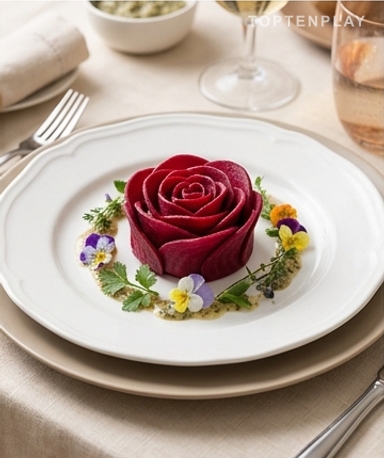
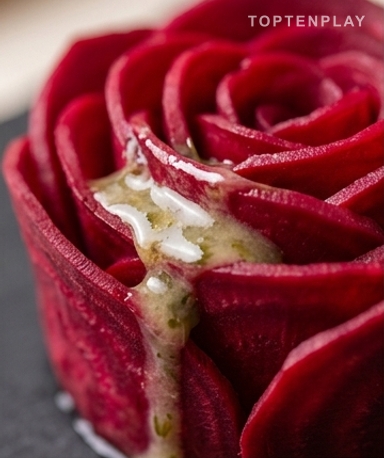
Before you: a flower of an almost purple burgundy red, with thin petals that have slightly caramelized during cooking. The vinaigrette flows slowly between the layers, shiny, a deep green flecked with golden spices like turmeric. It smells of candied beetroot—that earthy and slightly sweet scent, with a surprise briny note behind it. Under the fork, the petals yield without resistance—meltingly soft, slightly fleshy, with the acidity of the lemon cutting through at exactly the right moment.
Why you’ll love this recipe
Ingredient Notes
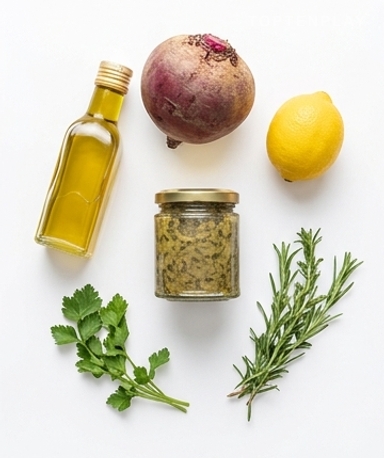
Everything you need for this elegant appetizer: a beetroot, Indian-style seaweed tartare, and a few pantry staples.
- Raw beetroot : Take a large beetroot, really large—at least 300g. The wider it is, the longer your strips will be and the fuller the rose. A fresh beetroot can be recognized by its firmness: it should resist under your thumb like a radish. If it’s soft or limp, keep moving.
- Bord à Bord Indian-style seaweed tartare : This is the product that holds the whole recipe together. The Bord à Bord brand is the gold standard, found in organic grocery stores and online. If you can’t find the Indian version, the plain version works—just add a pinch of cumin and ground coriander.
- Olive oil : No need for a prestige oil here. A decent fruity oil is enough. What matters is incorporating it gradually to emulsify the vinaigrette—pour too fast and it will separate in two seconds.
- Lemon : The juice of half a lemon, no more. It balances the brininess of the tartare and cuts through the natural sugar of the beetroot. Taste before serving and adjust if it seems flat.
Take your time with the peeler—this is where it all happens
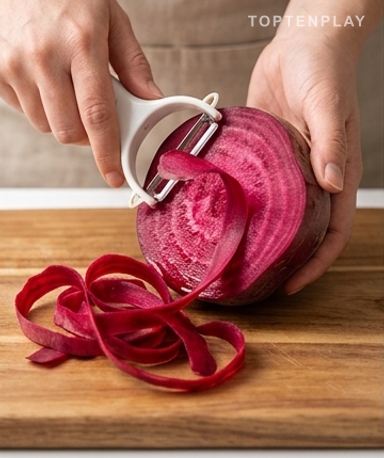
First, peel the beetroot, then cut off both ends to get a straight cylinder of the same width from top to bottom. Stand it vertically and start cutting thin strips by rotating the beetroot. The sensation under your fingers is a bit like peeling a very firm apple—it resists slightly, and it stains immediately with an intense, almost Inky purple. The thinner your strips, the more flexible and easier they will be to roll without cracking. Take the time to make them even. This is where the beauty of the final result is decided.
Roll loosely—the beetroot shrinks while cooking
Start by rolling a first strip on itself to form the heart of the rose. Add the following strips around it, one by one, letting the top edges stick out slightly to simulate petals. The raw strips are slightly damp and sticky to the touch—they hold in place naturally, no need for glue or toothpicks. Place the rose in a cookie cutter or a cupcake mold so it keeps its shape. Don’t pack it too tightly: during cooking, the beetroot loses water and contracts; if it’s too compact, the rose closes up and loses its petals.
Open the oven halfway through and baste generously
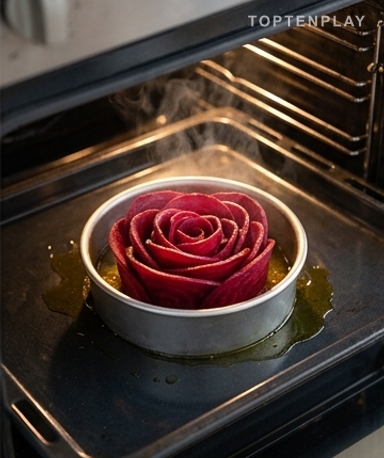
Bake at 170°C with a drizzle of olive oil and half a glass of water in the bottom of the dish. After 10 minutes, open the oven—it already smells of candied beetroot, a sweet and earthy scent mixed with warm oil vapors. Baste the roses with the juices using a spoon, gently so as not to deform the petals. Return for another 20 minutes. The beetroot is ready when the tip of a knife sinks in without resistance and the edges of the petals take on that dark burgundy hue, almost like a cherry caramel.
Make the vinaigrette just before plating
Put the seaweed tartare in a small bowl. Squeeze the half lemon over it and mix. Then add the olive oil in a steady stream, stirring vigorously with a fork. The texture should be thick, slightly sticky—not liquid like a classic vinaigrette. Taste it. It should be briny, slightly acidic, with that spicy undertone from the Indian version showing up at the end. Spoon over the cold or lukewarm roses, pour a few drops of the reserved cooking juice onto the plate, then sprinkle with fresh herbs and edible flowers if you have them.
Tips & Tricks
- Save the cooking juice carefully. A few drops on the plate just before serving will give the beetroot back its shine and flavor—don’t throw it away.
- Prepare the roses the day before, store them covered in the fridge. They hold up very well. The vinaigrette, however, should be made on the day—it becomes watery if it sits too long.
- If you can’t find edible flowers, a few sprigs of dill or chervil do the job perfectly. What matters is the green touch that contrasts with the deep burgundy of the beetroot.
Can the beetroot roses be prepared in advance?
Yes, and it’s even recommended. You can cook the roses the day before and keep them covered in the refrigerator. Take them out 30 minutes before serving and only drizzle the vinaigrette at the last moment—it softens the petals if it sits too long.
Where can I find Bord à Bord Indian-style seaweed tartare?
In organic stores, specialized condiment aisles, or online. If you can’t find the Indian version, the plain version from the same brand works very well—just add a pinch of cumin and ground coriander to recreate the spicy profile.
Can I use store-bought cooked beetroots?
No, for this recipe you absolutely need raw beetroots. Vacuum-packed cooked beetroots are too soft to cut thin strips with a peeler, and they wouldn’t hold the rose shape during cooking. Only raw beetroot has the necessary firmness.
I don’t have a cookie cutter or cupcake mold—what should I do?
A small ramekin works very well. You can also use a circle of aluminum foil rolled onto itself to form a ring. The key is to keep the rose vertical while the beetroot sets during cooking.
The vinaigrette is too liquid, how can I fix it?
The oil was probably incorporated too quickly or the tartare was too cold. Add an extra spoonful of seaweed tartare and whisk vigorously. If it’s still too liquid, let it sit for 5 minutes in the fridge—the texture naturally thickens when cold.
What should I serve this appetizer with?
This rose is sufficient on its own as a light starter. For a more substantial meal, accompany it with a slice of toasted bread with olive oil or a poached egg placed alongside. An extra squeeze of lemon juice just before serving wakes up the whole dish.
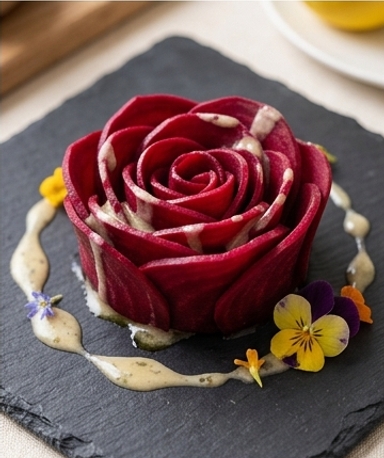
Beetroot Rose with Indian-style Seaweed Tartare
French
Appetizer
A vegetable appetizer as beautiful as it is delicious: candied beetroot petals in the shape of a rose, drizzled with a creamy spiced seaweed tartare vinaigrette. Ready in under an hour, guaranteed effect.
Ingredients
- 1 grosse (environ 350g) raw beetroot
- 2 c. à soupe olive oil (for cooking)
- 3 c. à soupe olive oil (for the vinaigrette)
- 50g (½ pot) Bord à Bord Indian-style seaweed tartare
- ½ lemon (juice)
- 1 pincée salt
- quelques tiges fresh herbs (dill, chervil, or parsley)
- quelques edible flowers (optional)
Instructions
- 1Preheat the oven to 170°C. Peel the beetroot and cut off both ends to obtain a cylinder of even width.
- 2Using a peeler, cut thin strips by rotating the beetroot.
- 3Roll a first strip onto itself to form the heart of the rose, then add subsequent strips around it, letting the top edges stick out.
- 4Place each rose in a cookie cutter or cupcake mold. Arrange in a baking dish.
- 5Drizzle with a little olive oil, add half a glass of water to the bottom of the dish, and bake for 10 minutes.
- 6Baste the roses with the cooking juices, then extend the cooking for 20 minutes. Let cool in the dish while keeping the juice.
- 7In a bowl, mix the seaweed tartare and lemon juice. Incorporate the olive oil in a steady stream while stirring until you get a thick, creamy vinaigrette.
- 8Plate each rose. Drizzle with vinaigrette, pour a few drops of cooking juice, then sprinkle with fresh herbs and edible flowers.
Notes
• The roses can be prepared the day before: keep them covered in the refrigerator and take them out 30 minutes before serving. Add the vinaigrette only at the moment of plating.
• Don’t throw away the cooking juice—a few drops on the plate at serving time intensifies the color and flavor.
• Variation: Replace the seaweed tartare with hummus or eggplant caviar for a different version using the same rose technique.
Nutrition Facts (per serving, estimated)
| 185 kcalCalories | 3gProtein | 13gCarbs | 14gFat |