📌 Beef Vegetable Soup: how two-stage slow cooking reveals the full flavor of the meat
Posted 2 February 2026 by: Admin
The Ultimate Comfort Recipe
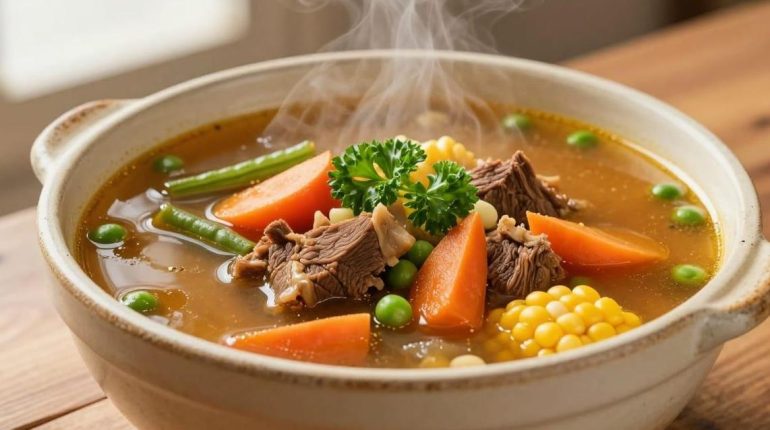
This substantial soup embodies American comfort food in all its glory. With 1.5 pounds of stewing beef, it offers a complete and nourishing meal capable of satisfying 8 to 10 guests. The recipe relies on a traditional aromatic architecture: dried basil (1½ teaspoons), oregano (1 teaspoon), and thyme (½ teaspoon) orchestrate a deep taste symphony.
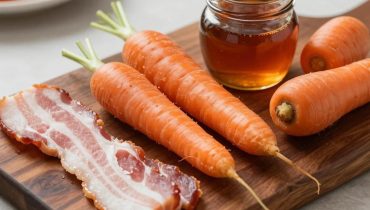
The balance lies in the combination of eight carefully selected vegetable varieties. Yellow onions, carrots, celery, and garlic form the classic aromatic base, while potatoes, green beans, corn, and peas provide texture and color. This combination of fresh and frozen products simplifies preparation without compromising final quality.
The secret to this success lies in two words: time and technique. Browning the meat in two steps develops essential caramelized flavors, while the 1 hour and 20 minutes of cooking time guarantee optimal tenderness. Each component reaches its point of perfection through meticulously timed staggered additions.
This one-pot dish transcends a simple soup to become a meal in its own right, ideal for warming up chilly evenings or feeding a hungry table. The total investment of 1 hour and 40 minutes transforms into eight generous portions of pure culinary comfort.
Strategic Ingredients For Optimal Results
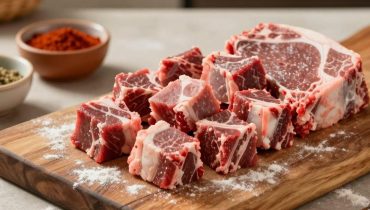
This flavor architecture relies on precise dosing that leaves nothing to chance. The 680 grams of stewing beef constitute the protein backbone, browned in 2.5 tablespoons of olive oil strategically distributed between the three initial cooking phases. This calibrated amount avoids overcooking while developing an essential caramelized crust.
The aromatic trinity forms the flavor foundation: 1¾ cups of chopped yellow onions, 1¼ cups of carrots, and 1 cup of celery create a powerful vegetable base, reinforced by 1½ tablespoons of minced garlic. These generous proportions guarantee aromatic depth without any single component dominating.
The cooking liquid combines 8 cups of low-sodium broth with two 14-ounce cans of diced tomatoes. This substantial volume allows for optimal flavor dilution while maintaining a substantial consistency. The trio of dried herbs integrates harmoniously: basil dominates at 1½ teaspoons, oregano follows with 1 teaspoon, while thyme brings its final touch at ½ teaspoon.
The supporting vegetables simplify execution: 1 pound of potatoes in ¾-inch cubes, 1½ cups of fresh green beans, then 1½ cups of corn and 1 cup of frozen peas are added progressively. This smart combination of fresh and frozen reduces prep time without sacrificing texture or taste.
The Seven Essential Phases Cooking Technique
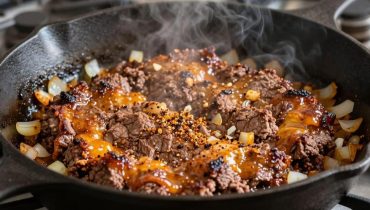
This methodical progression transforms raw components into a culinary symphony. The initial browning splits the meat into two batches of 4 minutes each, guaranteeing uniform caramelization impossible to achieve in an overcrowded pot. This separation preserves the high temperature necessary for the Maillard reaction that fixes deep flavors.
The cooking of aromatics follows precise timing: 3 minutes to soften onions, carrots, and celery, then 1 additional minute once the garlic is incorporated. This delay prevents the garlic from burning while releasing its volatile aromatic compounds at the optimal moment.
The initial 30-minute simmer after boiling tenderizes the beef muscle fibers in the broth and tomato bath enriched with herbs. This fundamental phase creates the flavor matrix into which the vegetables will be integrated. The lid maintains moisture while occasional stirring homogenizes the heat.
The sequential addition of vegetables respects their respective resistance: potatoes require 20 minutes to partially break down without disintegrating, green beans require 15 minutes to retain a slight crunch, while frozen corn and peas require only 5 minutes to reach ideal temperature and texture. This temporal orchestration avoids mushiness while guaranteeing perfect beef tenderness after 1 hour and 5 minutes of total cooking in the liquid.
Secrets For Perfect Execution
Beyond temporal mechanics, several technical gestures separate the amateur from the savvy cook. Meticulously drying the meat before browning is the first imperative: surface moisture creates steam that prevents caramelization. Paper towels remove this barrier, allowing direct contact with the hot cast iron to generate that golden crust rich in natural glutamates.
Layered seasoning amplifies flavor depth. Salt and pepper applied to the meat before browning penetrate the outer fibers, while a second seasoning of the broth diffuses flavors throughout the liquid. This double intervention avoids the blandness that plagues under-seasoned soups where salt is only added at the end.
Thermal management determines the final texture: the vigorous initial boil quickly raises the temperature before the gentle covered simmer takes over. This abrupt transition from high to low heat creates the ideal conditions to soften collagen without hardening muscle proteins. Occasional stirring redistributes heat and prevents sticking to the bottom.
The incorporation of fresh chopped parsley (⅓ cup) occurs exclusively after turning off the heat. This final touch preserves the volatile essential oils and the vibrant green color that prolonged heat would destroy. Immediate service in preheated bowls maintains the optimal tasting temperature, rewarding the 1 hour and 40 minutes of meticulous attention with the complete sensory experience promised by this professionally revisited American classic.