📌 Beef tataki: the citrus and sweet spice marinade that transforms meat in 2 hours
Posted 23 December 2025 by: Admin
The Perfect Tataki Cooking Technique
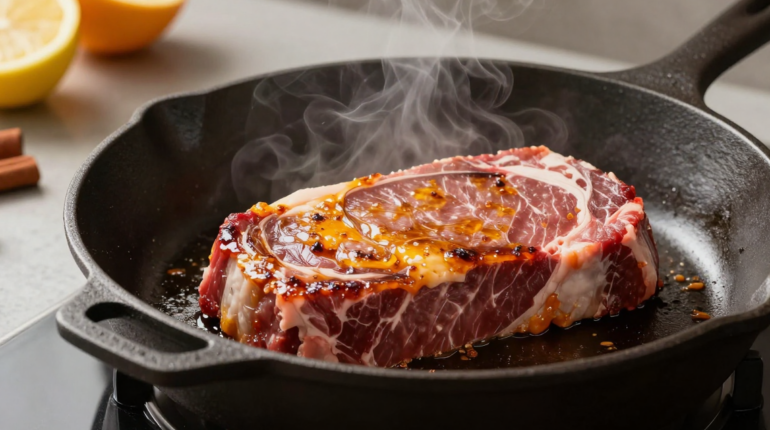
Tataki is based on a simple but demanding principle: a radical thermal contrast that transforms a simple ribeye into a delicate medium-rare delicacy. Searing is done in a heavy-bottomed pan heated to high temperature, where the pre-seasoned meat grills for exactly 2 minutes per side. This chronometric precision is not arbitrary: it creates a caramelized crust on the surface while preserving a pink and tender heart.
Immediately removed from the heat, the steaks are plunged into a cold marinade made of freshly squeezed orange and lemon juices, flavored with cinnamon and nutmeg. This ice bath stops the cooking process instantly and allows the sweet spice aromas to delicately penetrate the flesh for 2 hours in the refrigerator. Plastic wrap traps the flavors and maintains the necessary moisture.
The final slicing requires a perfectly sharpened knife to cut the meat into ultra-thin strips without tearing the fibers. This step reveals the characteristic cooking gradient of tataki: a seared border framing a bright red heart. Each slice bears witness to technical mastery, where every second of cooking counts and where the patience of resting transforms the texture.
The Bold Alliance Of Sweet Spices And Citrus
The marinade reveals its full aromatic complexity here. Freshly squeezed orange and lemon juice forms the liquid base, but its role goes beyond simple acidity: it subtly tenderizes the meat fibers while providing a lemony freshness that contrasts with the richness of the ribeye. This citrus alliance naturally tempers the power of the beef without ever masking it.
The balance is refined with the addition of cinnamon and nutmeg, two spices traditionally reserved for desserts but perfectly suited to tataki. Cinnamon diffuses a gentle warmth that envelops every bite, while nutmeg adds a slightly woody depth. These warm notes amplify the character of the beef rather than covering it, creating a unique flavor profile where spices and citrus dialogue harmoniously.
This marinade is not limited to flavoring the meat. Once the beef is sliced and plated, it transforms into a vinaigrette to season the lamb’s lettuce and beetroot duo that accompanies the dish. Nothing is wasted: every aroma-filled drop extends the taste experience and unifies the flavors on the plate. This dual function illustrates a thoughtful culinary approach where every ingredient fully justifies its presence.
The Gourmet Side: Celery Purée With Maple
Faced with the aromatic intensity of the tataki, the celery purée plays the card of contrasting sweetness. Frozen celery discs cook slowly in milk for 10 to 12 minutes, a method that preserves the velvety texture of the vegetable while avoiding the bitterness sometimes associated with fresh celeriac. The milk naturally tempers the strong vegetal notes and prepares a creamy base.
Enrichment with semi-salted butter provides the fat necessary for a silky purée, but it is the maple syrup that truly transforms this side dish. Its natural sugar introduces an unexpected sweet-and-savory note that responds to the warm spices of the beef without competing with them. This touch of maple creates a flavor bridge between the spiced meat and the freshness of the salad, subtly unifying the components of the dish.
Prolonged blending until a perfectly smooth texture is obtained guarantees an impeccable quenelle when plating. This homogeneous consistency intentionally contrasts with the firmness of the beef slices, offering a creamy respite between each bite of meat. The whole is balanced: where the tataki asserts its character, the purée soothes and rounds off, preparing the palate for the final freshness of the seasoned salad.
Refined Plating And Presentation Tips
After two hours of resting, the beef reveals its transformation. The slices, cut as thinly as possible with a perfectly sharpened knife, are arranged in a harmonious fan on the plate. This cutting requires precision and firmness: a sharp blade passes through the medium-rare flesh without crushing it, preserving the silky texture obtained by the cold marinade. Each slice reveals the pink heart bordered by a thin caramelized crust.
The quenelle of purée finds its strategic place next to the beef, never on top. This visual separation respects the integrity of each component while inviting the eye to move around the plate. The small handful of lamb’s lettuce-beetroot duo brings the necessary chromatic contrast: the tender green and deep red respond to the brown tones of the tataki and the creamy beige of the purée.
The final tip transforms a leftover into a key element: the marinade, far from being thrown away, becomes the salad dressing. Its citrus and spice notes harmonize naturally with the lamb’s lettuce leaves, while the lemony acidity awakens the earthy sweetness of the beetroot. This creative reuse completes the flavor circle, subtly recalling the flavors that permeated the meat. Each element now dialogues with the others, forming a coherent whole where nothing is lost.