📌 Beef and Vegetable Soup
Posted 13 April 2026 by: Admin
I ate bland, thin soups throughout my childhood — basically hot water with a few floating vegetables. This one is the exact opposite. A dense, amber broth, beef that shreds apart, and vegetables that turn melt-in-the-mouth tender after a long, slow cook: the kind of dish that reminds you why simmering is still the best culinary technique ever invented.
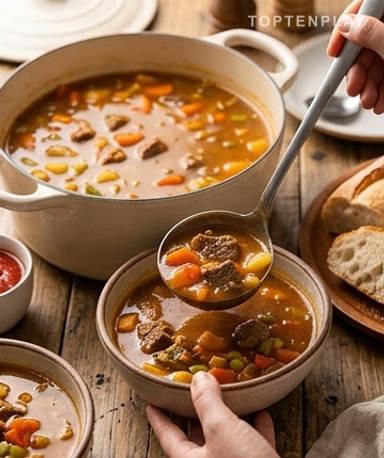
The broth leans towards a coppery orange, with those amber glints you see when light passes through it. It smells of thyme, slightly camphorous bay leaf, and that simmered beef base you recognize immediately — that smell you can only describe by saying ‘the smell of a real kitchen.’ The vegetables have lost their sharp edges; they’ve become rounded and absorbent. And you can tell the beef is tender just by looking at it: those slightly separated fibers floating gently in the bowl.
Why you’ll love this recipe
Ingredient Notes
Everything you need for a complete soup: beef, fresh vegetables, and simple aromas.
- Stewing beef : Chuck or shoulder, no fillets. These cheap cuts are made for slow cooking — their fibers relax slowly, the collagen melts into the broth giving it body and a silky consistency. A noble cut here would be a waste of money and a guaranteed disappointment.
- Canned tomatoes : Whole peeled tomatoes are preferred. You crush them as you add them — you control the texture better. A good Italian brand makes a difference. Canned crushed tomatoes are often more acidic and less flavorful.
- The potato : It’s not just there for looks — it naturally thickens the broth by releasing its starch during cooking. Choose melting varieties like Charlotte or Bintje. Waxy potatoes stay in compact cubes and don’t provide that natural binding.
- Beef broth : Homemade if you have it, but a good concentrate works just fine. Taste before seasoning — some industrial broths are very salty and you’ll end up with an undrinkable soup if you add more on top.
- Celery stalks : Often forgotten, always missed. It brings that slightly bitter and aromatic base that prevents the soup from tasting ‘flat.’ Two stalks are enough. It’s not a celery dish.
Why I always sear the meat first
Many people throw everything in the pot at once. That’s a mistake. Searing the beef pieces in a hot pot until they are golden like light caramel — those little brown deposits that form on the bottom are concentrated flavor. When you deglaze with the broth, they loosen and go straight into the soup. The beef should sizzle loudly when touching the metal, not simmer timidly. If you hear a soft whisper, the pot isn’t hot enough and you’ll steam the meat instead of searing it. Don’t skip this step.
Vegetables: in what order, and why it changes everything
Not all vegetables have the same cooking time. Carrots and potatoes go in early — they need at least 35 to 40 minutes to become truly tender. Green beans or zucchini should arrive in the last 15 minutes, or you’ll end up with a greenish mush. Onions and garlic start with the meat: they must melt completely into the broth, disappear, not stay in crunchy pieces that surprise the teeth. Cut the vegetables into generous pieces — 2-3 cm cubes. Too small, they disintegrate during the long cooking time and you lose all texture.
Between simmering and boiling, there is a difference no one explained
A soup that boils aggressively results in a cloudy broth and stringy meat. What we want is a simmer — those little bubbles that lazily rise to the surface, not a restless boil. Adjust the heat once it simmers, put the lid on leaving a small opening, and let it go for 50 minutes to an hour. It’s during this time that the beef releases its collagen into the broth, the vegetables soak up the juices, and the thyme and bay leaf slowly infuse. Don’t interfere too much. Let it work on its own.
The final touch that almost everyone forgets
Taste the broth two minutes before serving — not during cooking, at the end. Salt levels evolve, vegetables absorb, and liquid levels change. A bit of freshly ground pepper at this stage makes a real difference. If the broth seems a bit flat, half a teaspoon of tomato paste or a squeeze of lemon juice wakes it up instantly. Serve in deep, warm bowls — if you run the bowls under hot water for 30 seconds before filling them, the soup stays piping hot until the last spoonful.
Tips & Tricks
- Skim the surface at the beginning of cooking, as soon as it starts to simmer. That grayish foam consists of impurities coming out of the meat — they aren’t dangerous, but they cloud the broth and give it a slightly bitter taste over time.
- The soup freezes very well for up to 3 months, but freeze it without the potatoes: they become grainy and mealy when thawed. Add them fresh when you reheat it, they will be cooked in 20 minutes.
- If your broth is too thin at the end of cooking, remove the lid and let it reduce over medium heat for 10 minutes. Conversely, if you have too little, a bit of hot water is enough — no need to add extra broth, the flavors are already well established.
Which cut of beef should I choose for this soup?
Chuck roast or shoulder are the best choices — they are long-fiber cuts, rich in collagen, which become melt-in-the-mouth tender after an hour of slow cooking. Avoid noble cuts like fillet or ribeye: they stay dry and flavorless in a broth.
How long can this soup be stored?
4 days in the refrigerator in an airtight container. Up to 3 months in the freezer, but remove the potatoes before freezing — they become grainy upon thawing. Add them fresh when reheating.
Can I make it in a pressure cooker?
Yes, and it’s even faster: still sear the meat in the pot first, then cook under pressure for 25 minutes. The broth will be slightly less deep than with slow cooking, but the result is still very good.
My broth is too thin, how do I fix it?
Remove the lid and let it reduce over medium heat for 10 to 15 minutes — the starch from the potatoes will naturally do the rest of the work. You can also mash 2-3 pieces of potato directly into the soup with a fork to thicken it without adding anything else.
Can I vary the vegetables according to the season?
It’s highly recommended. In winter: parsnips, turnip, celeriac. In spring: peas, asparagus at the end of cooking. In summer: zucchini, corn. The only rule is to add delicate vegetables (zucchini, green beans) in the last 15 minutes to avoid turning them into mush.
Can I make this soup the day before?
It’s actually preferable. Reheated the next day, the flavors are deeper and the broth is more bound. Keep it in the fridge overnight, reheat over low heat while stirring gently, and taste before serving to readjust the seasoning if needed.
Beef and Vegetable Soup
American / Family
Main course
A generous slow-cooked soup with melting beef chuck, seasonal vegetables, and a flavorful amber broth. The ultimate comfort dish.
Ingredients
- 800g beef chuck, cut into 3 cm cubes
- 2 c. à soupe olive oil
- 1 grosse yellow onion, chopped
- 3 gousses garlic, crushed
- 1 c. à soupe tomato paste
- 1 boîte (400g) whole peeled tomatoes
- 1,5 litre beef broth
- 3 moyennes carrots (~300g), peeled and cut into thick rounds
- 3 branches celery (~150g), cut into pieces
- 2 moyennes melting potatoes (~400g), in large cubes
- 150g trimmed green beans
- 2 feuilles bay leaves
- 3 brins fresh thyme
- 1 c. à café salt (adjust according to broth)
- ½ c. à café ground black pepper
Instructions
- 1Dry the beef cubes with paper towels, season generously with salt and pepper.
- 2Heat the oil in a large pot over high heat. Sear the beef in two batches until bright caramel brown on all sides (3-4 min per side). Remove and set aside.
- 3In the same pot, sauté the onion and garlic over medium heat for 3 minutes until translucent.
- 4Add the tomato paste, mix, and cook for 1 minute while stirring.
- 5Return the beef to the pot. Pour in the peeled tomatoes, crushing them by hand, then the broth. Add the bay leaves and thyme.
- 6Bring to a simmer, skim the surface. Add the carrots, celery, and potatoes.
- 7Cover leaving a small opening, reduce heat and simmer for 50 minutes over low heat.
- 8Add the green beans and continue cooking for 12 to 15 minutes.
- 9Remove the bay leaves and thyme. Taste, adjust salt and pepper. Serve in warm bowls.
Notes
• Make ahead: can be fully prepared the day before. The broth is deeper and the meat even more tender the next day.
• Freezing: freezes up to 3 months, without the potatoes. Add them fresh when reheating.
• Vegetable variations: replace green beans with frozen peas (5 min), corn kernels, or diced zucchini depending on the season.
Nutrition Facts (per serving, estimated)
| 370 kcalCalories | 32gProtein | 27gCarbs | 15gFat |