Basque Chicken, for many, is the ultimate Sunday roast — the one that requires time, attention, and an available grandmother. That’s a myth. Twenty minutes of prep, a few vegetables, and the casserole pot does all the heavy lifting for you.
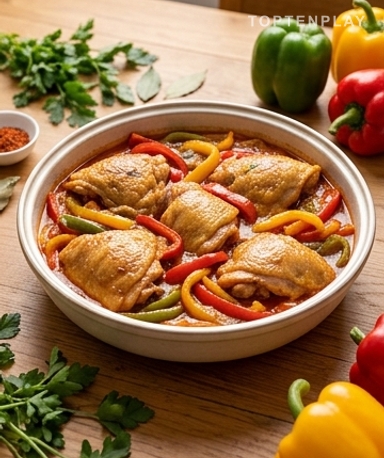
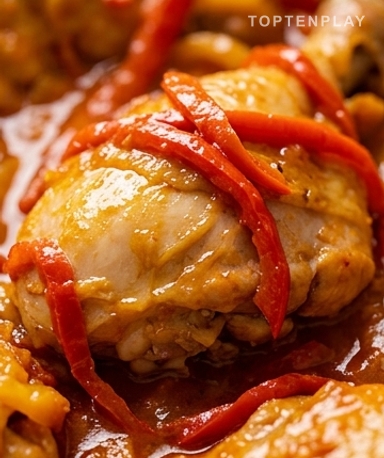
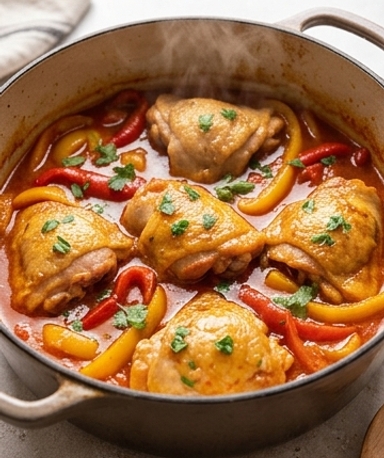
The sauce is a deep orange-red, almost brick-colored, with strips of bell pepper that have completely melted into it. The chicken glistens — skin lightly caramelized, meat soaked in a thick juice loaded with thyme and confit garlic. Lift the lid and the scent hits you all at once: slow-cooked vegetables, pan juices, and that gentle heat of Espelette pepper that rises to the nose without being aggressive. This is exactly it.
Why you’ll love this recipe
Ingredient Notes
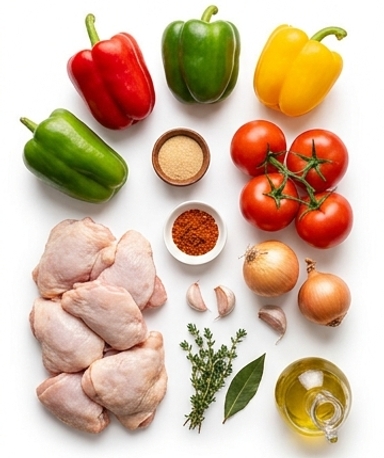
Basque chicken ingredients: simple products, a powerful combination.
- The bell peppers : Get three colors if you can. Red is sweet and fleshy, green brings a slight bitterness, yellow an almost sugary sweetness. This mix gives the piperade its complexity. Outside of summer season, jarred peppers work just fine.
- Espelette pepper : It’s the soul of the dish — a gentle, fragrant, slightly smoky heat, nothing like a pepper that burns. If you can’t find it, mild smoked paprika can help, but Espelette is worth buying a jar; it lasts a long time.
- The tomatoes : In summer with ripe market tomatoes, it’s perfect. In winter, a quality tin of peeled tomatoes does the exact same job — a 400g tin replaces four fresh tomatoes, and the sauce will even be more consistent.
- The chicken : Thighs, drumsticks, or a whole jointed chicken — pieces with the bone in give infinitely more flavor than breasts. The fat and collagen melt into the sauce during cooking, giving it a velvety texture. Avoid breasts: they dry out.
Brown the chicken to a light caramel color — not before
Heat olive oil in a large, heavy-bottomed pot. Place the chicken pieces skin-side down. Don’t move them. Leave them alone for 4 to 5 minutes — you’ll hear a steady sizzle and the skin will gradually turn a light caramel color, almost like shortbread out of the oven. This is exactly what we want: this crust will stick juices to the bottom of the pot and give depth to the final sauce. Flip the pieces, brown for another 3 minutes on the other side, then remove and set aside.
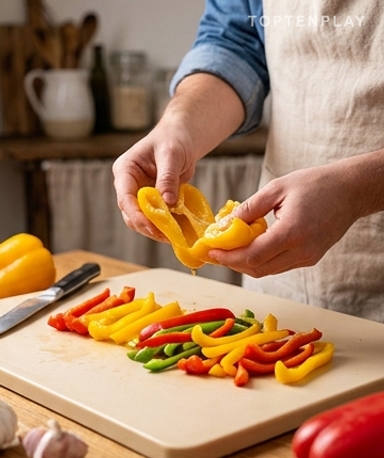
Let the piperade collapse slowly
In the same pot, without touching the juices stuck to the bottom, sauté the sliced onions. They will stick slightly at first, then soften while absorbing everything left by the chicken. Add the sliced peppers. This volume, which seems huge, will shrink by half in ten minutes over medium heat — the strips become supple, translucent at the edges, with a slightly sweet smell emerging. Then add the minced garlic, diced tomatoes, thyme, bay leaf, and Espelette. The sauce forms: the tomatoes release their juices, mixing into a thick, bright red base turning towards warm orange.
Cover and forget the pot for thirty-five minutes
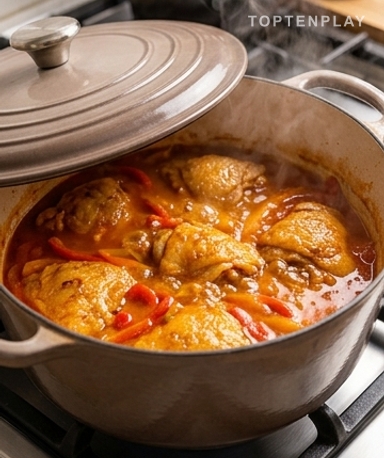
Put the chicken back into the pot, nestled in the piperade. Pour in the 100 ml of chicken stock — just enough to wet the bottom, not to drown it. Cover partially. Turn the heat down to low. You have nothing left to do but stir gently two or three times. The meat will gradually tenderize until it almost falls apart, and the sauce will thicken, coating each piece in a glossy, deep juice with that slight Espelette warmth lingering in the throat. Taste before serving, adjust the salt.
Tips & Tricks
- Don’t drown the chicken in stock — 100 ml is enough. Liquid levels rise during cooking and you want a stew, not a soup. If the sauce looks too thick at the end, add a splash of hot water in small doses.
- Dose the Espelette gradually. Start with half a teaspoon, taste at the very end of cooking and adjust — once it’s in the sauce, you can’t take it out.
- Make it the day before if you’re hosting. Reheated over very low heat with a little water, Basque chicken is better than on the day: the sauce has had time to concentrate and flavors have melded.
Can I prepare Basque chicken the day before?
Yes, and it’s highly recommended. The sauce intensifies after resting overnight in the fridge and the flavors meld much better. Reheat over very low heat with a small splash of water to loosen the sauce.
How to store and reheat leftovers?
Basque chicken keeps for 3 days in the refrigerator in an airtight container. To reheat, use a saucepan over low heat with a little water rather than the microwave, which dries out the chicken.
Can I use chicken breasts instead of thighs?
Technically yes, but the result will be less flavorful and drier. Bone-in pieces (thighs, drumsticks) release collagen during cooking that enriches the sauce. If you only have breasts, reduce the simmering time to 20 minutes maximum.
I don’t have Espelette pepper, what can I replace it with?
Mild smoked paprika is the best alternative — it brings comparable heat and a slight smokiness. Use half a teaspoon. Avoid Cayenne pepper which is much stronger and would completely change the dish’s profile.
Can I use canned tomatoes?
Yes, without hesitation. A 400g tin of peeled tomatoes perfectly replaces four fresh tomatoes, especially in winter when fresh tomatoes have no flavor. Drain slightly to avoid a watery sauce.
What to serve with Basque chicken?
White rice is the classic accompaniment — it absorbs the sauce perfectly. Steamed potatoes or couscous work very well too. Avoid pasta, which might overwhelm the dish.
Basque Chicken
French
Main course
A generous stew of browned chicken pieces in a fragrant piperade of peppers, tomatoes, and Espelette pepper. The signature family dish from South-West France that is simple to prepare and eats even better the next day.
Ingredients
- 1,5 kg chicken cut into pieces (or 6 chicken thighs)
- 3 bell peppers (1 red, 1 green, 1 yellow)
- 4 ripe tomatoes (or 1 400g tin peeled tomatoes)
- 2 onions
- 3 cloves of garlic
- 2 c. à soupe (30 ml) olive oil
- 100 ml chicken stock
- 1 c. à café Espelette pepper
- 1 bay leaf
- 1 sprig of thyme
- 1 c. à café salt
- ½ c. à café ground black pepper
Instructions
- 1Slices the onions, seed and cut the peppers into strips, dice the tomatoes and mince the garlic.
- 2Heat olive oil in a large pot over medium-high heat. Place chicken pieces skin-side down and brown for 4 to 5 minutes without touching, then flip and brown for another 3 minutes. Season with salt and pepper and set aside.
- 3In the same pot, sauté the onions for 3 to 4 minutes until translucent.
- 4Add the pepper strips and cook for 10 minutes over medium heat, stirring occasionally, until they soften.
- 5Stir in the minced garlic, diced tomatoes, thyme, bay leaf, and Espelette pepper. Simmer for 8 to 10 minutes until a thick sauce forms.
- 6Return the chicken pieces to the pot. Pour in the chicken stock — the liquid should not entirely cover the chicken.
- 7Partial cover and simmer on low heat for 30 to 35 minutes, stirring gently two or three times.
- 8Taste the sauce, adjust salt and Espelette pepper to your liking. Serve hot.
Notes
• Make ahead: even better the next day. Prepare the day before, let cool to room temperature, then refrigerate. Reheat over very low heat with a little water.
• Storage: 3 days in the refrigerator in an airtight container. Freezes very well for up to 3 months.
• Winter variation: replace fresh tomatoes with a 400g tin of drained peeled tomatoes for a more concentrated and consistent sauce.
Nutrition Facts (per serving, estimated)
| 410 kcalCalories | 38gProtein | 13gCarbs | 23gFat |