📌 Baked Mac and Cheese Gratin
Posted 13 April 2026 by: Admin
That sound — the low bubbling of a cheese sauce thickening on the stove — is the sign that dinner is going to be good. Baked mac and cheese is the dish that silences everyone at the table. No fuss, no hard-to-find ingredients — just pasta, cheese, and an oven.
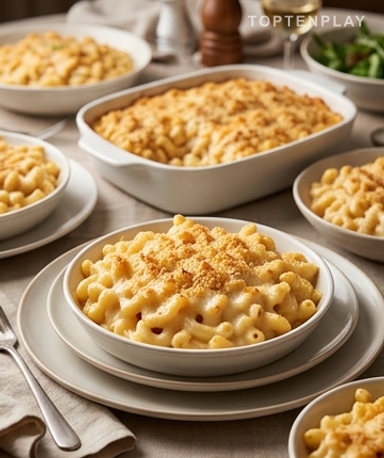
What you see there is exactly what you’re going to get. A light caramel-colored crust that cracks under the spoon, a thick and glossy sauce that flows slowly between the pasta, and cheese that pulls with every serving. The smell coming out of the oven when the crust browns — warm butter, melted cheese, slightly toasted notes — it’s hard to wait. But let it rest for two minutes, it’s worth it.
Why you’ll love this recipe
Ingredient Notes
All the ingredients gathered: pasta, cheeses, butter, and milk for a competitive mac and cheese.
- Elbow macaroni : The classic shape, hollow inside — it holds the sauce inside every tube. Penne or rigatoni work too, but elbow macaroni remains the best choice for this recipe.
- Mature cheddar : Use an aged cheddar (mature or extra-mature), not the orange mild burger cheddar. It has character and holds up better to heat. And grate it yourself: pre-shredded cheese contains anti-caking agents that produce a grainy sauce instead of a smooth one.
- Swiss Gruyère : This brings the stretch. A 12-month Comté also works very well. Without it, the sauce is good but less complex. Otherwise, Emmental does the job.
- Whole milk : For a creamy sauce, not a watery one. Semi-skimmed gives a lighter béchamel — it works, but it’s less indulgent. If you want to go further, replace a third of the milk with heavy cream.
- Panko breadcrumbs : Japanese breadcrumbs provide a lighter and crispier crust than classic breadcrumbs. Mix them with melted butter before spreading — they brown much more evenly and uniformly.
Béchamel, without the panic
Start with the sauce. Melt the butter over medium heat — not high, otherwise it will brown before you have time to add the flour. Add the flour all at once and stir immediately. You’ll get a compact, slightly sandy paste: that’s the roux. Let it cook for one to two minutes, stirring constantly — this removes the raw flour taste that would spoil the sauce. Then pour in the warm milk in a thin stream, whisking non-stop. The sauce thickens gradually over five to seven minutes. It’s ready when it coats the back of a spoon and a finger swipe leaves a clean trail.
Cheese, off the heat
Remove the pot from the heat before adding the cheese. That’s the rule. Over the heat, the cheese turns grainy and the sauce becomes greasy and lumpy. Off the heat, the residual heat is enough to melt everything gently. Add the grated cheddar and Gruyère in two batches, stirring well between each addition. The sauce takes on a slightly amber cream color and a glossy texture that flows slowly from the spoon. Season with salt, freshly ground black pepper, and a pinch of mustard powder if you have it — it enhances the cheese without being noticed.
Quick assembly
The pasta should cook in parallel in well-salted boiling water — stop it one minute before the time indicated on the package, as it continues cooking in the oven. Drain and mix directly into the cheese sauce. Pour everything into a buttered baking dish. Mix the panko breadcrumbs with melted butter and spread in an even layer on top. There, it’s ready for the oven.
20 minutes and a golden crust
Bake at 180 °C, fan oven, for twenty to twenty-five minutes. The dish is ready when the crust is golden like light caramel and the edges are bubbling slightly with a soft sizzle. No need to open the oven every five minutes — let it do its job. Take the dish out and resist the urge to dive in immediately: five minutes of rest and the sauce stabilizes, and the portions hold together better.
Tips & Tricks
- Always grate the cheese yourself. Thirty seconds of extra work, but the sauce will be twice as smooth — pre-shredded cheese contains starch that interferes with melting.
- If the béchamel thickens too quickly before adding the pasta, loosen it with warm milk, one spoonful at a time. Cold milk creates lumps.
- For an even crunchier crust, place under the broiler for two to three minutes at the end of cooking. Keep your eye on the oven: it goes from perfect to burnt in less than a minute.
Can baked mac and cheese be prepared in advance?
Yes, no problem. Assemble the dish up to the breadcrumb step, cover it, and keep it in the refrigerator for up to 24 hours. On the day, take it out 20 minutes before baking and add 5 to 10 minutes of extra cooking time since the dish starts cold.
How to store and reheat leftovers?
In the refrigerator in an airtight container, it lasts 3 days. To reheat, add a tablespoon of milk to the portion before microwaving — this prevents the sauce from drying out and becoming sticky. In the oven at 160 °C covered with foil is even better but takes longer.
My sauce turned grainy, what happened?
The cheese was added while the sauce was still on the heat, or the temperature was too high. Excessive heat causes the cheese to “break” — the fats separate from the proteins. Always remove the pan from the heat before stirring in the cheese, and add it in small amounts.
Can you freeze this mac and cheese?
Technically yes, but the result is disappointing: the béchamel tends to separate upon thawing and the pasta texture becomes mushy. It’s better to prepare it fresh or in advance (max 24h in the fridge) rather than freezing.
What cheeses can be used instead of cheddar and Gruyère?
Comté, Emmental, Beaufort, Raclette — any cheese that melts well works. Avoid mozzarella alone (too neutral in taste) and Parmesan alone (too dry and salty). The ideal is a mix: one flavorful cheese + one melty cheese.
Should the pasta be cooked al dente or completely cooked before going in the oven?
Al dente, or even a bit under. Stop the cooking one minute before the time indicated on the package. The pasta absorbs the sauce and continues to cook during the 20-25 minutes in the oven — if they start overcooked, they end up soft and textureless.
Baked Mac and Cheese Gratin
American
Main course
Macaroni coated in a cheddar and Gruyère béchamel sauce, baked in the oven with a crispy breadcrumb crust. The American classic in its most satisfying version.
Ingredients
- 400g elbow macaroni
- 200g mature cheddar, grated
- 150g Swiss Gruyère, grated
- 500ml whole milk
- 50g unsalted butter (for the béchamel)
- 30g flour
- 50g panko breadcrumbs
- 20g melted butter (for the breadcrumbs)
- 1 tsp mustard powder
- 1 tsp salt
- ½ tsp ground black pepper
Instructions
- 1Preheat the oven to 180 °C (fan oven). Cook the macaroni in a large pot of salted boiling water, one minute less than the time indicated on the package. Drain and set aside.
- 2In a large saucepan, melt 50g of butter over medium heat. Add the flour all at once and stir vigorously for 1 to 2 minutes to cook the roux.
- 3Pour the warm milk in a thin stream while whisking constantly. Thicken over medium heat for 5 to 7 minutes until the sauce coats the back of a spoon.
- 4Remove the pan from the heat. Stir in the grated cheddar and Gruyère in two batches, mixing well between each addition. Add the mustard powder, salt, and pepper.
- 5Pour the drained pasta into the cheese sauce and stir to coat well. Transfer to a buttered baking dish (about 30×20 cm).
- 6Mix the panko breadcrumbs with the 20g of melted butter, then spread evenly over the top.
- 7Bake for 20 to 25 minutes, until the crust is golden and the edges are bubbling. Let rest for 5 minutes before serving.
Notes
• Advance preparation: assemble the dish without the breadcrumbs, cover and refrigerate for up to 24h. Add the breadcrumbs just before baking and extend the cooking time by 5 to 10 minutes.
• Storage: keeps for 3 days in the refrigerator. Reheat in the microwave with a spoonful of milk to loosen the sauce, or in the oven at 160 °C covered with foil.
• Richer variation: replace 150ml of milk with heavy liquid cream for an even creamier sauce.
Nutrition Facts (per serving, estimated)
| 640 kcalCalories | 28gProtein | 58gCarbs | 32gFat |