📌 Baked Ground Beef and Potatoes: The family recipe that transforms 7 ingredients into a comfort dish
Posted 23 February 2026 by: Admin
The Foundations of a Reinvented Family Classic
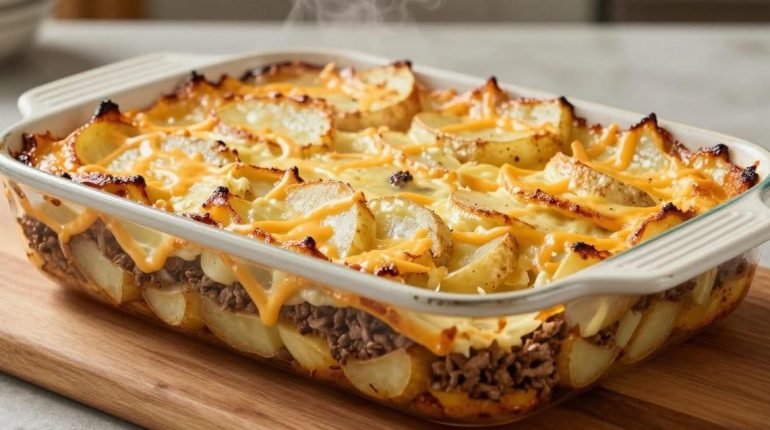
The Hamburger Potato Casserole embodies this unpretentious North American cuisine that has spanned decades, establishing itself on family tables and at community gatherings alike. Its strength lies in a layered culinary architecture where 1.5 pounds of ground beef, 4 large Russet potatoes, and 2 cups of shredded cheddar orchestrate a textural dialogue between melting, creamy, and savory.
This trilogy of ingredients forms the backbone of a dish designed to nourish without ostentation. Russet potatoes, a starchy variety, absorb the cooking juices while maintaining their structure. The ground beef brings its protein density and characteristic umami. The cheddar, melted into a generous topping, seals the whole with a golden layer that contrasts with the tenderness of the lower layers.
Far from contemporary sophistications, this gratin embraces its status as a versatile comfort food: as legitimate for a Tuesday night family dinner as it is for a noticed contribution at a potluck. Condensed mushroom soup, a pillar of American casserole cooking since the 1950s, acts as a creamy binder between the different layers. This methodical composition transforms everyday ingredients into a satisfying dish where each bite reveals the mastered layering of complementary textures.
The Aromatic Palette and Its Assembly Secrets
The medium chopped onion plays a structuring role here that is often underestimated: caramelized with the beef, it diffuses its sweet mildness into the fat rendered by the meat, creating that aromatic base that permeates every layer of the casserole. The 2 tablespoons of olive oil facilitate this transformation while preventing sticking during the initial cooking.
The true alchemy lies in the condensed soup-milk alliance: 10.75 oz of condensed cream of mushroom soup diluted in 3/4 cup of milk generates that signature smooth sauce that coats potatoes and meat without drowning them. This emulsion, neither too thick nor too liquid, migrates between the layers during cooking to bond them while preserving their textural identity.
The trio of spices completes the gustatory structure with calculated precision: 1 teaspoon of garlic powder brings its savory depth, paprika its subtly coloring smoky note, while salt and pepper adjust the final balance. These modest dosages respect the philosophy of the dish: to enhance without dominating, allowing the main ingredients to express themselves fully.
This apparently simple aromatic orchestration reveals an instinctive understanding of culinary harmonies where each component fulfills a precise function in building a coherent and comforting whole.
Layered Architecture: Construction Technique
Slicing the four peeled Russet potatoes is the critical operation: uniformly thin slices, ideally 3 to 4 millimeters, guarantee even cooking of each layer. Irregular thickness would create soft zones next to still-firm segments, sabotaging the textural harmony this casserole seeks.
The layering follows an implacable logic: a first layer of potatoes lining the oiled bottom of the dish, followed by the cooked and drained beef-onion mixture, then a new bed of potatoes. The mushroom-milk sauce is then poured sparingly between the levels, penetrating the gaps without saturating. This alternation is repeated until the ingredients are exhausted, each layer contributing to the overall structure.
The shredded cheddar cheese is used strategically: part mixed into the intermediate layers melts during cooking to bond the whole, the rest reserved for the final surface creating that sought-after golden gratin crust. The 2 cups are distributed according to a precise ratio between internal binder and crispy topping.
This methodical construction transforms ordinary ingredients into culinary architecture where each level dialogues with the others, creating that distinct layered profile upon cutting that visually reveals the technique deployed.
Versatility and Finishes of a Unifying Dish
This meticulous architecture finds its full expression in its dual vocation: a main dish for routine family dinners or the undisputed star of community potlucks. Its ability to nourish generously while maintaining its structural cohesion during transport makes it the ally of large tables, where each portion reveals the same harmony of layers as the first.
Fresh chopped parsley, reserved for the final garnish, transcends its decorative role. This herbaceous touch brings an essential aromatic contrast that cuts through the richness of the melted cheddar and creamy sauce, offering a freshness that awakens the palate between bites. A few pinches are enough to balance the whole without masking the flavors built during cooking.
The comforting dimension of the casserole rests on this alchemy between immediate satisfaction and lasting substance: potatoes provide satiety, beef provides umami depth, and cheese provides addictive creaminess. No element dominates; each component fulfills its function in a balance designed to satisfy without being heavy.
This adaptability to contexts explains its longevity in the North American culinary repertoire: the same dish crosses generations by adjusting to circumstances, from a rushed Tuesday night to a Sunday celebration, without ever betraying its unifying essence around a shared table.