Warm camembert—everyone knows the drill. A box in the oven, some bread, and you’re set. What people don’t see coming is what blood orange and raisins do to this cheese when heat gets involved—the sugar concentrates, the acidity softens, and it all melts into the creamy paste in a way that makes the classic cheese board feel completely obsolete.
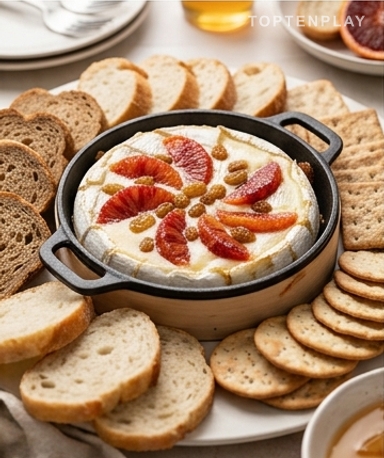
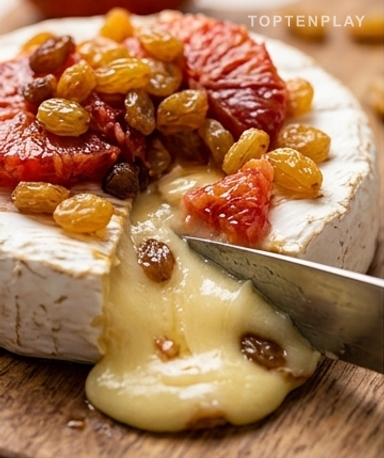
The rind is slightly puffed, almost cracked at the edges, with those russet hues turning to light caramel brown in spots. The blood orange slices have lost their moisture during baking—they’ve become translucent, almost candied, in a deep red that leans towards burgundy. The raisins have plumped up. It smells warm and milky, with that slightly caramelized fruity undertone that rises as you approach the dish. Even before touching the cheese, the soft center flows gently toward the edges.
Why you’ll love this recipe
Ingredient Notes
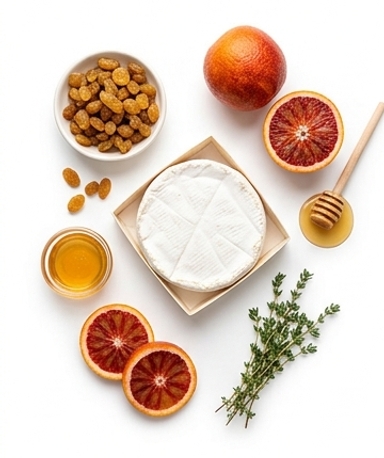
All the ingredients gathered: camembert in its box, blood oranges, raisins, and fresh thyme.
- The Camembert : A real Camembert de Normandie AOP if you can find it, but a classic pasteurized milk camembert does the job just fine here. What really matters: that it is at room temperature before going into the oven. A camembert taken cold from the fridge will cook unevenly—the rind hardens before the center has time to melt.
- Blood Oranges : This is what gives the recipe its character. Blood oranges have a finer acidity and a slight bitterness that classic oranges don’t have. If you can’t find any—they are only available for a few weeks in winter—Navel oranges will do, but the result will be a bit less visually interesting, minus that burgundy red.
- Raisins : Classic golden raisins work very well. Zante currants or Sultanas provide a slightly different sweetness if you want to vary. The idea is that they swell during cooking, absorb the orange juice, and become almost candied.
- Honey : A drizzle just before serving, not during cooking—honey burns quickly in the oven and would become bitter. Acacia honey to stay subtle, or chestnut honey if you like bold flavors.
Setting the stage
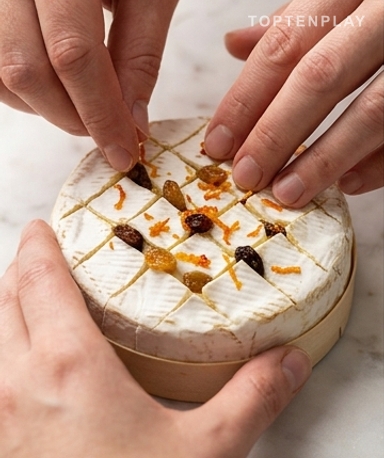
Take the camembert out of the fridge a good half hour before starting. This isn’t optional. Once at room temperature, remove the plastic packaging but leave it in its wooden box—this is what will hold it together during baking. With a sharp knife, score the surface of the rind in a diamond pattern about two centimeters wide. No need to go deep, just cut into it. This will allow the flavors to penetrate and the cheese to breathe during cooking.
Preparing the orange
Zest one blood orange before cutting it—using a fine grater, just the colored part, not the bitter white pith. Then slice your oranges into rounds about five millimeters thick. Thin, but not too thin: otherwise they disappear completely during cooking. Squeeze the orange end pieces directly onto the scored camembert. This juice will soak deep into the cheese—it’s what does the real work. Arrange the slices on top, distribute the raisins into the gaps of the scoring, then sprinkle the zest over it.
Fifteen minutes, no more
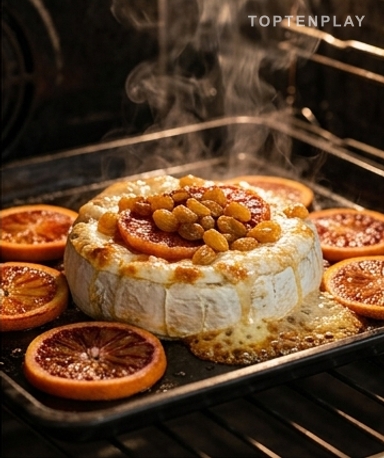
Preheated oven to 180°C, convection setting. The wooden box goes directly into the oven—place it on a baking sheet to avoid any accidents. Fifteen minutes. Not sixteen, not eighteen. After this time, the camembert starts to dry out and the rind hardens instead of staying supple. You know it’s ready when you touch the top with the back of a spoon and it sinks slightly, like a well-filled cushion. The smell changes too: at first it just smells like warm cheese, then towards the end, that slightly sweet caramelized background appears from the raisins and orange juice reducing together.
To the table, quickly
Baked camembert doesn’t wait. Once out of the oven, you have about eight to ten minutes before the cheese starts to set. Place the box directly on a wooden board, drizzle with a light thread of honey, and add a few sprigs of fresh thyme if you have some. Arrange toasted bread, crackers, or baguette slices around it. Cut into the rind in a cross shape in front of everyone and let the cheese flow. Then everyone dips whatever they like.
Tips & Tricks
- For an even more intense result, macerate the raisins for 20 minutes in orange juice before using them—they absorb the juice and release even more flavor during baking. No need to drain them completely.
- Check that the wooden box doesn’t have a metal staple under the bottom—some do. If it does, simply put the camembert in a small ovenproof dish; it won’t change the result.
- Do not cover during cooking. The rind must remain exposed to the heat to color. If you cover it, you’re steaming it—it becomes soft, not meltingly gooey, and it’s not the same.
- Keep a few orange zests for serving: added at the last minute, they bring a freshness and a bright aroma that contrasts with the richness of the melted cheese.
Can I use a regular orange instead of a blood orange?
Yes, a Navel or Valencia orange works very well. The blood orange brings a slight bitterness and a particularly beautiful burgundy red color, but the taste result remains very close with a classic orange. Avoid clementines—they are too sweet and unbalance the cheese.
Can the wooden camembert box really go in the oven?
Yes, at 180°C it holds up without a problem. Just check that there is no metal staple under the bottom—some manufacturers use them. If so, remove it or use a small gratin dish of the same diameter. Always place the box on a tray to prevent it from burning by direct contact with the rack.
Can I prepare this baked camembert in advance?
The preparation, yes: score the camembert, arrange the oranges and raisins, and keep it all in the fridge until two hours before serving. However, the cooking must be done at the last moment—melted camembert that cools down becomes compact and loses all its creaminess.
What should I serve with this baked camembert?
Toasted country bread or sliced baguette is essential. Cereal crackers provide an interesting texture contrast. To make it a full meal, add a simply dressed green salad—the freshness cuts through the richness of the melted cheese.
Can I make this recipe on a barbecue or outdoor grill?
Absolutely, and it’s actually excellent. Place the box directly on the grill over indirect heat or moderate embers, and close the barbecue lid. Cook for about 12 to 15 minutes. The slight smokiness pairs very well with the cheese and orange.
What should I do if there is leftover baked camembert?
Honestly, leftovers are rare. But if there are any, once cooled, the cheese sets—you can scoop it out with a spoon and spread it cold on bread like a spread. Don’t put it back in the oven a second time; it would lose all its texture.
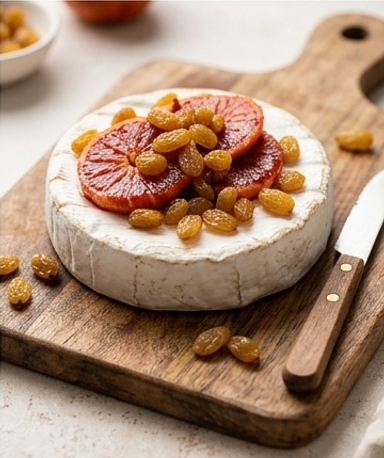
Baked Camembert with Blood Orange and Raisins
French
Appetizer
A whole camembert baked with blood orange slices and raisins, served melted directly in its box. Five ingredients, fifteen minutes of cooking.
Ingredients
- 1 (250g) camembert (in its wooden box)
- 2 blood oranges
- 50g golden raisins
- 2 tbsp acacia honey
- 1 tsp grated blood orange zest
- 4-5 sprigs fresh thyme
Instructions
- 1Take the camembert out of the fridge 30 minutes before starting. Preheat the oven to 180°C convection.
- 2Remove the plastic packaging from the camembert while keeping the cheese in its wooden box. Place the box on a baking tray.
- 3With a sharp knife, score the surface of the rind into diamonds about 2 cm wide.
- 4Zest one blood orange with a fine grater. Cut both oranges into 5 mm thick slices.
- 5Squeeze the juice from the orange ends directly onto the scored camembert. Arrange the slices on top, distribute the raisins into the gaps, then sprinkle with the zest.
- 6Bake for 15 minutes. The cheese is ready when it gives slightly under the pressure of the back of a spoon.
- 7Remove from the oven, immediately drizzle with a bit of honey and sprinkle with fresh thyme leaves. Serve immediately with toast or crackers.
Notes
• This dish should be eaten exclusively right out of the oven—the cheese sets as it cools and cannot be reheated properly.
• To intensify the flavors, soak the raisins for 20 minutes in orange juice before use. They become softer and release their sugar during cooking.
• Outside of blood orange season (available from December to March), classic oranges work very well—the result is slightly sweeter and less colorful, but just as good.
Nutrition Facts (per serving, estimated)
| 195 kcalCalories | 9gProtein | 14gCarbs | 11gFat |