Suivez-nous
28 May 2026

Baked Camembert: the simple method to transform it into a melting dish with caramelized mushrooms

Illustration image © TopTenPlay
Symbolbild © TopTenPlay

Publicité

Ingredient and Oven Preparation

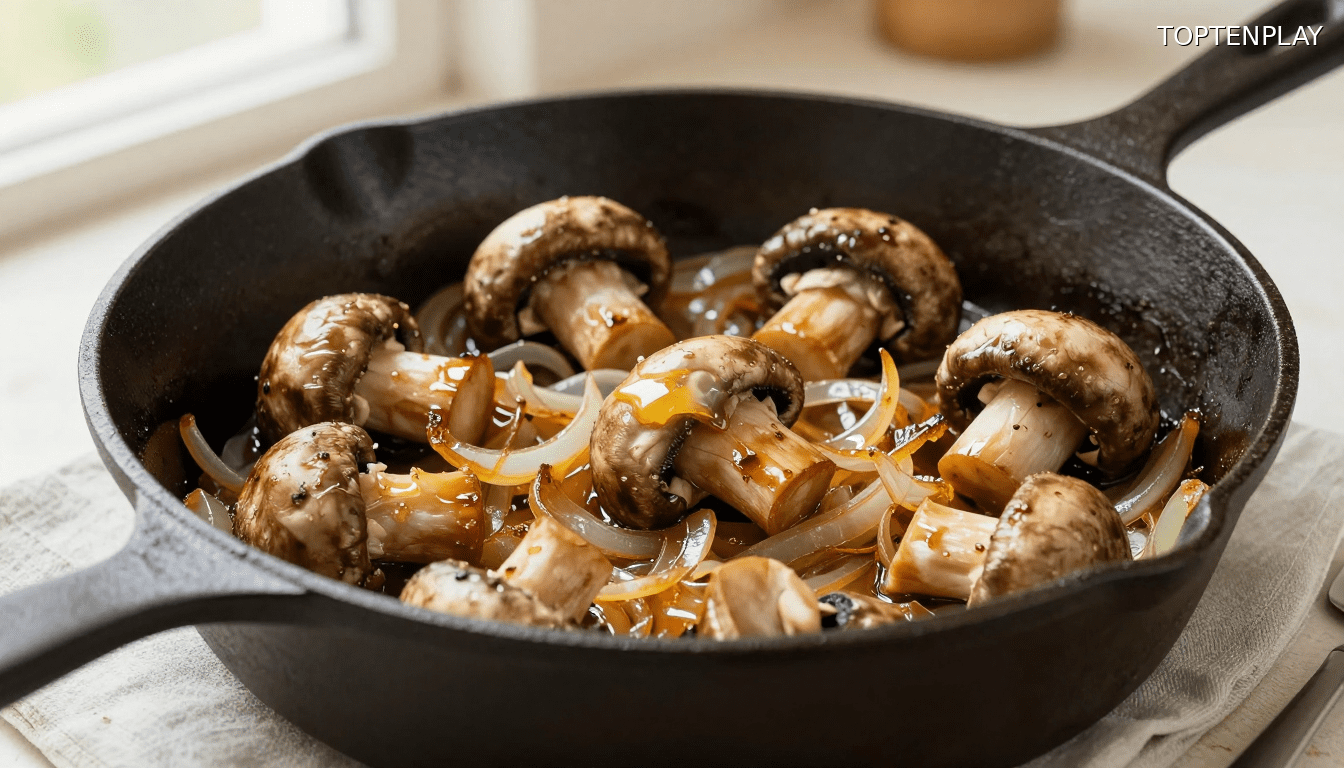
The success of this Camembert with mushrooms relies on methodical preparation from the very first steps. The oven must be preheated to 180 °C, the ideal temperature to obtain a melting cheese without excessive liquefaction. During this preheating, finely slice the half-onion before sautéing it in a knob of butter until it takes on a golden color.

The button mushrooms, cut into large pieces after peeling, then join the pan. This generous size preserves their texture and prevents them from releasing too much water. Cooking lasts for exactly 10 minutes, a crucial duration to develop umami aromas and concentrate rustic flavors. This step cannot be rushed: the mushrooms must lose their natural moisture and soak up the caramelized taste of the onions.

The addition of cider vinegar occurs only after these mandatory ten minutes, never before. This final acidity deglazes the pan, captures the cooking juices, and brings a fruity note that perfectly balances the creamy richness of the cheese. This aromatic preparation constitutes the flavor foundation of the recipe, transforming a simple Camembert into a mastered gastronomic creation.

Publicité

Illustration image © TopTenPlay
Symbolbild © TopTenPlay

The Camembert Preparation Technique

Once the garnish is ready, it’s time for the technical gesture that distinguishes this recipe from a simple cheese improvisation. Carefully remove the Camembert from its wooden box and discard its paper wrapping. Choose a ramekin perfectly fitted to its dimensions: the cheese must rest in it without any empty space, an essential condition for even cooking and optimal hold.

The crucial step lies in incising the top. Armed with a sharp knife, make light incisions on the upper crust, without ever piercing the cheese to the bottom. This professional technique creates absorption channels that will allow the aromas of the onion confit, mushrooms, and herbs to penetrate the creamy heart during cooking. Too deep, the incision would cause the cheese to collapse; too superficial, it would block the infusion of flavors.

This delicate cross-hatching transforms the crust into a permeable membrane while preserving the structure of the Camembert. The traced furrows also hold the garnish on the surface, preventing it from sliding off when placed in the oven. This seemingly trivial mastery of gestures determines the final success: a cheese melting at the heart, deeply flavored, without losing its hold. The Camembert thus prepared now awaits its aromatic garnish to reveal its gastronomic potential.

Publicité

Illustration image © TopTenPlay
Symbolbild © TopTenPlay

The Gourmet Assembly

The incised Camembert becomes the vessel for a triple aromatic alliance that transcends ordinary cheese. Generously spread the onion confit over the entire surface, utilizing the furrows traced previously. The caramelized texture of the onion immediately penetrates the incisions, setting the stage for a fusion of flavors.

Next, add the sautéed button mushrooms, still warm from the butter and infused with cider vinegar. Their juice seeps into the cheese while their generous pieces create relief and texture contrast. Finish with a sprinkling of fresh herbs that bring the final botanical touch to this layered composition.

Bake for exactly 10 to 15 minutes at 180 °C. This calibrated timing triggers the metamorphosis: the Camembert melts progressively under the heat, its paste becoming runny without ever completely liquefying. The upper crust softens just enough to let the garnish sink in naturally, creating a homogeneous blend of cheese, onion confit, and mushrooms.

Publicité

Monitor the cooking: beyond 15 minutes, the Camembert risks collapsing; under 10 minutes, it will remain firm in the center. The optimal result features a slightly golden surface and a creamy heart that delicately escapes at the first cut. This controlled transformation prepares the moment of tasting where texture and temperature will play their decisive roles.

Publicité
Partager sur Facebook