📌 Bagworms on Evergreens: How a Single Moth Can Lay Hundreds of Eggs and Kill Your Trees Before You Notice
Posted 12 December 2025 by: Admin
Image d’illustration © TopTenPlay EN
The Silent Invasion: When Camouflage Becomes A Weapon
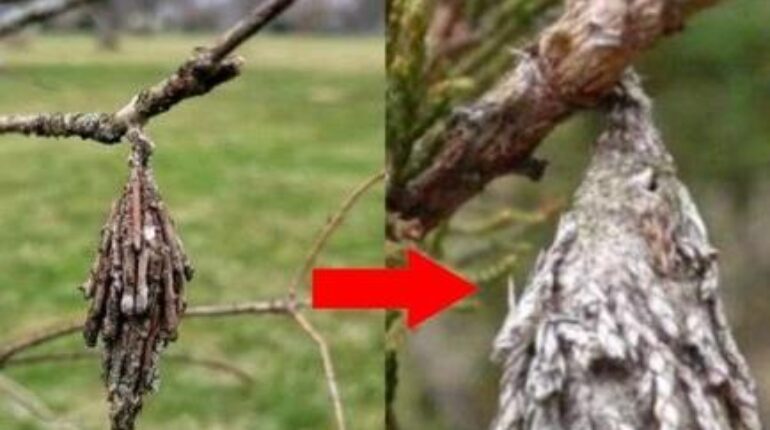
Those brown capsules hanging from my junipers and cedars seemed almost decorative at first—tiny ornaments that blended seamlessly into the branches. I assumed they were dead needles clumped together from a storm, debris that nature shed each season. But something about their structure felt deliberate, too organized to be accidental. When I tugged one gently and felt how firmly it clung to the bark, uneasiness crept in. This wasn’t debris. This was something alive.
What I didn’t realize that afternoon was that my trees were under systematic attack.
These capsules are bagworms—moth larvae disguised in portable fortresses built from the very tree they’re destroying. Imagine a pest intelligent enough to use your evergreen’s own needles and twigs as camouflage, then settle inside that stolen shell to feed continuously. Each bag serves as a sleeping pod, dining room, and fortress combined, swinging gently in the wind while remaining virtually invisible to the untrained eye.
The real horror lies in their reproductive efficiency. A single female bagworm can lay hundreds of eggs inside just one bag. When spring arrives, these microscopic larvae—barely the size of a grain of rice—hatch and spread across the tree like an invisible tide. By early summer, they’ve begun constructing their own protective pouches while feeding relentlessly on the foliage. Within weeks, what appeared to be harmless decorations transforms into an advancing colony consuming your tree from within.
Most homeowners don’t notice the threat until needles rain down and their once-sturdy evergreens suddenly appear fragile and faded—long after intervention becomes exponentially harder.
Image d’illustration © TopTenPlay EN
The Precision Attack: Understanding Their Calculated Lifecycle
Nature rarely operates on guesswork. The bagworm’s timeline follows a mathematical precision that borders on chilling—and understanding it is the key to catching them before devastation takes hold.
Late spring marks the moment when my cedar’s fate truly hung in balance, though I didn’t know it yet. The eggs laid inside those bags the previous fall hatch into larvae no larger than a grain of rice. These microscopic invaders don’t scatter randomly across the tree. They spread methodically, immediately beginning to feed. This is the critical window—the easiest moment to stop an infestation before it accelerates. Yet most gardeners remain oblivious. The damage is invisible. The feeding is silent.
By early summer, the larvae have begun their architectural phase. As they consume the tree’s foliage, they simultaneously gather needles, silk, and debris to construct new protective bags around themselves. Each week, these pouches grow heavier and longer, swinging from branches like innocent ornaments. I’d stared at them dozens of times before understanding what they truly were—living fortresses that housed an expanding colony.
Late summer through fall brings transformation. The larvae seal themselves inside these bags and pupate. Males eventually emerge as small moths with delicate wings, searching for the females who remain trapped inside their woven shells, waiting to reproduce. The cycle completes. The next generation is assured.
What struck me hardest wasn’t the complexity—it was the inevitability. Once spring arrives, the machinery resets. Understanding this timeline revealed something darker: without intervention at that brief early-summer window, stopping bagworms becomes exponentially harder.
Image d’illustration © TopTenPlay EN
The Irreversible Damage: From Weakening To Death
By midsummer, the deception becomes undeniable. What began as a few barely noticeable brown capsules transforms into something far more sinister—a visible unraveling of the tree itself.
The progression follows a predictable arc that I now recognize instantly. Foliage thins noticeably. Patches of bare branches emerge where needles once hung densely. Evergreens shift from their characteristic deep green to a faded, almost desperate brown, the discoloration creeping downward from the canopy like a slow death sentence. Needles rain down at rates that defy the season, carpeting the ground beneath in a way that screams distress to anyone paying attention.
Bagworms don’t assault a tree dramatically. They methodically strip the soft inner tissue of each needle, leaving skeletal branches that catch the light in ways they never should. A mature tree can lose up to 80% of its foliage in a single season—a devastation that sounds abstract until you’re staring at your own half-bare cedar, wondering if it will survive the winter.
Here’s what stopped me cold: one severe infestation doesn’t weaken an evergreen or temporarily injure it. It kills it permanently. Not next year. Not after rehabilitation. Permanently. Those little dangling bags I once mistook for harmless decorations were slowly executing my trees while I watched, uninformed and helpless.
Understanding this stakes changed everything. The bags weren’t warnings I could ignore—they were sentences already pronounced.
Image d’illustration © TopTenPlay EN
The Battlefield Strategy: Proven Defense Methods
Knowledge alone doesn’t save trees. After watching my cedar struggle to recover, I transformed from passive observer into active defender—and discovered that bagworm control isn’t complicated; it simply requires precise timing and commitment.
The most effective strategy arrives during dormancy. From late fall through early spring, inspect your evergreens methodically. The bags become obvious once you know what to seek: those brown, ragged capsules clinging to branches. Hand-removal with gloves—cutting or pulling each bag and burning or sealing it in trash—prevents hundreds of larvae from hatching. Never compost them. Each removed pod represents potential colonies eliminated before they spread.
But prevention extends beyond removal. A monoculture garden invites disaster; when one tree becomes vulnerable, others follow inevitably. Plant different species, varying textures and heights. Bagworms prefer evergreens, but a diverse landscape disrupts their momentum.
Strengthen your trees’ natural resistance simultaneously. Water during droughts, mulch to protect roots, prune stressed limbs. Healthy trees fight harder and recover faster when attacked. Then invite nature’s allies: birds, parasitic wasps, and other predators that view bagworms as simple meals. Add birdhouses and nectar-rich flowers to welcome them.
For severe infestations, biological treatments like Bacillus thuringiensis kurstaki target bagworms during early larval stages without harming beneficial insects. Timing remains critical—miss the early window and effectiveness plummets dramatically.
The distinction between losing a tree and saving it often comes down to one simple choice: whether you noticed before it was too late.