Have you ever opened the fridge on a Saturday morning wondering what to cook that’s actually worth the effort? Ayam kecap is exactly that. One hour of relaxed cooking, a single pot, and a sauce so fragrant it fills the whole apartment long before it’s even ready.
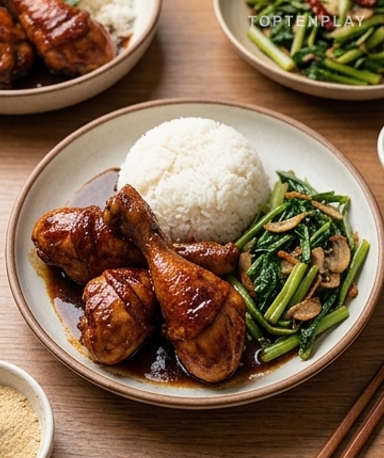
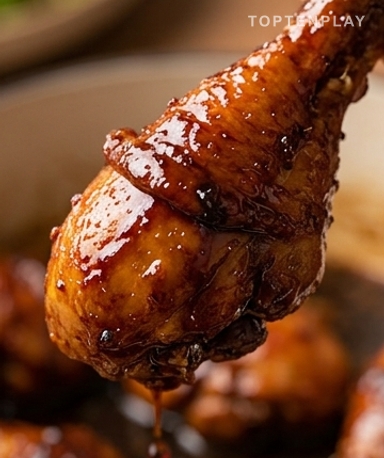
The drumsticks are a deep mahogany brown, almost black in places where the sauce has caramelized against the hot side of the pot. The sauce itself is dense and glossy—not runny, not solid, just syrupy enough to generously coat every piece. When you lean over the pot, a wave of sweet soy mixed with clove and a subtle hint of citrus greets you. The white rice underneath absorbs it all, quietly.
Why you’ll love this recipe
Ingredient Notes
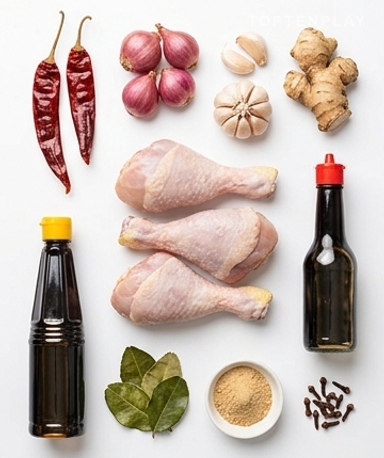
Everything you need for a successful ayam kecap: chicken drumsticks, kecap manis, whole spices, and fresh aromatics.
- Kecap manis : The backbone of the recipe. A thick, sweet Indonesian soy sauce, very different from classic soy sauce—closer to a dark syrup. Brand Bango or ABC both work perfectly. If you can’t find it, mix two parts soy sauce with one part honey: it’s an honest approximation.
- Galangal powder : A cousin of ginger, but with a more earthy and slightly peppery side. Fresh galangal is magnificent but hard to find—the powder gives a very decent result here. Don’t replace it with ginger; it’s really not the same thing.
- Dried makrut lime leaves : They provide that subtle citrus undertone you couldn’t name if you didn’t know the ingredient. We let them simmer whole in the sauce and don’t eat them—they do their job in silence, then we remove them before serving.
- Tamarind paste : Optional on paper, almost essential in practice. It brings a discreet acidity that perfectly balances the sweetness of the kecap manis. A small teaspoon, no more—the goal isn’t to taste the acidity, but to round out the sauce.
- Chicken drumsticks : Choose meaty ones. Drumsticks stay moist even if they cook a few minutes longer than planned—unlike breasts which dry out quickly, these have the generosity to forgive small inaccuracies.
Salt the chicken and let it rest for ten minutes
It might seem trivial, but this short dry salting really changes things. The salt begins to penetrate the meat and relax it slightly. Rub each drumstick between your hands; you’ll feel the skin getting slightly damp after a minute. Place them in a bowl and use these ten minutes to weigh your spices, slice the onion, and prepare everything you’ll need—once the pot is hot, you won’t have time to search the cupboards for jars.
Sear hard, but don’t move the drumsticks
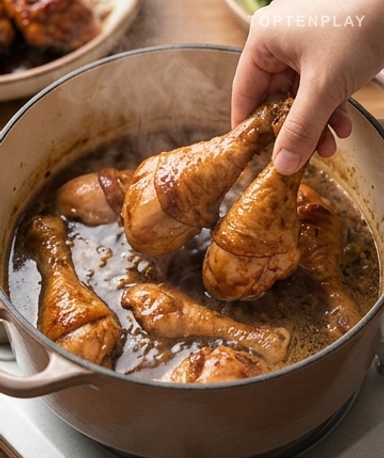
Heat your pot over high heat with two tablespoons of neutral oil. When the oil starts to shimmer slightly at the edges, add the drumsticks. You’ll hear a clear searing sound—that’s exactly what we want. Leave them. No need to move them every thirty seconds. Two to three minutes per side is enough to get a golden color like light caramel. Once well-browned on all sides, remove them from the pot and set them on a plate—they will continue to release some juice, don’t lose that juice.
Melt the aromatics until they smell amazing
In the same pot without washing it—that’s the whole point—add the ginger, garlic, and onion. Medium heat. We’re looking for light caramelization, not burning. After two or three minutes, the rising aroma is sharp and pungent, and the garlic starts to turn golden. Add the dried chilies if using. Pour in the chicken broth to deglaze, and scrape the bottom of the pot well with a wooden spoon—all those golden bits stuck down there are where the flavor is stored.
Add the spices, then simmer uncovered
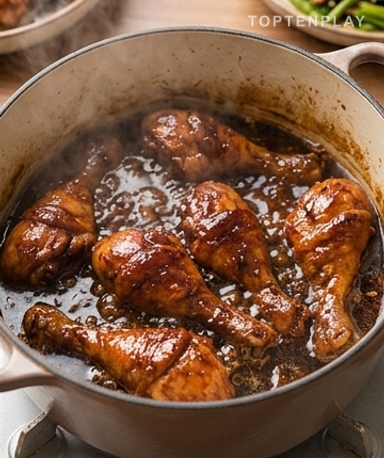
Galangal, coriander, cloves, makrut leaves, kecap manis, soy sauce, tamarind paste, pepper. All in at once. Stir, bring to a simmer, then put the drumsticks back in the pot along with any juices that accumulated on the plate. Twenty-five minutes uncovered, turning them every five to ten minutes. The sauce starts out looking like coffee with milk and ends up almost black and dense, with small bubbles making a regular ‘blop’ sound.
Wait until the sauce coats your spoon
This is the final moment, and it deserves your attention. Turn up the heat slightly and let it reduce for a few more minutes. Dip a spoon into the sauce and lift it: if the sauce runs down slowly and covers the back of the spoon without dripping off, it’s ready. Taste before adding salt—between the soy sauce and kecap manis, there is often enough already. Serve over plain white rice with a side of sautéed vegetables.
Tips & Tricks
- Do not cover the pot during cooking—you need the liquid to evaporate so the sauce reduces and concentrates its flavors. A lid on top will leave you with a broth, not a glaze.
- If your sauce reduces too quickly before the chicken is cooked, add a little broth, not water. Water dilutes the flavors while broth maintains them.
- You can remove the drumsticks from the pot at the end of cooking and reduce the sauce alone over high heat for two or three minutes—this allows you to control the thickness without risking overcooking the meat.
Where can I find kecap manis?
Asian grocery stores are the safest bet—the Bango and ABC brands are the most common. Alternatively, some well-stocked supermarkets have it in the international aisle. If you really can’t find it, mix 2 parts soy sauce with 1 part honey: it’s not identical, but it makes the recipe doable while you wait to order some online.
Can I use other chicken parts?
Yes, bone-in, skin-on thighs work very well and give a result close to drumsticks. Chicken breasts are not recommended here: without bone or skin, they dry out quickly during cooking and the sauce won’t coat them the same way. If using larger pieces, add 5 to 10 minutes to the cooking time.
How to store ayam kecap?
It keeps for 3 days in the refrigerator in an airtight container. The sauce will slightly solidify when cold, which is normal—it regains its texture when gently reheated in a pan with a tablespoon or two of broth or water. It also freezes very well for up to 2 months.
The sauce isn’t thickening, what should I do?
It simply needs more time and a slightly higher heat. First, check that the pot isn’t covered—a lid prevents evaporation and the sauce stays runny. If necessary, remove the drumsticks and reduce the sauce alone over medium-high heat for 3 to 5 minutes, stirring regularly to prevent it from burning at the bottom.
Can I prepare this dish in advance?
Yes, and it’s even better reheated the next day—the spices have had time to properly infuse into the meat. Prepare it the day before until finished, let it cool, and refrigerate. On the day, reheat over low heat, adding a splash of broth if the sauce is too thick.
Is galangal really different from ginger?
Yes, and it’s worth not confusing them. Galangal has a more earthy, slightly peppery, and less pungent profile than ginger—it brings a different depth to Indonesian dishes. If you can’t find it, use ginger in smaller quantities, but be aware that the result will have a distinct character.
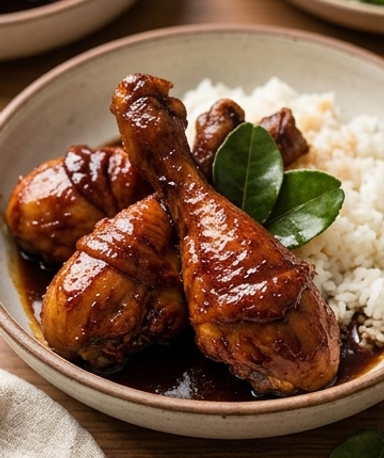
Ayam Kecap — Indonesian Braised Chicken
Indonesian
Main Course
Chicken drumsticks simmered in a fragrant kecap manis sauce with Indonesian spices. A comforting and generous dish, perfect served over white rice.
Ingredients
- 1,1 kg chicken drumsticks (about 6 pieces)
- ½ tsp salt
- 2 tbsp (30 ml) neutral oil (sunflower, canola, or avocado)
- ½ tsp finely grated fresh ginger
- 3 cloves garlic, minced
- 50 g shallots or red onion, finely sliced
- 3 dried whole chilies (optional)
- 530 ml (2¼ cups) low-sodium chicken broth
- ¾ tsp galangal powder
- ¾ tsp ground coriander
- ¾ tsp ground cloves
- 3 dried makrut lime leaves
- 3 tbsp (45 ml) kecap manis (Indonesian sweet soy sauce)
- 2 tbsp (30 ml) soy sauce
- 1 tsp (5 g) tamarind paste (optional)
- ½ tsp ground white or black pepper
Instructions
- 1Rub the drumsticks with salt on all sides and let rest for 10 minutes at room temperature.
- 2Heat the oil in a pot over high heat. Sear the drumsticks for 2-3 minutes per side until uniformly golden brown. Set aside on a plate.
- 3In the same pot over medium heat, sauté the ginger, garlic, shallot, and dried chilies (if using) for 2-3 minutes until lightly caramelized.
- 4Pour in the broth and deglaze by scraping the bits from the bottom of the pot. Add the galangal, coriander, cloves, makrut leaves, kecap manis, soy sauce, tamarind paste, and pepper. Stir well.
- 5Bring to a simmer, then return the drumsticks and accumulated juices to the pot. Cook uncovered for 25 minutes, turning the chicken every 5-10 minutes.
- 6Slightly increase the heat and let the sauce reduce until it coats the back of a spoon. Taste and adjust salt if necessary.
- 7Serve immediately with plain white rice and sautéed vegetables.
Notes
• For a more intense glaze, remove the drumsticks at the end of cooking and reduce the sauce alone over high heat for 2-3 minutes while stirring, then coat the chicken before serving.
• Keeps for 3 days in the refrigerator. Reheat gently with a splash of broth—the sauce solidifies when cold and regains its texture with heat.
• Without kecap manis: mix 30 ml soy sauce + 15 ml honey as an approximate substitute.
Nutrition Facts (per serving, estimated)
| 315 kcalCalories | 29 gProtein | 8 gCarbs | 18 gFat |