Have you ever stared at a bunch of asparagus wondering what to do with them, besides boiling them? This tart is the direct answer. Five minutes of work, a store-bought puff pastry, and the oven handles everything.
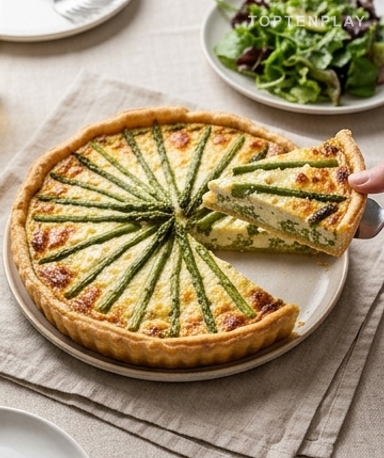
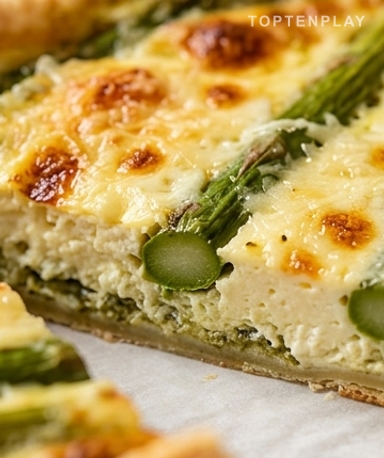
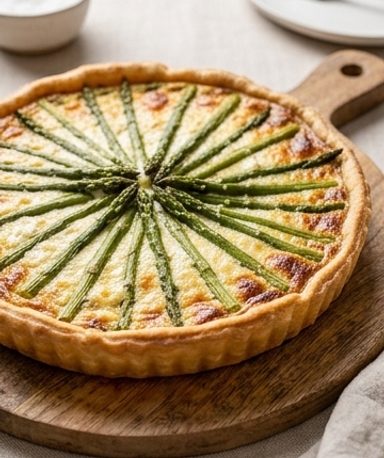
The edges of the pastry rose up on their own during baking, forming a small golden wall — not dark brown, just that light caramel that means it’s ready. Inside, the egg custard set with just a slight wobble, creamy and supple at the same time. The pesto infused the entire base with a deep, herbaceous green. As for the asparagus, they turned from bright green to khaki, with the tips slightly crunchy to the touch.
Why you’ll love this recipe
Ingredient Notes
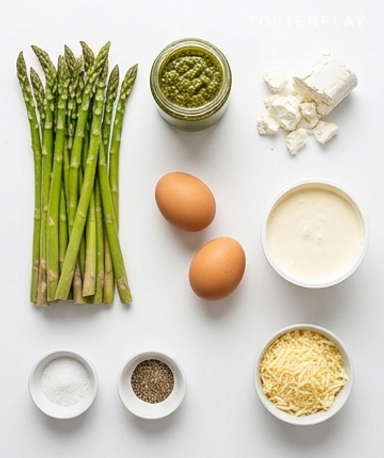
A few simple ingredients are enough: thin green asparagus, homemade or store-bought pesto, fresh goat cheese, and a ready-to-use puff pastry.
- Thin green asparagus : Definitely go for the thin ones — not the thick white asparagus that require 20 minutes of cooking. Thin green ones cook in 25 minutes on the tart without prior blanching. Choose a bunch where the stalks are all roughly the same diameter, otherwise some will be overcooked while others remain hard.
- Pesto : Store-bought or homemade, both work. If using store-bought, avoid versions with sunflower oil which give a flat taste — check the label, it needs olive oil. Half a jar is the right amount to cover the entire dough without seeing the pastry through it.
- Goat cheese : A classic log (bûchette) works perfectly. Cut it into rounds that you crumble roughly with your fingers — no need to overwork it. It partially melts during baking, creating small creamy and slightly tangy pockets that balance the richness of the pesto.
- Cream : The recipe suggests soy cream, and it works very well if you want something lighter. Otherwise, heavy cream (30% fat) gives a smoother custard. In both cases, 20 ml is intentionally very little — just enough to bind the eggs without drowning the tart.
- Grated cheese : It’s not the main ingredient, but it makes the difference on the surface: it browns slightly at the end of baking and creates that little crust that cracks when you cut the tart. Gruyère or Emmental work very well. You don’t need much — just enough to cover.
Let’s start with the dough
Take the puff pastry out of the fridge about 10 minutes before — it spreads better at room temperature and breaks less. Unroll it directly onto the baking sheet with its parchment paper. Fold the edges over by 1 to 2 centimeters all around to form the border: this rim will puff up during baking and hold the filling. No need for a mold. Store-bought dough is already the right size, and honestly, it makes everything simpler.
The mixture, quick and easy
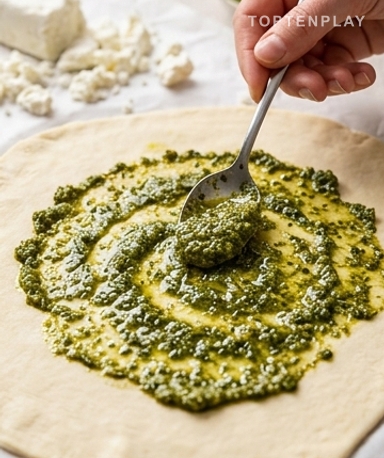
In a bowl, whisk the two eggs with the cream, salt, and pepper. It takes 30 seconds. The goal is just to homogenize — no need to whip anything. Then spread the pesto on the pastry base with the back of a spoon, in an even layer up to the folded edges. Crumble the goat cheese on top, then gently pour the egg mixture over. At this stage, the tart already smells of basil and garlic — that’s a good sign.
Asparagus, raw and intended
Peel the asparagus if they are a bit fibrous at the base — a vegetable peeler, two passes, and it’s done. Arrange them on the tart by pressing them slightly into the mixture, tips pointing outwards or towards the center, as you like. They will cook directly in the oven’s heat and the moisture of the egg cream. Sprinkle the grated cheese over. Lightly, not in a thick layer.
25 minutes, not a minute less
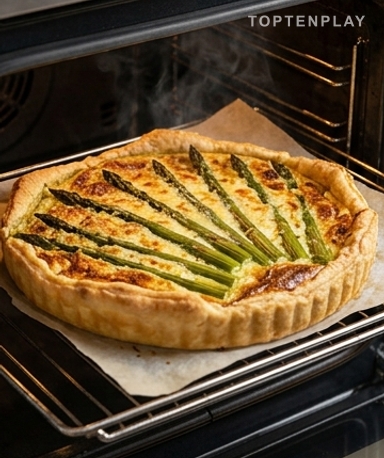
Preheat the oven to 180°C, fan-assisted if you have it. The tart goes in for 25 to 30 minutes. You’ll know it’s ready when the puff pastry edges have taken on that light caramel color and the center no longer wobbles when you gently shake the tray. The asparagus tips start to brown very slightly on the edges — this is intentional, not an accident. Let it cool for 5 minutes before cutting: too hot, the cream is still soft and it will run everywhere.
Tips & Tricks
- Don’t cut the tart immediately out of the oven — 5 minutes of rest and the slices hold much better. The cream needs this time to set completely.
- If you have pesto leftovers at the bottom of the jar, drizzle them over the tart after baking. The acidity of raw pesto contrasts well with the heat of the dish.
- To check the cooking without opening the oven every 5 minutes: look at the edges. When they are golden like a shortbread cookie, the center is usually set too.
- Serve with a slightly vinegary salad — the acidity cuts through the richness of the goat cheese and pesto and balances the meal.
Can I use white asparagus instead of green?
Technically yes, but it’s not ideal. White asparagus are thicker and more fibrous — they require blanching for 5 to 7 minutes before going on the tart, otherwise they stay hard. Thin green ones cook directly from raw in 25 minutes, which is the whole point of this recipe.
How to store the tart and for how long?
It keeps for 2 days in the refrigerator, covered with plastic wrap or in an airtight container. Cold, it is very good as is. To reheat, put it in the oven for 10 minutes at 160°C — the microwave softens the puff pastry and that would be a shame.
Can I prepare it in advance?
Yes, it is even recommended. Prepare it the day before, let it cool completely before refrigerating. The flavors of the pesto, goat cheese, and asparagus blend much better after a night in the fridge. Take it out 15 minutes before serving.
What to do if I don’t have pesto?
You can replace it with green tapenade, hummus, or simply fresh cream mixed with fresh herbs (basil, chives). The result will be less fragrant but just as good. Avoid tomato sauce — the acidity doesn’t pair well with the goat cheese here.
How to prevent the bottom of the pastry from getting soggy?
Two things: first, don’t put too much pesto (5-6 teaspoons, no more). Second, make sure the oven is properly preheated before baking — a slow temperature rise prevents the pastry from searing quickly. Using the bottom rack can also help if your oven doesn’t heat well from below.
Can I freeze this tart?
Not really. Freezing degrades the texture of the puff pastry which becomes soft upon thawing, and the egg custard becomes slightly grainy. Better to make it fresh — it only takes 5 minutes to prepare.
Asparagus, Pesto, and Goat Cheese Tart
French
Main course
An ultra-fast spring savory tart to prepare, with green asparagus cooked directly raw on a bed of pesto and goat cheese. Ready in 35 minutes.
Ingredients
- 1 rectangular puff pastry (about 230g)
- 65g pesto (about ½ jar)
- 100g goat cheese (log type)
- 2 eggs
- 20ml soy cream or heavy cream
- 250g thin green asparagus (about 1 bunch)
- 30g grated cheese (Gruyère or Emmental)
- 1 pinch salt
- 1 pinch black pepper
Instructions
- 1Preheat the oven to 180°C (fan oven). Unroll the puff pastry onto the baking sheet with its parchment paper and fold the edges over by 1 to 2 cm all around.
- 2In a bowl, whisk the eggs with the cream, salt, and pepper until the mixture is smooth.
- 3Spread the pesto on the pastry base with the back of a spoon, then crumble the goat cheese on top.
- 4Gently pour the egg mixture over the topped pastry.
- 5Peel the base of the asparagus if necessary, then arrange them on the tart by pressing them slightly into the mixture.
- 6Sprinkle the grated cheese over and bake for 25 to 30 minutes, until the edges are golden and the center is set.
- 7Let cool for 5 minutes before cutting and serve with a green salad.
Notes
• Storage: 2 days in the refrigerator. Reheat in the oven at 160°C for 10 minutes — avoid the microwave which softens the pastry.
• Variant: replace the goat cheese with ricotta or feta for a milder or saltier result according to taste.
• Make ahead: the tart is better prepared the day before — flavors develop in the cold and slices hold better.
Nutrition Facts (per serving, estimated)
| 490 kcalCalories | 16gProtein | 25gCarbs | 35gFat |