📌 Asparagus and Morel Velouté
Posted 29 March 2026 by: Admin
An asparagus and morel velouté definitely makes an impression on any table. People see “morels” and imagine a gourmet restaurant, advanced techniques, and three pans to watch at once. In reality: it’s a soup. A really good soup — but a soup nonetheless.
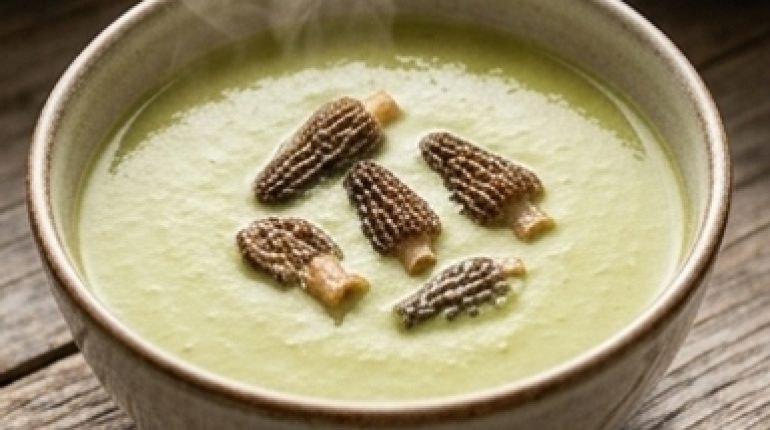
In the bowl, it’s a deep green, almost khaki, with glossy highlights where the cream has blended in. The morels float on the surface, wrinkled and dark like little sponges. A light steam rises, smelling of earth after the rain doubled with something buttery and warm. You dip the spoon in and the texture offers that soft, silky resistance that glides in the mouth without feeling heavy.
Why you’ll love this recipe
Ingredient Notes
Fresh green asparagus, dried morels, shallot, and red onion: the stars of this velouté.
- Green asparagus : No white asparagus here — they produce a more bitter velouté and an unappealing beige color. Green ones have character, a light vegetal bitterness that holds up well during cooking. In peak season (April-June), get them from a greengrocer. Off-season, whole frozen green asparagus works very well for a velouté — no one will know the difference.
- Dried morels : This is the ingredient that changes everything. Fifty grams seems like little, but dried morels concentrate a forest-floor scent that button mushrooms simply don’t provide. The brand Plantin is a reliable reference and easy to find in specialty shops. Most importantly: keep the soaking water, it’s worth its weight in gold.
- Liquid heavy cream : Full-fat, always. 15% light cream tends to split when heated and yields a less creamy result. 40 cl is generous — that’s what makes this velouté truly silky rather than just liquid.
- Shallot and red onion : Shallot brings a fine aromatic sweetness, while red onion adds a slightly sugary note. Together, they form a discreet base that doesn’t overpower the asparagus. Mince them finely — no need for chef-level knife skills, just patience.
First, the morels
They sleep in their bag, light and dry. Pour them into a bowl with very warm water — not boiling, just hot — and let them swell for 45 minutes. They will double in volume, soften, and the water will take on a golden-brown hue, the color of strong tea, with an earthy and woody smell starting to fill the kitchen. You must absolutely keep this water. Filter it through a fine cloth or a fine-mesh sieve to remove any fine sand that settles at the bottom — a single grain of sand in the final velouté and it’s ruined.
The base, without rushing
While the morels soak, mince the shallot and red onion. In a large pot, melt a knob of butter over medium heat — it should foam slightly, not brown. In go the onions: they soften gently, becoming translucent after 3-4 minutes with that discreet sizzle that says everything is going well. Chop the asparagus into chunks in the meantime, without worrying about uniformity — they’ll end up blended anyway. In a small pan on the side, sear the drained morels in a bit of butter over low heat for about ten minutes. They reduce further, darken slightly, and their fresh mushroom aroma settles into the room.
Everything together
Add the asparagus to the pot with the onions and let them sauté for 5 minutes. The asparagus begins to soften, their edges turning from bright green to a deeper olive green. The morels join the mix. Then pour in the filtered soaking water and top up with extra water to cover, then add the bouillon cube. Bring to a boil, then lower to a simmer: 10 to 15 minutes. The doneness test is simple — the tip of a knife should sink into an asparagus piece with no resistance.
The blender moment
Turn off the heat. Let it cool for two minutes before blending; splashes are less violent that way. Plunge the immersion blender in and hold it firmly against the bottom of the pot. The soup goes from bright green to deep green in seconds with that satisfying whirlpool sound. Blend for at least two good minutes for a truly smooth texture — that’s where the velouté magic happens. Then pour in the cream, mix with a spatula, and put back on low heat for one minute. Taste. Adjust the salt.
Tips & Tricks
- Filter the soaking water twice if the bottom of the bowl looks sandy. A single grain of sand in the velouté and you’ll hear it crunch under your teeth — it breaks all the magic of the texture.
- For guests, pass the velouté through a chinois (fine sieve) after blending. It takes 2 extra minutes and gives an ultra-smooth, truly impeccable result.
- The velouté keeps for 2-3 days in the fridge without any issues. It thickens as it cools — loosen it with a bit of hot water when reheating over low heat, never boiling.
Can I use fresh morels instead of dried ones?
Yes, but the result will be different. Dried morels have a concentrated earthy aroma that fresh ones don’t quite have. If you use fresh ones, plan for 150 to 200g and jump straight to the pan stage — no soaking obviously, so remember to add a bit of extra broth to compensate for the lack of liquid.
Can I prepare this velouté in advance?
It’s actually recommended. The velouté prepares very well the day before — the flavors develop even more after resting a night in the fridge. Reheat it over low heat, adding a bit of water if needed, and stir in the cream at the last moment to preserve the creaminess.
Can I freeze this velouté?
Yes, but freeze it without the cream. Cream doesn’t handle freezing well and can separate upon thawing. Freeze the asparagus and morel base, then add the heavy cream when reheating, just before serving.
I don’t have an immersion blender — what should I do?
A classic blender works very well. Let the soup cool for 5 minutes before pouring, fill the blender at most two-thirds full, and hold the lid down with a folded towel — the steam creates pressure. Blend in short pulses at first.
How do I know if the asparagus is cooked enough before blending?
The tip of a knife should sink into a chunk of asparagus without any resistance. If it still resists a bit, let it simmer for 5 more minutes. Under-cooked asparagus will result in a grainy rather than silky velouté, even with a powerful blender.
Can I replace green asparagus with white ones?
Technically yes, but the color will go from deep green to a rather dull beige — much less visually appetizing. White asparagus is also more bitter and less aromatic. If you only have white ones, add a small handful of fresh spinach when blending to bring back the color.
Asparagus and Morel Velouté
French
Starter
A creamy and fragrant soup that combines the vegetal freshness of green asparagus with the woody scent of dried morels. Simple to prepare, impressive to serve.
Ingredients
- 1,2 kg fresh green asparagus
- 50 g dried morels
- 2 shallots
- 1 red onion
- 400 ml liquid heavy cream
- 1 L water
- 1 vegetable bouillon cube
- 30 g butter
- 1 tsp salt (to adjust)
- ½ tsp ground black pepper
Instructions
- 1Soak the dried morels in 500 ml of hot water for 45 minutes. Drain carefully and filter the soaking water through a fine cloth. Set the water aside.
- 2Cut the asparagus into 3-4 cm chunks. Finely mince the shallots and red onion.
- 3In a small pan, sauté the drained morels in 15 g of butter over low heat for 10 minutes, until tender and golden.
- 4In a large pot, melt the rest of the butter over medium heat. Sauté the shallots and onion for 3-4 minutes until translucent.
- 5Add the asparagus chunks and morels to the pot. Sauté everything for 5 minutes while stirring.
- 6Pour in the filtered soaking water and top up with extra water to cover the vegetables. Add the bouillon cube. Bring to a boil.
- 7Reduce to low heat and simmer for 10-15 minutes, until a knife sinks into the asparagus without resistance.
- 8Off the heat, blend with an immersion blender for 2 minutes until perfectly smooth.
- 9Stir in the heavy cream, mix, and place back on low heat for 1 minute. Taste and adjust seasoning. Serve immediately.
Notes
• Storage: keeps for 2-3 days in the refrigerator in a closed container. Reheat over low heat, adding a splash of water if the velouté has thickened.
• Freezing: freeze without the cream for best results. Add the heavy cream only when reheating.
• For an even finer result, pass the velouté through a chinois (fine sieve) after blending before stirring in the cream.
Nutrition Facts (per serving, estimated)
| 460 kcalCalories | 11 gProtein | 14 gCarbs | 31 gFat |