📌 Air recirculation in the car: how this ignored button improves your air conditioning efficiency
Posted 7 February 2026 by: Admin
The Two Air Circulation Modes You Might Not Know About
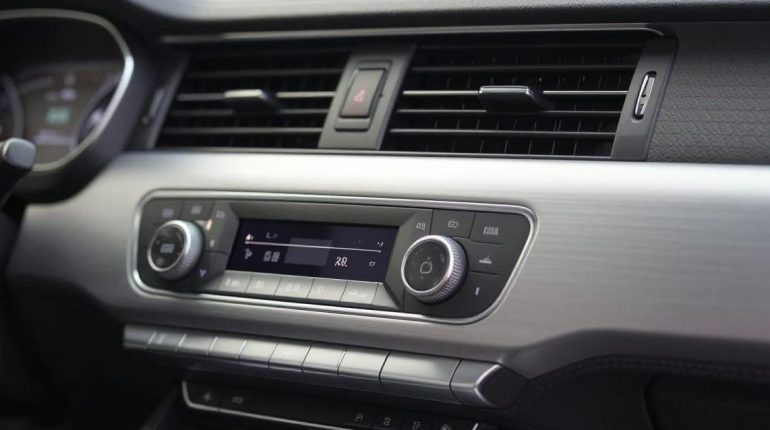
Under this discreet button on your dashboard lies a feature that most drivers activate by chance, without really understanding its scope. Your heating, ventilation, and air conditioning (HVAC) system does not operate in a single mode, but in two radically different configurations that determine the very source of the air you breathe.
The first mode, called “fresh air,” continuously draws in outside air through the cabin filter. This air then passes through the system which heats or cools it according to your settings, before being distributed in the cabin. This process constantly replaces stale air with oxygen-rich outside air.
The second mode, recirculation, operates on a completely opposite principle. A motorized flap hermetically closes the outside air intake, transforming your cabin into a closed circuit. The system then exclusively reuses the air already present inside, heating or cooling it in a loop. This configuration creates an air flow completely isolated from the outside environment, allowing the HVAC system to operate with increased efficiency in certain specific conditions.
This technical distinction, seemingly trivial, profoundly modifies the performance of your air conditioning and directly influences your fuel consumption.
Fresh Air Mode: Permanent Oxygen Renewal
This open circulation system maintains constant ventilation by drawing directly from the outside air. Every breath you take at the wheel comes from air that, just seconds before, was still circulating outside your vehicle.
The process starts as soon as the HVAC system is activated. Outside air enters through the front intake, necessarily passes through the cabin filter which traps pollen, dust, and fine particles, then reaches the thermal treatment unit. Depending on your settings, this air is heated by the engine coolant or cooled by the air conditioning circuit, before being propelled towards the air vents.
This unidirectional circulation guarantees a permanent renewal of the interior atmosphere. Stale air, loaded with carbon dioxide exhaled by the occupants, escapes through the exhaust vents generally located at the rear of the vehicle, while fresh air continuously flows in. This mechanism reproduces natural ventilation, essential during long trips where several passengers share a confined space.
The disadvantage lies in the energy effort required. Conditioning outside air at 35°C in summer or -5°C in winter places more demand on the air conditioning compressor or the heating system than maintaining a stable temperature on already treated air. This technical reality explains why a second mode exists, and why certain driving situations fully justify its activation.
Recirculation Mode: Efficiency Through the Closed Circuit
Activating this mode radically transforms the operation of your HVAC system. A motorized flap moves to completely block the outside air intake, isolating the cabin from the outside environment. From that moment on, the system only treats the air already present in the vehicle.
This hermetic circuit creates a continuous recycling loop. Interior air is drawn in, thermally conditioned according to your settings, and then redistributed in the cabin. This same volume of air circulates indefinitely, heated or cooled with each pass through the treatment unit. The air conditioning compressor or heating system works on a mass of air already close to the target temperature, considerably reducing the necessary energy effort.
Efficiency gains are particularly significant in summer air conditioning. Cooling interior air already at 24°C down to 20°C consumes significantly less energy than bringing outside air at 38°C down to that same temperature. The compressor works less intensely, the engine undergoes a reduced load, and the desired temperature is reached more quickly.
This technical optimization explains why manufacturers systematically integrate this mode. But this increased efficiency comes with an obvious trade-off: the total absence of air renewal. The oxygen consumed by the occupants is never replaced, and carbon dioxide gradually accumulates in this confined space, justifying usage precautions that few drivers really know.
Why This Distinction Changes Everything in Your Driving
This opposition between the two modes goes beyond simple technical curiosity. It directly determines the energy performance of your vehicle and your comfort on board. Understanding when to activate recirculation transforms an ignored function into a strategic climate management tool.
In intensive air conditioning, recirculation mode reduces fuel consumption in a measurable way. Tests demonstrate that reaching 18°C in a cabin exposed to 35°C outside requires 40% more energy in fresh air mode. The compressor forces continuously to treat a flow of burning air, taxing the engine well beyond what is necessary. Switching to recirculation divides this effort by two, lightening the mechanical load and preserving the powertrain’s efficiency.
This efficiency is also verified during rapid winter heating. Warming up already lukewarm interior air requires less thermal energy than treating a freezing flow from outside. The comfort temperature is established in a few minutes rather than a quarter of an hour, particularly appreciable during short urban trips.
But this increased performance imposes strict vigilance. The accumulation of CO₂ in a hermetic cabin causes fatigue, decreased concentration, and drowsiness after 30 to 45 minutes of continuous use. Fog gradually invades the windows as soon as exhaled humidity saturates the confined air. Recirculation mode therefore requires occasional and controlled use, strategically alternating with air renewal to combine energy efficiency and respiratory safety.