Have you ever served eggs to guests and seen their eyebrows shoot up? Adobong Itlog does that. This Filipino recipe — literally “eggs adobo” — is the kind of dish you throw together on a weeknight and set on the table with the quiet satisfaction of having cooked well.
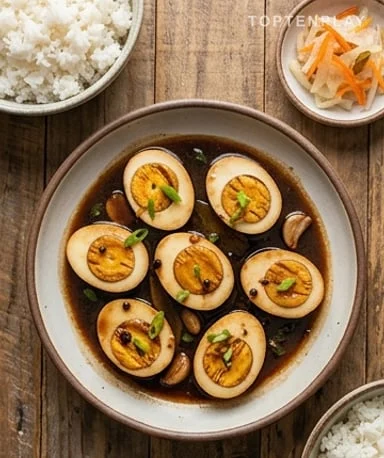
The sauce is a deep brown, almost mahogany, with lacquered highlights that catch the light. The smell that rises when you lift the lid is that vinegary-salty-sweet mix that tickles your nose before you even taste it. The eggs have absorbed the sauce all over: the pristine white has turned honey-beige. Cut one in half — the yolk is firm but not rubbery, ready to melt into the sauce and rice.
Why you’ll love this recipe
Ingredient Notes
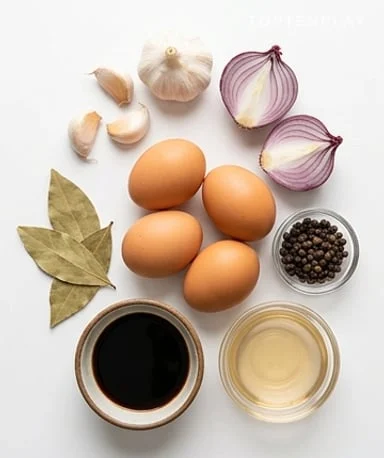
All the ingredients for Adobong Itlog: nothing fancy, just what you need for a solid adobo sauce.
- White vinegar : This is what makes it all happen. Use basic white vinegar — no cider, no balsamic. The absolute rule: let it boil alone for thirty seconds before stirring. Otherwise the sauce remains harsh on the palate and doesn’t taste right.
- Soy sauce : A classic soy sauce, not too salty. Kikkoman works perfectly. It’s the salt of the dish — so taste before adding more, because the oyster sauce and Maggi already have salt in them.
- Oyster sauce : The ingredient that elevates the sauce a notch. It gives body, sheen, and that umami depth you may not pinpoint but would miss if it were absent. Lee Kum Kee is the go-to accessible brand.
- Garlic : Coarsely chopped, not crushed. Sauté until golden like light caramel — not pale blond, not burnt brown. At that precise stage it perfumes the oil and, by extension, all the sauce that follows.
- Bay leaves : Two or three dried leaves are enough. They give the adobo that slightly camphory aromatic signature that you recognize even if you don’t know where it comes from. Don’t forget them — they’re what makes people say ‘what is that?’
Why Filipino adobo isn’t what you think
Many people think adobo is a marinade or a spice. It’s neither. It’s a method: you simmer your protein in a vinegar-soy mixture until the sauce reduces and coats everything. Filipinos do this with chicken, fish, vegetables. And eggs. With eggs, it’s quick because there’s nothing to tenderize — they’re already cooked before they even hit the sauce. The result is a dish ready in under forty minutes with the depth of flavor of something that simmered for two hours.

The part everyone messes up: garlic that truly browns
Heat the oil over medium heat. Add the chopped garlic. And then you wait. Not thirty seconds. Not stirring constantly. Let the garlic take on color until it smells like toasted hazelnuts — that precise smell that rises in the kitchen and announces something good is happening. It should be golden like light caramel: amber, not brown, never brown. That garlic has deeply perfumed the oil. When the sauce comes in, it will carry that flavor throughout the dish. Pale blond garlic is raw garlic in cooked sauce. Not the same thing.
Cooking the eggs without ruining them
Ten minutes in boiling water. Not eleven, not twelve. You don’t want that greenish yolk with a gray ring around it — the classic sign of overcooking. You want a firm yolk that is still slightly orange at the center, dense and creamy under the tooth. After cooking, plunge immediately into cold water: it stops the cooking cold and the shell comes off much more easily. Under your fingers, the cooled egg has that smooth, slightly damp surface that indicates a clean peel. Set them aside and start the sauce while they rest.
Building the sauce: vinegary first, balanced after
After the garlic is well browned, add the onion and let it become translucent, almost melting. Then comes the vinegar — and here, absolute rule: let it boil for thirty seconds before touching anything. This short step changes everything. The vinegar rounds out, loses its raw bite, the sauce becomes pleasant instead of acrid. Then add soy sauce, oyster sauce, a little water, bay leaves, cracked pepper. Simmer gently — the surface should barely tremble, definitely not boil vigorously. Taste after five minutes. Add a pinch of sugar near the end to balance everything: just a touch, you’re not making jam.
The eggs in the sauce: two minutes, no more
Slide the eggs into the reduced sauce and stir them gently to coat well. Two minutes over low heat. That’s enough for them to absorb the surface sauce and for their whites to take on that characteristic honey color without becoming rubbery. The sauce should still have some body — not syrupy, not dry. Serve immediately with hot white rice and a few slices of green onion on top. The rice absorbs the remaining sauce at the bottom of the bowl. That’s where it all comes together.

Tips & Tricks
- Don’t reduce the sauce too far: eggs are soft by nature, they need sauce to exist in the dish. If it becomes too thick before adding the eggs, add a tablespoon of hot water and it’s fixed.
- Make it the day before if you have guests. Reheated over very low heat the next morning, it’s even better — the eggs have slept in the sauce all night and it shows.
- Cracked pepper rather than ground. The small bits crunch under your teeth and release their aroma in one burst — something that powdered pepper, mixed uniformly into the sauce, simply cannot do.

Can I prepare Adobong Itlog the day before?
Yes, and it’s even recommended. The eggs absorb the sauce overnight and the flavor is noticeably more developed the next day. Reheat over very low heat with a splash of water if the sauce has thickened.
How should I store leftovers?
In the refrigerator in an airtight container for up to 3 days. The sauce will gel when cold — that’s normal, it becomes liquid again at the first simmer.
Can I use a different vinegar instead of white vinegar?
Rice vinegar works well and gives a slightly milder result. Avoid balsamic vinegar (too sweet and coloring) and cider vinegar (its aroma is too present and completely changes the dish’s profile).
My sauce is too salty. How can I fix it?
Add a little hot water spoon by spoon and let it simmer. A pinch of sugar also helps rebalance. That’s why you should taste before adding any extra salt — the soy sauce and oyster sauce already provide plenty.
What’s the difference from those adobo-marinated eggs you see everywhere?
Marinated eggs are soft-boiled eggs submerged cold in a cold sauce for several hours or overnight. Adobong Itlog is hard-boiled eggs cooked hot in a simmering sauce. Not at all the same result in texture or taste — one is runny and raw in the center, the other is firm and fully cooked.
Can I add tofu or chicken for a heartier version?
Yes. Firm tofu cut into cubes, previously pan-fried until golden, integrates very well into the sauce. For chicken, you’ll need to cook it in the sauce much longer — about 25 minutes — before adding the eggs at the end.

Adobong Itlog — Filipino Adobo Simmered Eggs
Filipino
Main course
Hard-boiled eggs simmered in a soy-vinegar sauce perfumed with garlic and bay leaf. A Filipino classic ready in 35 minutes that impresses every time.
Ingredients
- 8 eggs
- 4 cloves (20g) garlic, chopped
- 1 medium (120g) onion, sliced
- 60 ml (4 tbsp) soy sauce
- 60 ml (4 tbsp) white vinegar
- 30 ml (2 tbsp) oyster sauce
- 120 ml (½ cup) water
- 1 tsp (5g) sugar
- 3 dried bay leaves
- 1 tsp (3g) black peppercorns, cracked
- 30 ml (2 tbsp) neutral cooking oil
- 2 stalks green onions, for serving
Instructions
- 1Place the eggs in a saucepan, cover with cold water and bring to a boil. Cook for 10 minutes, then immediately cool under cold water. Peel and set aside.
- 2Heat the oil over medium heat in a large skillet. Sauté the chopped garlic for 2–3 minutes until golden like light caramel.
- 3Add the sliced onion and sauté for 2 minutes until translucent.
- 4Pour in the white vinegar and let it boil for 30 seconds without stirring.
- 5Add the soy sauce, oyster sauce, water, bay leaves, and cracked pepper. Stir and bring to a gentle simmer.
- 6Let it reduce over low heat for 5 minutes. Stir in the sugar, taste, and adjust if needed.
- 7Slide the whole eggs into the sauce and gently turn to coat them well. Simmer for 2 minutes over low heat.
- 8Serve immediately over white rice, garnished with sliced green onions.
Notes
• Make ahead: prepare the day before and refrigerate. Reheat over low heat with a splash of water. The flavor is better after a night.
• Storage: 3 days in the refrigerator in an airtight container. The sauce gels when cold — that’s normal.
• Heartier version: add cubes of firm tofu previously pan-fried until golden, together with the eggs.
Nutrition Facts (per serving, estimated)
| 215 kcalCalories | 13gProtein | 6gCarbs | 16gFat |