📌 Achar Fried Rice
Posted 19 April 2026 by: Admin
Fried rice is often the ultimate ‘next-day’ comfort food—the dish you make without really thinking about it. Achar fried rice follows the same principle, but with a depth of character that most dishes take hours to build. A jar of pickle, some leftover cold rice, and twenty minutes: you’re putting something unexpected on the table.
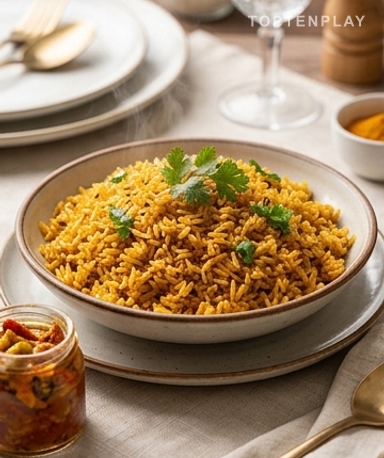
In the bowl, the rice glimmers with a golden copper hue where the pickle oil has coated every grain. You smell the toasted cumin first, followed by something tangy and slightly pungent—that specific scent of spices that have fermented together in the pickle oil. The grains are separate, glossy, each carrying that uneven amber color that proves they’ve been properly seared in the pan. It’s hot, fragrant, and visually much more impressive than the ingredient list suggests.
Why you’ll love this recipe
Ingredient Notes
Cooked rice, achar and its golden oil, spices, and fresh herbs: everything you need for this express fried rice.
- Achar : The centerpiece. Get a mixed vegetable achar—green mango, preserved lemon, fermented carrots—preferably a jar that has been sitting for a few weeks so the spices have had time to infuse the oil. And that oil is as much an ingredient as the vegetables themselves: it’s what perfumes the entire batch of rice. Don’t leave it in the jar.
- Chilled cooked rice : Day-old rice, absolutely mandatory. Fresh rice is humid, sticky, and clumps in the pan. Cold rice has dried out, and the grains separate easily between your fingers. Basmati is preferred for long grains, but ordinary Thai jasmine rice works very well too.
- Cumin seeds : Whole seeds, not ground. They need to sizzle in the hot oil—a sharp, brief crackle—before adding anything else. That sound is your signal. Without it, you miss the aromatic base of the dish.
- Fresh garlic : Two or three cloves, roughly chopped. Garlic powder has no business here. Don’t overdo it either: the achar already has its own powerful flavors, the garlic is there for support, not as the lead character.
Rice is prepared the day before
Let’s be direct: if you don’t have chilled rice, this dish will be disappointing. Hot rice absorbs too much moisture, the grains bond together, and you get a compact mass instead of fried rice. Prepare your basmati the day before, let it cool to room temperature uncovered, then put it in the fridge. The next day, the grains will break apart easily, feeling dry and slightly firm. This state is what allows the rice to sear properly in the pan. Nothing complicated—it’s just a matter of foresight.
Hot pan, spices first
Heat the oil over high heat in a wok or a large skillet—not a saucepan, you need surface area to stir. When the oil is shimmering, add the cumin seeds: they should pop almost immediately, a sharp sound followed by a toasted nutty aroma rising in seconds. Add the sliced onion and let it take on a light amber hue, like caramel just beginning to set—not dark brown, just translucent with colored edges. The garlic joins the pan one minute later, no more, just long enough to smell its fragrance without burning it.
The achar hits the heat
Add the achar directly into the pan with its oil—two good tablespoons, three if you like things bold. It will spit and sizzle, which is expected. Stir quickly to coat the onion and garlic in that orange-red spice paste. If you’re using tomato, it goes in now. Let it all melt together for thirty seconds over high heat: the smell shifts from sharp-tangy to something more rounded and mellow as the spices combine under the heat.
The rice absorbs everything
Pour the cold rice into the pan and start mixing everything constantly. Every grain should turn from white to gold in a few minutes, coated in the spiced oil. Press lightly on any clumps to separate them—you’ll feel them detach easily. Add turmeric if you want to enhance the sun-yellow tint. Taste before adding salt: achar is already salty, sometimes very much so. Two to three minutes over high heat with regular stirring is enough.
Serve while it’s hot
Turn off the heat. Let it rest for thirty seconds in the still-hot pan. Add freshly chopped cilantro directly on top—its citrusy-herbal scent cuts through the spicy and slightly heavy side of the dish; that’s exactly what makes the difference. Green chilies, if using, go raw on top, thinly sliced. Serve immediately in deep bowls, the rice still steaming.
Tips & Tricks
- Do not rinse your basmati rice after cooking if you plan to use it for this dish—the residual starch helps the grains hold their shape without crumbling in the pan.
- Taste your achar before you start: some jars are very salty, others mostly acidic. The amount you use should adapt to your specific jar, not a generic recipe.
- For guests, prep everything in advance (cold rice, chopping, measured achar in a bowl). The cooking itself takes ten minutes—you can do it standing in your kitchen while chatting with them.
Can I use freshly cooked rice?
No, this is the one rule you shouldn’t break. Hot rice is too moist—it sticks to itself and the pan, and you end up with a mushy mass instead of separate grains. Prepare the rice the day before and let it chill in the fridge uncovered.
What type of achar should I use?
A mixed vegetable achar (green mango, lime, carrots) works great. The essential part is finding a jar with oil heavily loaded with spices—that’s what gives the dish its character. Avoid achars that are too watery or too sweet.
My rice is sticking to the pan, what happened?
Either the rice was still lukewarm, or the pan wasn’t hot enough before adding ingredients. The heat must be high from the start. A wok or a well-heated large stainless steel pan is much more effective than a lukewarm non-stick skillet.
Can I add protein to make it a complete meal?
Yes, scrambled eggs added directly to the rice at the end of cooking is the easiest option. Shredded grilled chicken or sautéed shrimp also work well—fold them in just before serving.
The dish is too salty, how can I fix it?
Achar and its oil are already salty—some brands much more than others. If you went heavy on the achar, add a squeeze of lemon juice to balance it out, and serve with plain white rice on the side to dilute the saltiness.
How do I store and reheat leftovers?
In the fridge in an airtight container for up to two days. To reheat, use a skillet over high heat with a tiny bit of oil—the microwave softens the grains and ruins the texture. Two minutes in the pan is enough.
Achar Fried Rice
Asian
Main Course
A Pakistani-style fried rice flavored with spicy pickle oil, ready in twenty minutes using day-old rice.
Ingredients
- 300g cooked and chilled basmati rice (about 2 cups, day-old)
- 45g vegetable achar (about 3 tablespoons)
- 20ml pickle oil from the achar jar (about 2 tablespoons)
- 120g onion (1 medium), sliced
- 10g garlic (3 cloves), minced
- 80g tomato (1 small), diced (optional)
- 20ml neutral vegetable oil (about 2 tablespoons)
- 3g cumin seeds (1 teaspoon)
- 1.5g turmeric powder (½ teaspoon, optional)
- 1.5g ground black pepper (½ teaspoon)
- salt as needed (taste before adding)
- 15g fresh cilantro, chopped
- 2 green chilies, thinly sliced (optional)
Instructions
- 1Check that the rice is cold. Break apart any clumps by hand to separate the grains.
- 2Heat the vegetable oil in a wok or large skillet over high heat.
- 3Add the cumin seeds and let them sizzle for 20 to 30 seconds until fragrant.
- 4Add the sliced onion and sauté for 3 to 4 minutes until the edges are golden.
- 5Add the minced garlic and stir for 1 minute without burning.
- 6Add the achar with its pickle oil (and the tomato if using). Mix and cook for 30 seconds over high heat.
- 7Pour the cold rice into the pan. Stir vigorously to coat every grain with the spiced oil.
- 8Add the turmeric and black pepper. Mix well. Taste before adding any salt.
- 9Cook for 2 to 3 minutes over high heat, stirring regularly until the rice is golden and hot.
- 10Remove from heat. Garnish with fresh cilantro and green chilies. Serve immediately.
Notes
• Achar varies greatly by brand regarding salt and acidity—start with 2 tablespoons and adjust to taste rather than adding it all at once.
• For a heartier meal, add 2 beaten eggs directly to the rice at step 8: make a well in the center, scramble the eggs for 30 seconds, then fold into the rice.
• Leftovers: keeps 2 days in the fridge in an airtight container. Reheat in a skillet over high heat with a splash of oil, not in the microwave.
Nutrition Facts (per serving, estimated)
| 380 kcalCalories | 6gProtein | 55gCarbs | 15gFat |