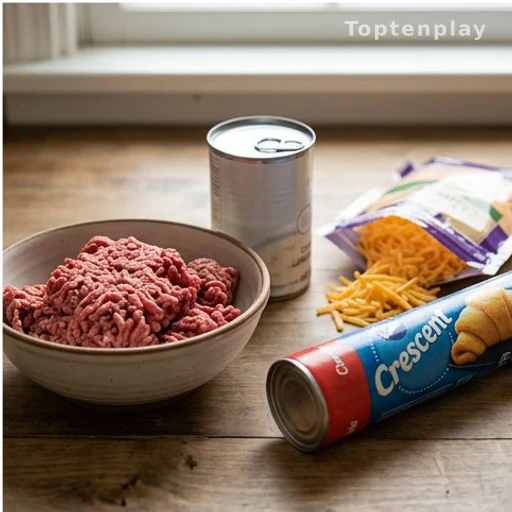
No broth, no eggs, no breadcrumbs. The four components are almost always available in a standard kitchen, which is precisely why this recipe has survived across generations. For those who want a little more complexity, optional additions include ½ teaspoon of garlic powder, a quarter cup of diced onion, or a splash of Worcestershire sauce — none of which are required to make the dish work.
The total grocery cost lands under $8 for a casserole that serves six generously. On a per-portion basis, that is roughly $1.30 a plate — a figure that makes this one of the more economical comfort meals available without sacrificing flavor or substance.
Brown, layer, bake: a method anyone can follow
The process starts with preheating the oven to 375°F (190°C) and lightly greasing a 9×13-inch glass baking dish. The ground beef goes into a skillet over medium heat and cooks until no pink remains. Draining the fat thoroughly at this stage is critical — excess grease will seep into the crescent dough and turn the base soggy rather than flaky.
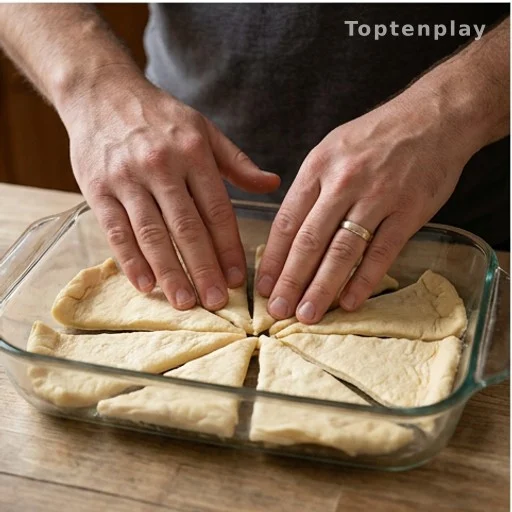
Once drained, the condensed cream of mushroom soup is stirred directly into the beef in the skillet and simmered for two minutes. The mixture is then removed from heat. Meanwhile, the crescent roll dough is unrolled and pressed flat, with seams pinched together to form one solid, seamless rectangle before being laid into the baking dish.
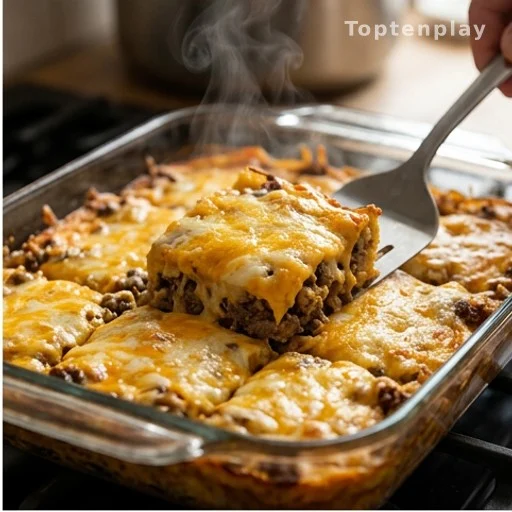
The beef and soup mixture is spread evenly over the dough layer, followed by the full 1½ cups of shredded sharp cheddar. The casserole then goes into the oven for 25 to 30 minutes, until the dough is golden and the cheese is bubbling. The result is a single-dish meal that requires no additional pots, pans, or complicated plating.
Why crescent dough became a comfort food staple
Refrigerated crescent roll dough, first widely sold in the United States in the 1960s, quickly became a fixture in home cooking because it eliminated the time and skill required for homemade pastry. Combined with canned condensed soups — another mid-century pantry staple — it enabled a generation of home cooks to produce baked, layered dishes with minimal preparation. Recipes built on these two products have remained popular precisely because they deliver consistent, satisfying results with very little margin for error.
The details that separate a good bake from a great one
Three technique notes make a measurable difference in the final result. The first is fat management: draining the cooked beef well before adding the soup is the single most important step for keeping the pastry base crisp. Even a small amount of residual grease can compromise the texture of the dough during baking.
The second is dough handling. Crescent roll dough comes pre-scored into triangles, but for this recipe it needs to function as a single sheet. Taking the time to press every seam firmly together before layering prevents gaps that would let the filling leak through and undermine the structure of the casserole.