📌 4-ingredient homemade bread: this no-knead technique reduces preparation time by 10
Posted 1 February 2026 by: Admin
A Revolution In Your Kitchen: Ultra-Simple Homemade Bread
The baking industry could tremble: a method is disrupting the codes of homemade bread. No more exhausting kneading, eggs, or butter. This technique relies on four basic ingredients – flour, salt, yeast, and water – and only a few minutes of preparation.
The numbers speak for themselves. While an industrial baguette now costs between €1.50 and €2, this homemade bread costs less than 50 cents per batch. Beyond the substantial savings, this recipe radically eliminates the additives and preservatives that populate supermarket shelves. E471, E300, ascorbic acid: so many codes that disappear from your diet.
The real revolution lies in its total accessibility. No technical skills are required, no sophisticated equipment. A simple Dutch oven, a bowl, and patience become your only allies. Absolute beginners succeed on the first try with this preparation that transforms ordinary ingredients into authentic artisanal bread.
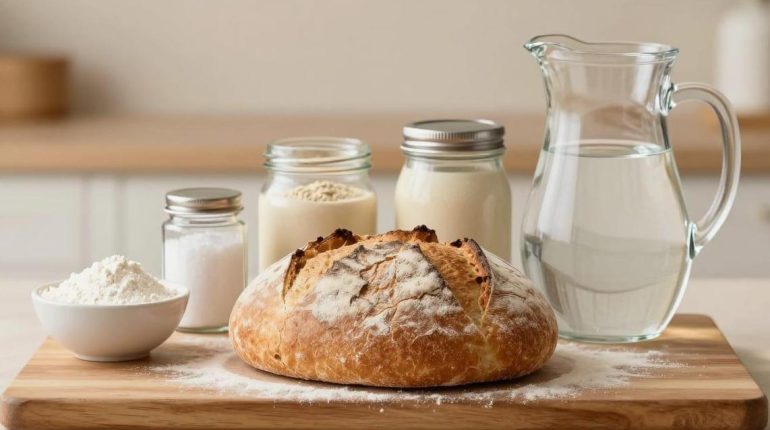
The crispy golden crust, the honeycombed and soft crumb, the comforting aroma that fills the kitchen: all the attributes of a bakery bread are found in this homemade result. Once tested, this method makes the trip to the bakery aisle obsolete. Industrial bread, with its standardized texture and endless list of ingredients, loses all appeal in the face of this disarming simplicity that restores the prestige of homemade food.
The Science Behind Simplicity: Why This Method Works
The secret lies in one word: time. Where the traditional baker vigorously kneads their dough for fifteen minutes, this technique substitutes a slow fermentation of 10 to 12 hours. During this overnight period, the yeast works methodically, transforming the sugars in the flour into carbon dioxide while the water gradually hydrates the gluten proteins.
This prolonged hydration naturally creates the desired elasticity and structure. The gluten develops without mechanical intervention, forming a three-dimensional network that traps the fermentation bubbles. Result: a honeycombed crumb characteristic of artisanal breads, obtained without the slightest physical effort.
Baking in a Dutch oven preheated to 230°C constitutes the other technical pillar. This closed container acts like a miniature steam oven. The moisture released by the dough remains trapped during the first thirty minutes, creating that golden and crackling crust impossible to reproduce on a simple baking sheet. The final opening of the lid then allows the surface to caramelize perfectly.
This elementary chemistry – flour, yeast, water, salt – produces a complex gustatory alchemy. Aromatic compounds develop slowly, generating deep flavors absent from quick-rise breads. The soft interior texture contrasts with the crispy envelope, the signature of a bakery-quality bread. Time becomes the invisible ingredient that transforms four basic elements into artisanal excellence.
The Infallible Step-By-Step Protocol
This science is applied concretely in eight timed steps. The initial mixing takes two minutes flat: combine flour, salt, and yeast in a bowl, pour in lukewarm water, stir until you get a sticky and irregular dough. No perfect homogeneity required – the coarse texture signals that you are progressing correctly.
Cover the container and let it rest for 10 to 12 hours at room temperature. During this overnight rest, observe the doubling of volume and the appearance of characteristic bubbles on the surface. These microscopic craters confirm active fermentative activity. Resist any temptation for premature manipulation.
Upon waking, lightly flour your work surface. Gently turn out the dough, fold the edges toward the center without pressing excessively. Shape an approximate ball – imperfection guarantees artisanal authenticity. Transfer to parchment paper, cover, let rise for 30-40 minutes while your Dutch oven preheats empty in the oven at 230°C.
This thirty-minute preheating is the critical detail. The cast iron or ceramic must reach a maximum temperature before receiving the dough. Carefully remove the hot container, place the dough in it via the paper, close the lid. Bake for thirty minutes covered, then uncover for 10-15 minutes of final caramelization. The water temperature (exactly 38-43°C) and this prolonged preheating alone determine the difference between a decent bread and an exceptional success with a crackling crust and airy crumb.
Customization And Optimization: Master Your Bread
Once this technical base is mastered, explore infinite variations. Integrate a teaspoon of garlic powder and dried herbs (oregano, rosemary, thyme) directly into the initial mix for an aromatic Mediterranean bread. Sprinkle sesame, poppy, or sunflower seeds on the dough before baking – they naturally adhere to the moist surface and create extra crunch.
Partial substitution radically changes the nutritional profile. Replace up to 50% of white flour with whole wheat flour to enrich with fiber and minerals, while maintaining an acceptable rise. Beyond this ratio, add 10% more water – the bran absorbs more liquid and risks drying out the texture.
For a breakfast version, incorporate a spoonful of honey and a handful of raisins at the time of mixing. This sweet touch transforms the bread into an ideal accompaniment for jams or salted butter. Adding grated cheese (Comté, cheddar) produces an intensely fragrant golden crust.
Storage determines the longevity of the crunch. Wrap the cooled bread in a clean tea towel or slide it into a paper bag – never plastic, which instantly softens the crust. Consume within three days or slice and freeze immediately. The choice of flour directly influences the chew: all-purpose flour generates a soft crumb perfect for toast, while bread flour produces a firmer texture ideal for sturdy sandwiches. This flexibility transforms a single recipe into a complete repertoire adapted to every daily culinary use.